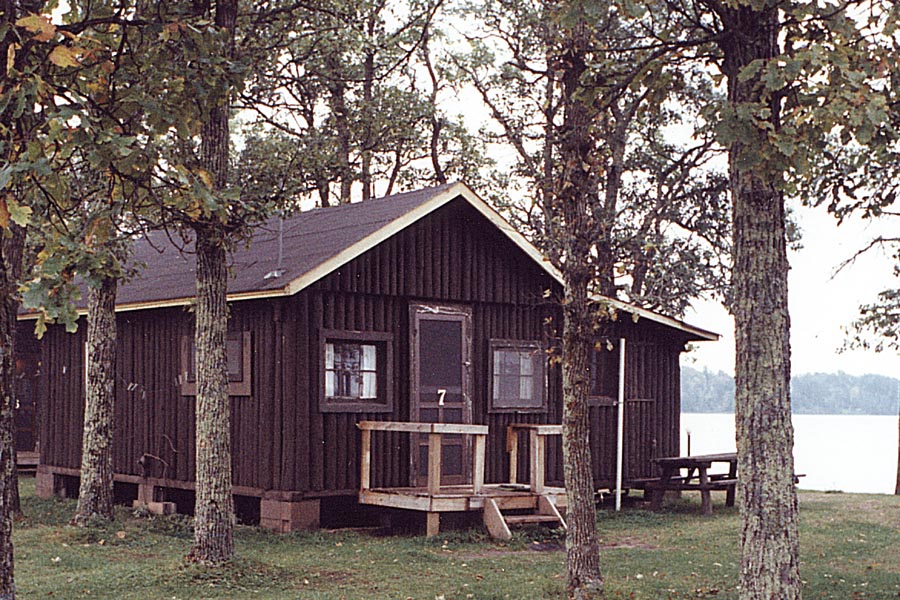
Camp Week

When I was pregnant with our fourth child, my husband was asked to counsel at a church camp for a week.  Oh, and a few days before he left, the other three little ones (ages 8, 5, and 2) all got chicken pox.  He left for a week.  And I had a houseful of itchy, spotted, miserable children.  And I was pregnant.  And he left for a week. 

Camp week  has changed over the years.  My husband went from counselor to director; that was 22 years ago.  There’s a lot of work involved in directing a camp.  Hands down, I’d rather be at home with three feverish children than be responsible for 80 kids out in the woods.  However, in those early years, the week dad went to camp was the hardest string of days in our summer.  I tried to be the fun parent and plan outings to the water park, go to McDonalds for lunch and spend an afternoon at the beach, but it was exhausting.  I was better suited for creating chore charts and instituting a non-negotiable quiet reading hour in the afternoon.  Dad was definitely the fun parent.  Back in those days, there were two rules for camp week: 1) No inviting friends over.  2) If you get invited over to anybody’s house, you can go.

One by one, the kids got old enough to go off to camp with dad and suddenly, one summer, I found myself alone for a whole glorious week.  I was giddy!  Finally, payback for the year of the chicken pox. 

I still love camp week, although all five of them don’t go anymore.  But I still look forward to those glorious few days.  Here’s my revised rules for camp week:

1) No laundry. Do it all the day they leave and then don’t do any washing of clothes until they get back.  (One year, my wonderful hubby stopped at a laundromat on the way home and all five of them came back with bags full of clean clothes!  Glory halleluiah!)

2) No cooking.  Eat fruit and cereal and go to Taco Bell.  Buy favorite flavors of yogurt with no fear of someone else eating it.  Run dishwasher once all week long.

3) Girl-i-fy the bathroom.  Clean it real good when they leave and revel in the fact that it will stay clean: no whiskers in the sink, no toilet seat left up, no toothpaste spray on the mirror.  Leave facial mask, fingernail polish and make up on the counter in pretty trays.

4) Go to the library and check out a stack of decorating and craft magazines.  In the evening, sit on the deck and read them with no tv background noise.

5) Turn off the air conditioning and open all the windows.  (There’s usually a thermostat war going on – he sets it at 69 degrees, I change it to 80 degrees; and back and forth we go.)

Now you see why I love camp week.  It’s like being on vacation without leaving the comforts of home.  Perfect.  Except by the end of camp week, I’ve had enough peace and quiet for one year and can’t wait to have the craziness of family life pick back up.  Also perfect.

Strawberry Jam

 I took my husband to a pick-your-own strawberry patch.  Now that the children are grown, I need someone to help with the household chores.  He has always been willing to offer a hand, but as the nest empties, his interests are expanding.  This summer we are tending our first garden in years and visions of a shelf full of canned goods is on his mind.  My hubby has always been a man in search of new adventures, so a trip into the country to pick berries sounded good to him.  He also likes my strawberry jam.  The fact that the jam cupboard has been empty since February provided good motivation.  The sweet stuff really is like a taste of summer in the deep midwinter.  There’s nothing  like a piece of warm buttery toast slathered with sugar-laden strawberry jam right before going to bed on a cold January night.  Mmmm, comfort food.

I usually fill two flats with ripe, juicy berries and head home to whip up several batches of jam.  When all the kids were little and peanut butter and jelly was the lunch of choice, I often made as many as six or seven batches to get the whole family through the winter. 

Now what you need to know about my wonderful husband is that he thinks big.  He comes up with great ideas, and usually finds a way to pull them off.  Most of the time I admire that outlook on life.  If a 12 ounce cup of coffee is good, 24 ounces is better.  If a one mile walk is good,  four miles is better. If a 15 passenger van is good, a 48 passenger bus is better.  In this case, 15 pounds of strawberries would’ve been good, but 30# was better.  “Besides,” he reasoned, “with the economy the way it is, we should try to preserve as much as we can.”  I am comforted to know that if  Wall Street crashes, at least we will have plenty of jam to eat.

I made ten batches. 

And froze another eight quarts of sliced berries. 

And made strawberry shortcake. 

And will put berries on my cereal every morning this week. 

To his credit, my husband hung in there with me, helping to wash and mash most of those berries.  He even ran to the store to get more containers when I had three more batches ready to go and no more margarine containers.  In a couple weeks, it will be blueberry picking time on the farm.  I’d better stock up on sugar and plastic freezer bags.  Blueberries taste pretty good in January, too.

Take a Deep Breath

I wonder how many of you actually just took a deep breath! We need to do that more often, you know. Most of us don’t breathe right most of the time. Quick, shallow breaths don’t feed our brains like long deep ones. In that case, I’d better take a few big ones right now before I go any further.

As a follow-up to Dry Bones, here are some thoughts on breathing.

Breathing is life. In the valley of dry bones, the bodies were reassembled, but remained nothing more than a pile of corpses until God’s breath entered them and they came to life. Just as when God made man in the beginning, Adam was a lifeless body until the breath of life shot into his nostrils and he became a living being. Isn’t that what we long for when we look at the body of a loved one lying in a casket – the breath of life? (I just looked in my thesaurus under breath and it says, “see LIFE”.)

The Hebrew word for breath, ruwach, also means wind and Spirit. Sounds like the lingo Jesus used with Nicodemus in John 3.  Spirit=breathe=life. I’m sure there are layers and nuances of meaning that go deep and wide here. I’d need lots of deep breathing to send my brain there.

In Paul’s letter to Timothy, he said “all scripture is God-breathed”. So, for me, reading the living and active Word of God is like being hooked up to an oxygen tank after inhaling pollution all day. It purifies, cleanses, brings health.

One last thought: don’t forget to exhale. Breathing isn’t just taking in air, but also letting it go in a natural rhythm. After six days of creating things, God designed something different: rest. The Hebrew Bible says that on the seventh day God rested and was refreshed. The word literally means God exhaled. I like to think of the Sabbath as the great exhale after sucking air for six days.

One more last thought: Here’s my favorite sermon illustration on breathing.

A young man asked a wise elderly teacher how he could find God. The gentleman asked the young man to come with him to the river. The young man expected to receive some wise words along the riverbank. But when they arrived, the old man walked out into the water, so the young man followed. Suddenly, the teacher grabbed the young man and forced him under. The seconds ticked by and the young man began to fight against the firm grip holding him down. Right before everything went black, the hand released him and he blasted out of the water, gasping for air. As he gagged and choked, he shouted, “What were you doing? Trying to kill me?” The teacher said, “When you want God as much as you wanted that breath of air, you will find Him.”

Breathe on me, Breath of God, till I am wholly thine;

Till all this earthly part of me glows with Thy fire divine.

Dry Bones

I’ve been gutting my way through the book of Ezekiel. It’s not an easy read, but then it wasn’t easy being a prophet, either. Ezekiel, the poor guy, had to pronounce judgement on place after place: Egypt, Sidon, Moab, Tyre, Edom, Babylon, Jerusalem, Ammon, Philistia, Gog. He had to relay searing messages from God to Israel’s leaders and priests, to false prophets and idolaters, to those in his own hometown. Whew! That’s a lot of bad news.

Finally, this morning, the words flew off the page right to my heart. As I read in chapter 37, God gave Ezekiel a break from broadcasting words of woe and took him on a field trip to the bottom of a valley filled with very dry bones. God asked the prophet, “Can these bones live?” Ezekiel didn’t say yes, but he didn’t say no, either. He gave the best answer possible, “Lord, only You can answer that.”

I don’t know about you, but there have been times when I’ve felt like a pile of dried up old bones laying on a valley floor. My prayers are dry, my devotions are dry — it’s that sense of being shriveled and empty and lifeless. Usually, something eventually breaks through and brings me back to life, although I once spent a two year stint in the desert of dryness. No fun.

God told Ezekiel what to say to that ditch full of skeletons and before the prophet got all the words out of his mouth, a rattling sound echoed from one end of the valley to the other. The bones came together (the foot bone connected to the ankle bone, the ankle bone connected to the shin bone…) and then tendons and flesh appeared (can you imagine seeing that?) and then God breathed His breath into the bodies and they all stood up (what a riveting picture!). “I will put breath in you, and you will come to life.” Ezekiel 37:6

During that long dry season I experienced, the words to a song by Michael W. Smith became my anthem:

“So breath in me, I need You now; I’ve never felt so dead within.

So breath in me, maybe somehow, You can breath new life in me again.”

So Ezekiel, can these dry bones live? Yes, indeed, they can.

At the Old Ballgame

My husband and I took the day off and whiled away a beautiful summer afternoon at the ballpark. We had two free tickets to a Brewer game, so off we went, on a date, to Milwaukee. I love baseball. I fell in love with baseball when I was eight months pregnant in 1982. Our first child was soon to enter our world and the Milwaukee Brewers were in the World Series. It was a magical time and I spent many happy hours lying on the couch dreaming of motherhood and cheering on my team. The Brewers haven’t been to a World Series since and my first baby is now a married woman, but the game stays the same and I still love it.

Today, our team was a little flat. They fell behind in the first inning and stayed that way through eight innings. Our two best hitters combined for one walk out of ten at-bats. It was a slow day at the diamond. The brats were good, and so were the pretzels and cheese fries and ice-cream and licorice. The sights and sounds of the ballpark along with the usual semi-inebriated fans two rows down were fairly entertaining. But by the end of the eighth we were still down by one run and my date was getting antsy. (He’s a football man at heart; he just likes baseball because he loves me.) He bent over and whispered, “If we leave now, we can get a jump on the traffic.” The bottom of the order was due to bat in the ninth, so I reluctantly agreed and we left our pile of empty food containers in row three and beat the crowd out of the stadium.

Before we found our way to the car, the Brewers had two men on base. Before we left the parking lot, the game was tied. Before we left the city limits of Milwaukee, our pitcher mowed down the order in the tenth inning. And before we reached the suburbs, the crowd (the very same crowd we so cleverly beat out of the ballpark) was enjoying a come-from-behind victory. We missed it because we gave up before it was really over.

Sometimes we just quit too soon. There’s a win coming within minutes, but we throw in the towel, thinking it’s over, when in reality we are standing on the brink of victory. “Let us not become weary in doing good,  for at the proper time we will reap a harvest if we do not give up.”  Galatians 6:9

25 Cents Worth, Please

I read something this morning that hit me as being so profound, I just have to share it. I came across this while doing some study on the verse, “If anyone would come after me, he must deny himself and take up his cross daily and follow me.” Luke 9:23

Credit for this quote goes to someone named Dr. Fred Craddock. I googled him (of course) and found he is a professor of theology at Emory University. After all the credentials were listed, the article said, “Often characterized as preaching with a style that is ‘folksy’, Craddock is a strong supporter of using humor in sermons.” I knew I liked this guy. Here’s what my friend Fred had to say to me this morning:

“We think giving our all to the Lord is like taking a $1,000 bill and laying it on the table – ‘Here’s my life, Lord, I’m giving it all.’  But the reality for most of us is that he sends us to the bank and has us cash in the $1,000 for quarters. We go through life putting out 25 cents here and 50 cents there. Listen to the neighbor kid’s troubles instead of saying, ‘Get lost.’ Go to a committee meeting. Give a cup of water to a shaky old man in a nursing home.

“Usually giving our life to Christ isn’t glorious. It’s done in all those little acts of love, 25 cents at a time. It would be easy to go out in a flash of glory; it’s harder to live the Christian life little by little over the long haul.”

So, denying myself may mean intentionally NOT making the big thousand dollar-type sacrifice, but faithfully unloading twenty-five-centers when no one is paying any attention. So, what does that look like played out in everyday life? How do we deny ourselves?

Undignified Worship

2 Samuel 6:14 “David, wearing a linen ephod, danced before the Lord with all his might.”

David danced. He danced before the Lord with all his might. Wearing a linen ephod. Some Bible scholars think that means David threw off his royal robe and associated himself with all the other lowly priests and servants. Others believe that David danced in his undies. It’s hard to kick up your heels in a long dress. Mrs. David despised her husband for such an indiscretion, especially in front of the other girls. Understandable. I wouldn’t want my husband waltzing down the aisle on Sunday morning in his Fruit of the Looms.

But David was dancing before the Lord — giving full expression of his deep love for God. He was dancing with all his might,  holding nothing back. After a long, emotional day of ministry, David went home to bless his own household. The Mrs. met him at the door with criticism on her tongue, calling her husband a “vulgar fellow”. David defended his dance by saying it was before the Lord in celebration. Then that great line – “I will become even more undignified than this.” 2 Samuel 6:22

How does it happen? Two extremely different interpretations: 1) an all-out offering of worship, 2) an embarrassment.

Funny, God never reprimanded David. Perhaps God liked David’s dance; maybe God loved the wild and uninhibited expression of worship. Clearly, God was not repulsed by David’s lack of clothes or lack of dignity, but instead reveled in David’s abundant, joyful, all-his-might worship.

What does my worship look like to God? Am I too dignified? Have I ever worshiped in such a heart-felt manner that others were a little embarrassed? Am I willing to praise Him with all my might?

The Graduate

Graduation Day arrived on Sunday for Anna!   Here’s the week-end update.

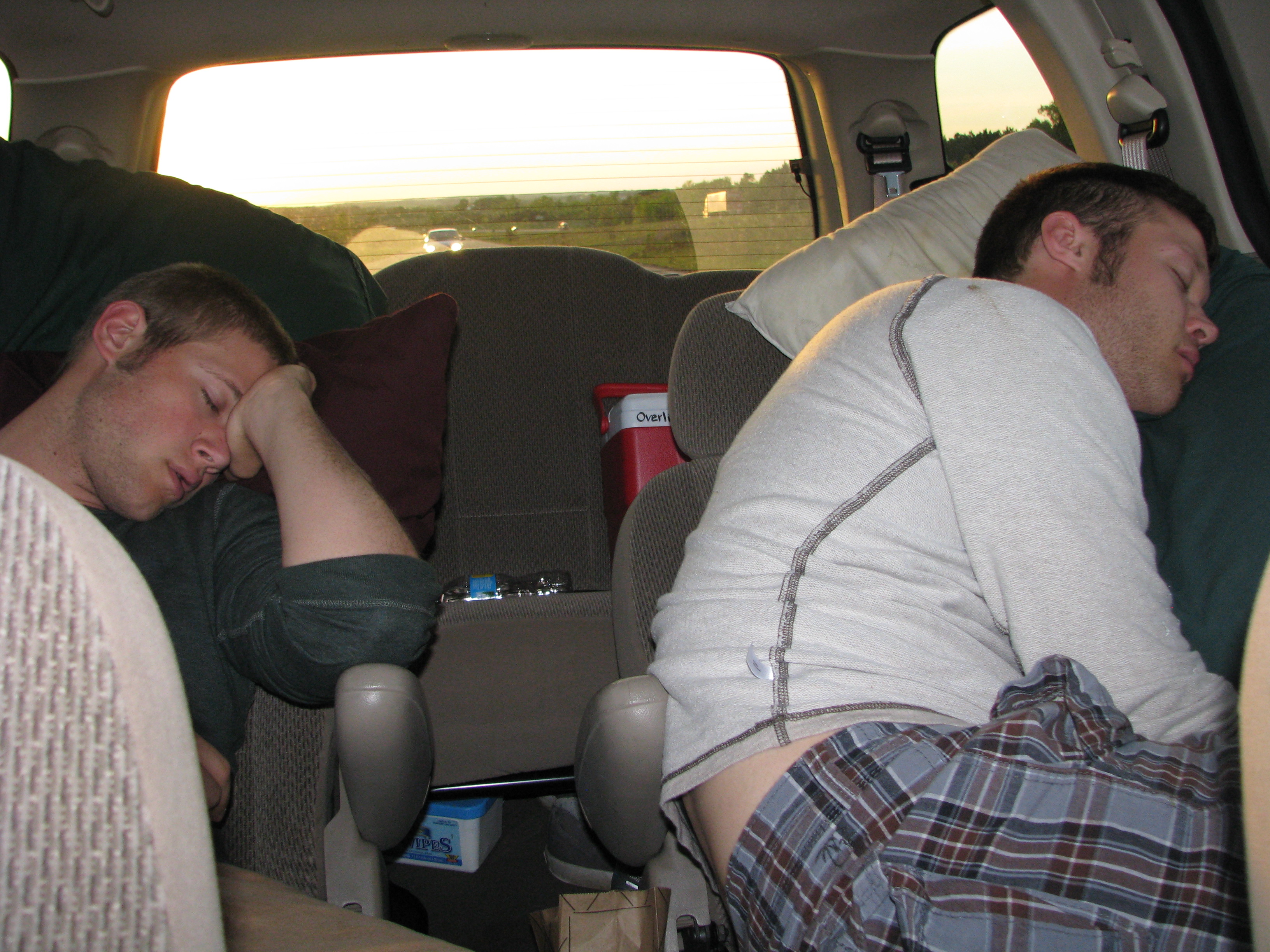
Parents and brothers left for Minneapolis early Saturday morning.  Well, 9:00 a.m. is early for Sam and Jake.  It was a quiet ride.   Aren’t they cute with their look-alike Packer blankets?

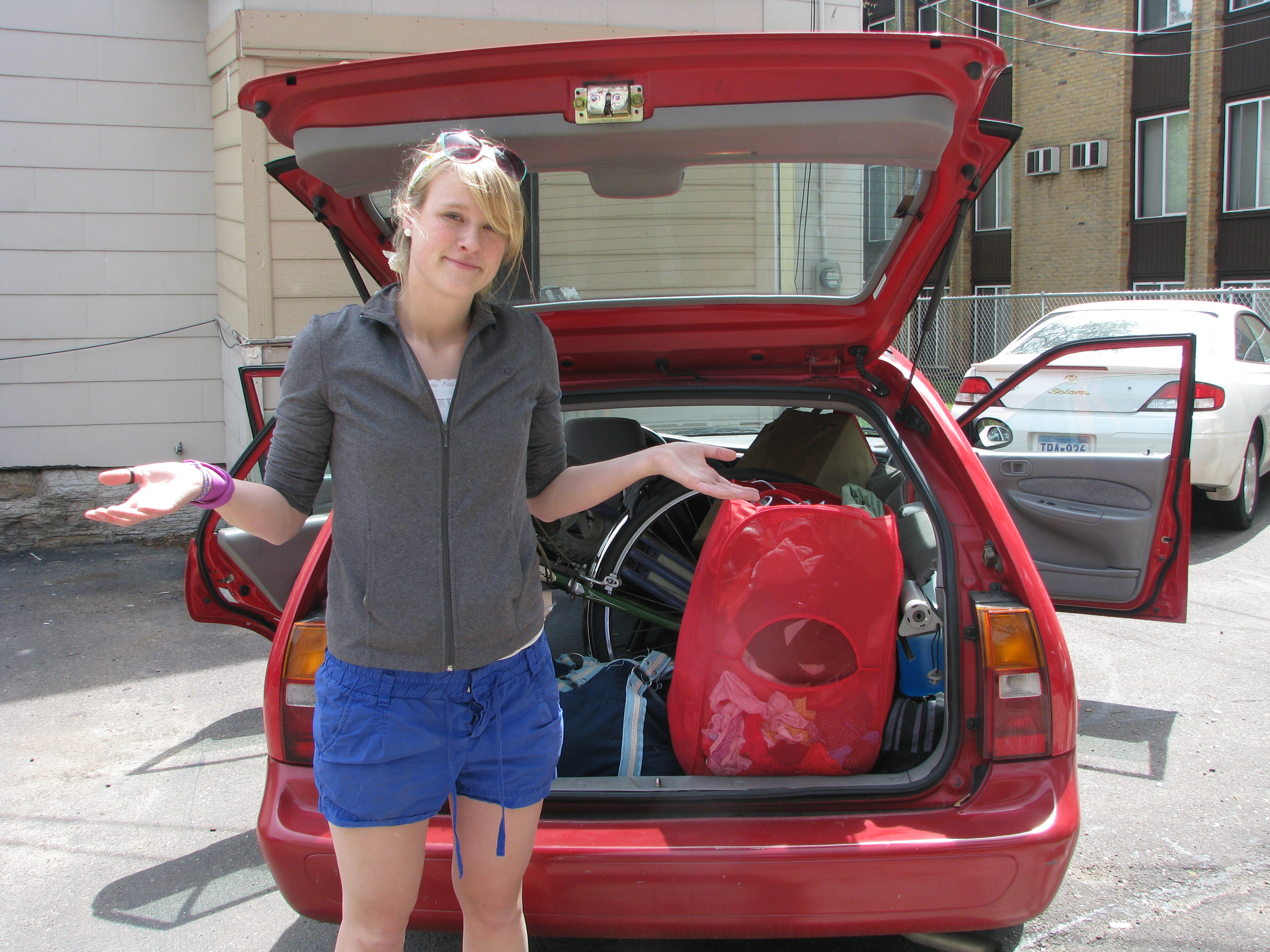
We arrived and helped Anna load all her worldly belongings into her Ford Escort station wagon.

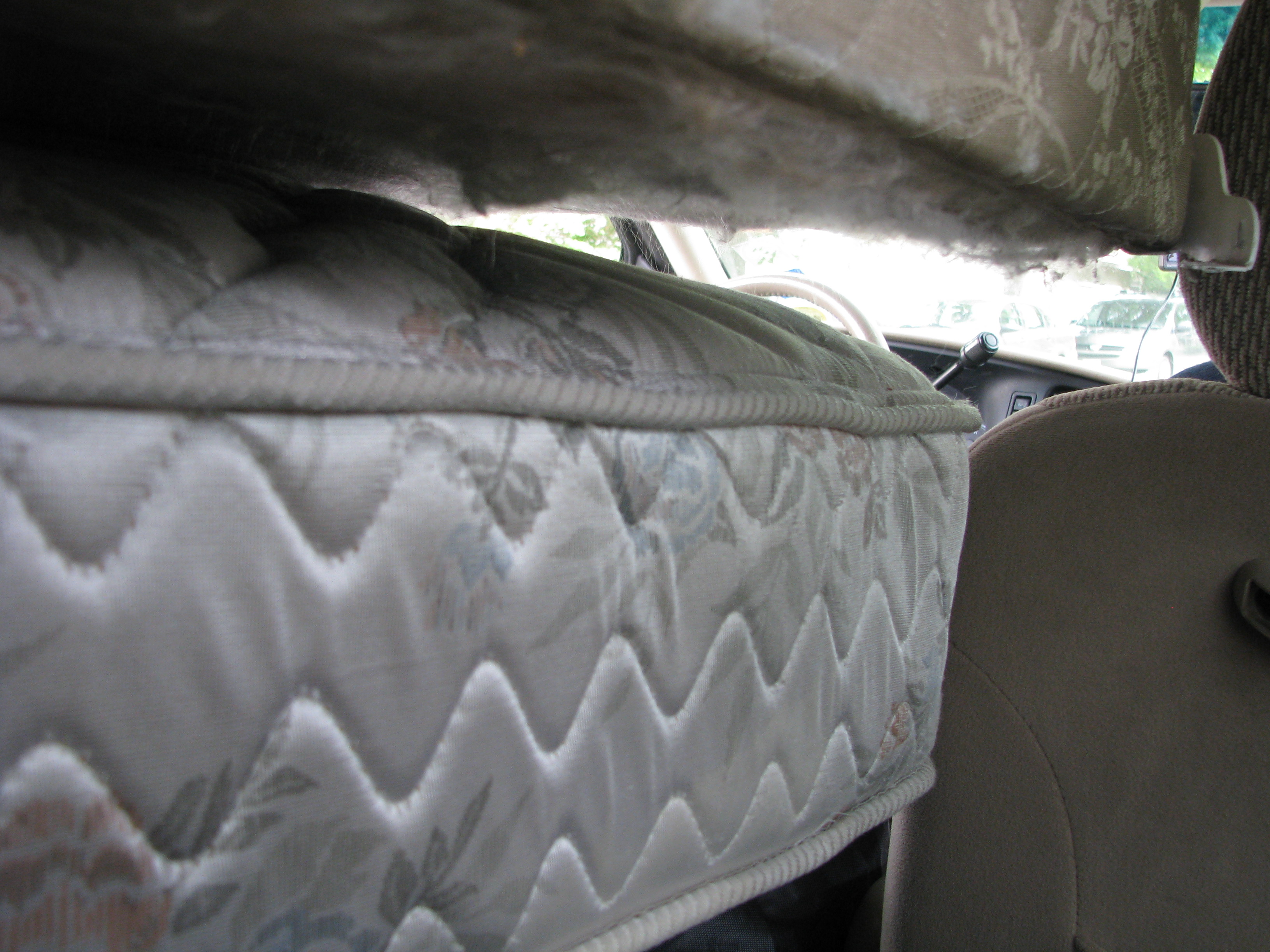
I drew the short stick and got stuffed in the back seat of the van with her mattress and box spring.   Here’s my view:

Anna, Sam and Jake (now awake) in front of the cool house on a lake Anna and five girlfriends get to live in for the summer.

Anna got what every Vocal Music Education grad longs for: an old record player that plays these really big CDs.

Sunday morning.  Stained glass and rock music.  Sitting next to my husband in church – a rare blessing.

Happy Gopher Grad jumpin’ for joy!  No more tests, no more papers, no more studying!

Look, mom!  My hat has a tassel!

Jake pretending he’s the grad.

Proud parents!  Hey!  Who’s the homeless man off to the side??

Ah!! The homeless man jumped into the pic…

Anna’s wishing  Sam and Jake would put down their cell phones for one minute.  Hold on…that’s no cell phone…that’s Jake playing Pokemon on his gameboy….

Ceremony time!  Jake checked out when he realized that after the four speeches, over one thousand grads were going to have to walk across that stage.

Diploma!  Sun’s kinda bright.

Quiet ride home.

Blake took this on the way home through the rear view mirror while steering with his knee going 70 mph down the interstate.   Pretty, huh?

She did it!  We did it!  Thank you Jesus!

Katie and Noah- I’m getting this photography/blog thing down.  Just wait till you are here this summer!  More good times coming!

Chewing on Figs

Okay, I’ve been chewing long enough. Three posts have been written and deleted so this is my last ditch effort to make sense of this parable. Another good way to gain understanding when studying Bible passages is to look at the story from the different characters’ point of view. So, here goes.

The owner of the vineyard: God owns the vineyard and He can plant whatever He wants on His property. In fact, He appreciates a little variety and makes room in His field for a totally different plant. He provides all that’s necessary to promote growth and maturity. He checks in regularly to see how it’s going. He watches and waits for fruit, but is patient and willing to give it a reasonable amount of time. When no fruit appears, He allows the vinedresser to give the tree extra attention. But the warning is given: it there’s no fruit, cut it down.

The vinedresser: He is the keeper of the vineyard, not an orchard specialist. Even so, he bargains for time with the owner in hopes of bringing about a harvest. The vinedresser may be a pastor, teacher or spiritual leader. He is willing to put in overtime to tend to this beautiful but barren member. He pleads for the life of the plant before the Owner. His plan is to fertilize by offering another Bible study, planning another retreat, praying harder for another year. Although it is frustrating to let this tree absorb all the nutrients out of the soil, he continues working to get the desired result.

The grape vines: It’s a stretch to consider the vines as “characters”, but humor me. The vines are the producers, the ones actually accomplishing what they were meant to do; the ones you can count on year after year, the faithful bearers. They are probably not happy that a tree is leeching all the nutrients out of the ground, soaking up all their minerals. However, they refuse to produce sour grapes because they desire to please the Owner. Even though their vines are scraggly compared to the tree trunk and their leaves are not as profuse and lush as the tree, they are content to know the will of the Owner and fulfill His purpose for them.

The fig tree: From its earliest days as a sapling, the tree has been given the very best of everything. It has gown up in a safe environment with all the opportunities a fig tree could want. All its needs have been generously met and it has had a good life in the vineyard. From a distance, the tree looks to be healthy and strong.  However, when the Owner looks deeply into its showy leaves and sees there is no fruit, he is deeply disappointed. A stay of execution is given, but at some point, if the tree remains fruitless, it will become firewood.

The man with the baseball bat: (not in the Bible story, but in the diy.com video)  Sometimes the conditions are just too good for a tree’s own good. Hopefully, the man with the bat will come alongside this tree and give it six to eight good whacks to get it thinking. It usually works for me.

Fruit is the point. Fruit is the purpose. And that’s all I have to say about fig trees.

Camping Under a Fig Tree

There are many ways to create interest and inject life into daily Bible reading. Here are two of my favorites: asking questions of the text, and googling.

Parable: “A man had a fig tree, planted in his vineyard, and he went to look for fruit on it, but did not find any. So he said to the man who took care of the vineyard, ‘For three years now I’ve been coming to look for fruit on this fig tree and haven’t found any. Cut it down! Why should it use up the soil?’ ‘Sir,’ the man replied, ‘leave it alone for one more year, and I’ll dig around it and fertilize it. If it bears fruit next year, fine! If not, then cut it down.'” Luke 13:6-9

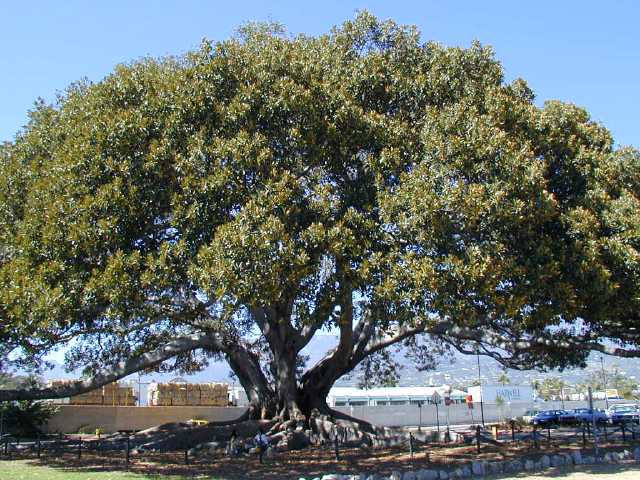
First question: Why did the man plant a fig tree in his vineyard? A vineyard is a place for growing grapes, not figs. A tree takes up lots of room. I googled “How to Grow a Fig Tree”, and a gardening site said a fig tree needs 10 feet on all sides cleared. That’s a lot of grape vines. The man must have really wanted some figs.

Second question: Were the man’s expectations realistic? He’d been waiting three years to eat a fig. I googled “Fig Production”, and a fruit tree site said typically a fig tree produces fruit in two years, so it seems reasonable to be looking for something to sink his teeth into by this time.

Third question: Why wasn’t the tree producing any fruit? A vineyard is a carefully cultivated and fertile spot, enriched with all the nutrients it needs to bear a crop. Here’s where it gets good. I googled “How to Make a Tree Bear Fruit” and a diy.com video held the secret. According to the expert, trees that don’t produce fruit  just require some stimulation to get in reproductive mode. “What the tree needs is to feel threatened,” said the expert, (I’m not kidding) “and the tree will think, ‘Uh oh, I’m going to die, so I’d better produce some fruit.'” At this point in the video, the expert picks up a baseball bat and instructs us to “whack it upside the trunk a few times, six or eight times.” After the whacking is demonstrated he assures us that “now the tree knows it is under attack and that’s ok because that will stimulate the production of flowers and fruit next year.”

The man with the baseball bat set me to thinking…

What is the lesson here? Chew on it awhile. What do you think?