Last week I was driving through town on my way to a lunch meeting, when I had a meeting of a different kind. It involved the crunching sound of metal hitting metal. The result was a significant dent in my back panel. Thankfully, no one was hurt and cars can be fixed.
The driver of the other vehicle apologized profusely and cooperated completely. I was in her blind spot and she didn’t see me as she veered into my lane.
We all have our blind spots, don’t we?
It’s those things we don’t see, usually about ourselves. I might throw out an opinionated point-of-view without considering how it sounds to those around me. Or I may jump to a conclusion based on my own biases. It’s possible for me to get so wrapped up in what I’m doing that I fail to appreciate what someone else is doing.
Blind spots.
Occasionally I am in someone else’s blind spot, like the other day. That’s when I need to extend some mercy and grace, some kindness and patience.
The Pharisees had some serious blind spots. Jesus had harsh words for them.
“Woe to you, blind guides! You strain out a gnat but swallow a camel.” “Woe to you, you hypocrites! You are like whitewashed tombs, beautiful on the outside but full of dead men’s bones.” “Woe to you, you bunch of snakes!” Matthew 23
The truth is, I’m not that much different.
“Accept my repentance, Lord, for the wrongs I have done: for my blindness to human need and suffering, and my indifference to injustice and cruelty, for all false judgments, uncharitable thoughts toward my neighbors, and for my prejudice and contempt toward those who differ from me.” Book of Common Prayer, 1549
My car will soon be fixed. I will keep working on my blind spots.
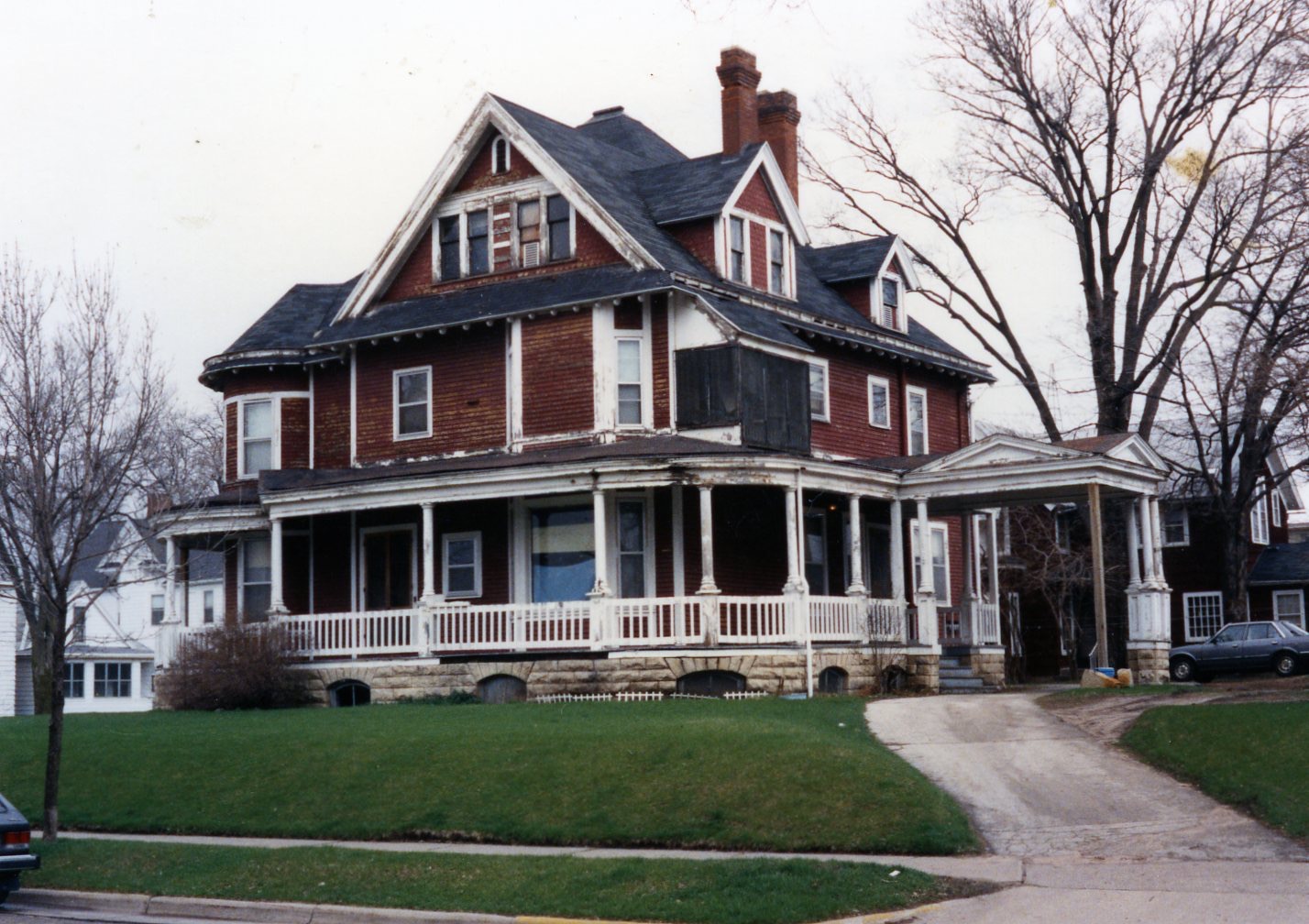
PB and I lived in this house when we were newlyweds.
To be more precise, we lived in a tiny one-bedroom apartment in the second story of this house. Every evening, I walked in through the massive wooden doors and climbed the sweeping staircase, just like the well-to-do lumberman’s daughter did when it was built in 1893.
One hundred years later, the house began to show signs of wear. It was put on the market for $1 with the contingency that it be moved, because the YMCA wanted the space for a parking lot.
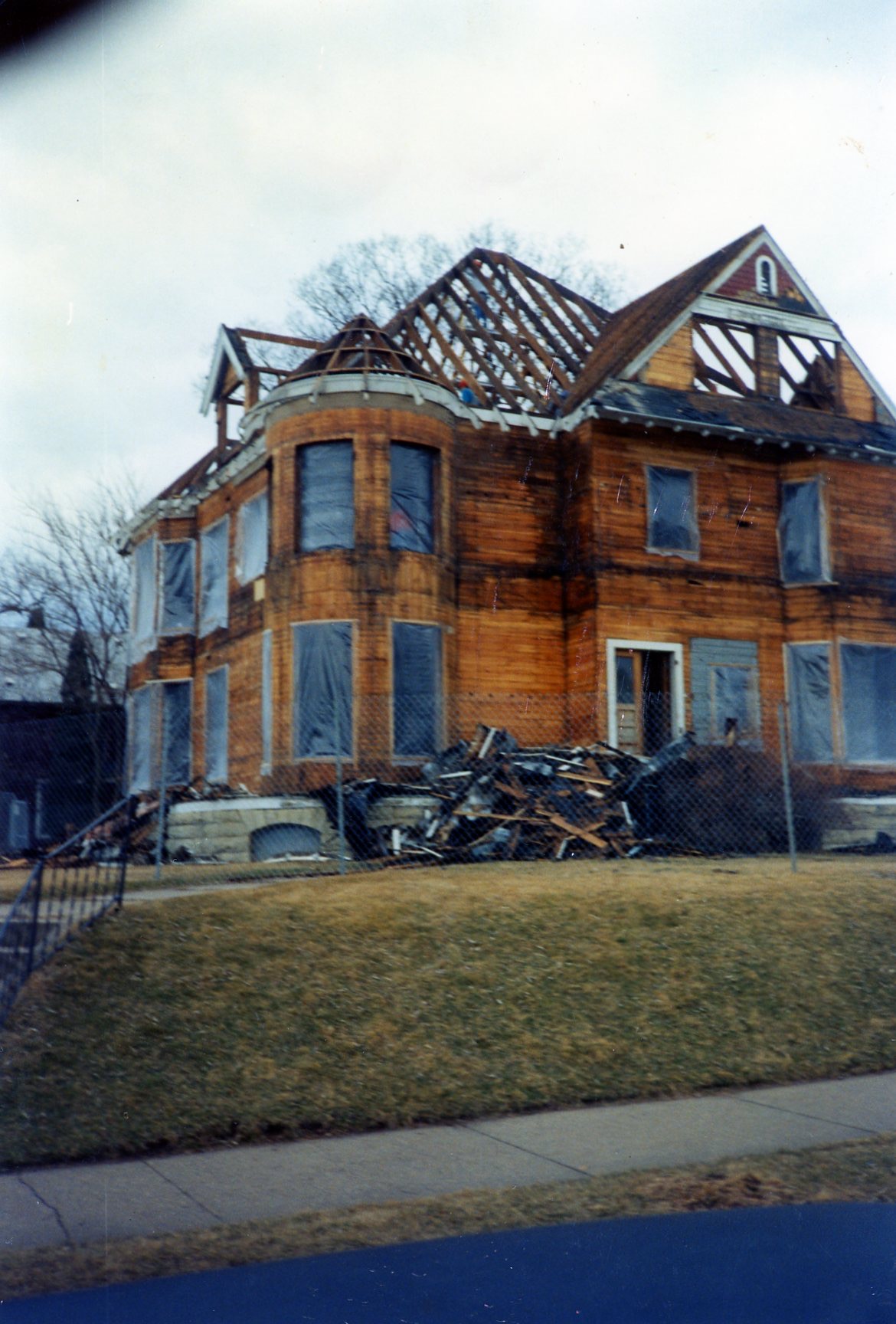
A lovely, ambitious couple scooped it up and began a long journey of de-construction and re-construction. They took the house apart, piece by piece, labeling each board and foundation stone.
It was a massive undertaking.
In order to restore the home’s original glory, they had to go through the painful process of de-construction. It was hard work. It took a long time. It wasn’t glorious.
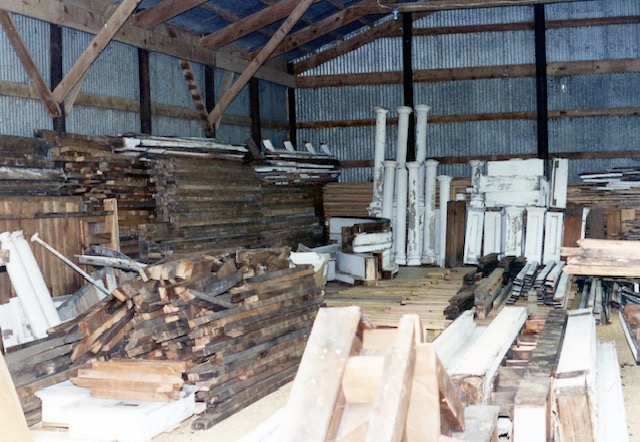
They were left with a shed full of bits and pieces—not a pretty sight.
This is what de-construction looks like.
Eventually, the house was restored and life returned. Once more, people walked through the majestic doors and ascended the stunning staircase.
While de-construction was necessary, it was never meant to be the final word. The pieces were never meant to be left in a pile in a barn forever. Each piece was numbered. Re-construction was always the end goal.
This is what re-construction looks like.
There is a time to tear down and a time to build. Ecclesiastes 3:3
Brain rot is the Oxford Word of the Year for 2024. What does that say about us?
brain rot (n.) Supposed deterioration of a person’s mental or intellectual state, especially viewed as a result of overconsumption of material (now particularly online content) considered to be trivial or unchallenging.
Brain rot beat out five other words that were under consideration for the honor: demure dynamic pricing lore romantasy slop
The Newport Institute released a report outlining the dangers of this phenomenon. The academic paper concluded with a list of ways to prevent the alarming social trend that is causing our brains to disintegrate.
1. Don’t sit in front of screens all day. 2. Consider unplugging completely. 3. Go outside and take a walk. 4. Get a hobby. 5. Talk to real people face to face.
Does the fact that I had to use the internet to find out this information mean I’ve just succumbed to the prevalent rotting of our collective brains?
Wow. I think we’re in trouble.
At least “slop” didn’t win.
slop (n.) Art, writing, or other content generated using artificial intelligence, shared and distributed online in an indiscriminate or intrusive way, and characterized as being of low quality, inauthentic, or inaccurate.
Whoo boy.
The Psalmist spoke for God in Psalm 81:11-12. “My people would not listen to me, so I gave them over to their stubborn hearts to follow their own devices.”
Surely this isn’t referring to our devices. Or is it?
“Do not conform any longer to the pattern of this world, but be transformed by the renewing of your mind.” Romans 12:2
Usually I choose a word for the year. Or, rather, I wait for a word to choose me. In a surprising twist, it’s a picture that has grabbed me. My word of the year is a picture. This is my picture of the year.
“He will cover you with his feathers, and under his wings you will find refuge.” Psalm 91:4
This Bible verse always makes me want to sneeze. The idea of being covered with feathers is not appealing to me. But this is different. I’m drawn to this visual representation of safety and security. I see protection and care and warmth there. I don’t feel sneeze-y when I look at it.
I don’t know what 2025 will bring, but I know where I need to be. Right there, huddled close to my Father’s heart.
I long to dwell in your tent forever and take refuge in the shelter of your wings. Psalm 61:4
“I do not want to just read books; I want to climb inside them and live there.” ~Unknown
I’ve climbed inside some great books this year–47 to be exact. Picking my top ten won’t be easy, but here goes.
10. The Dean’s Watch, Elizabeth Goudge I read one Goudge book every year for the sheer enjoyment of it. The English countryside in her captivating stories is a perfect escape for me in February. There’s always transformation, redemption, and beauty, but never in a formulaic way. This is a good one to climb into.
9. Water From a Deep Well, Gerald L. Sittser I’m a church-girl, but I didn’t know much about the sweep of church history. It may sound boring, but Sittser made it come alive starting with the early Christian martyrs and moving through the desert saints, the monastic movement, the mystics, the medieval laity, the reformers, and evangelicalism. We stand on the shoulders of centuries of faithful believers.
8. David’s Crown, Malcolm Guite Guite wrote a sonnet for every one of the 150 psalms with a creative twist. The last line of each psalm is the first line of the following psalm and this pattern is woven throughout the book. Then the last line of Psalm 150 is the first line of Psalm 1. So cool. He’s a true wordsmith.
7. The Bartender’s Tale, Ivan Doig This is a rollicking-good story set in Montana in 1960. Doig’s characters are so well developed and the settings so masterfully described that reading his books only feeds my fantasy of living in Montana. Talking about this novel with my neighborhood bookclub made it even better. Plus, snacks were served.
6. The Re-Set, Jeremy Riddle I listened to the audio version of this book. Riddle read his own words with such passion and conviction, I was brought to tears more than once. He had some hard things to say about the state of worship in the modern church, but always with a heart of love. I’ve given this book to every worship leader I know.
5. The Storied Life, Jared C. Wilson Jared Wilson is “Author-in -Residence” at Midwestern Seminary which means his job is to write stuff. After publishing 26 books, he wrote a book on how to write books. I don’t know if I have a book in me, but I’ll definitely use his wise words to propel me into 2025 with fresh inspiration.
3. Kristin Lavransdatter, Sigrid Unset I wanted to read a book set in another country, so I picked a 1,124 page novel about a Norwegian woman in the 1300’s. I’ve never read medieval literature, or Scandinavian history or a book that’s more than 2″ thick. I new experience for me—and I liked it.
2. A Christmas Carol, Charles Dickens PB and I immersed ourselves in Dickens this Christmas. We watched the 2009 animated film with Jim Carrey as Scrooge. We read “A Christmas Carol” together. We took the free course from Hillsdale College, which consisted of six delightful lectures by a literature professor. Then we watched “The Man Who Invented Christmas”—the story of the journey that led Dickens to write his Christmas masterpiece. God bless us everyone.
1. Trusting God in the Darkness, Christopher Ash This was the book that impacted me the most this year, which I read while studying the book of Job. Themes of suffering, loneliness and despair were gently dealt with in Ash’s book. Every single page has sentences underlined or notes written in the margin. It’s too good to say any more about it. When you’re ready to wade into deep waters, get a copy and read it slow.
This week between Christmas and the new year is my favorite week of the year. I like to look back over the notes I’ve made, read some old journal entries, and peruse the list of books I read. It’s a satisfying and somewhat solemn review of things I’ve learned and tried to process. It’s also a time to anticipate new growth in the coming year.
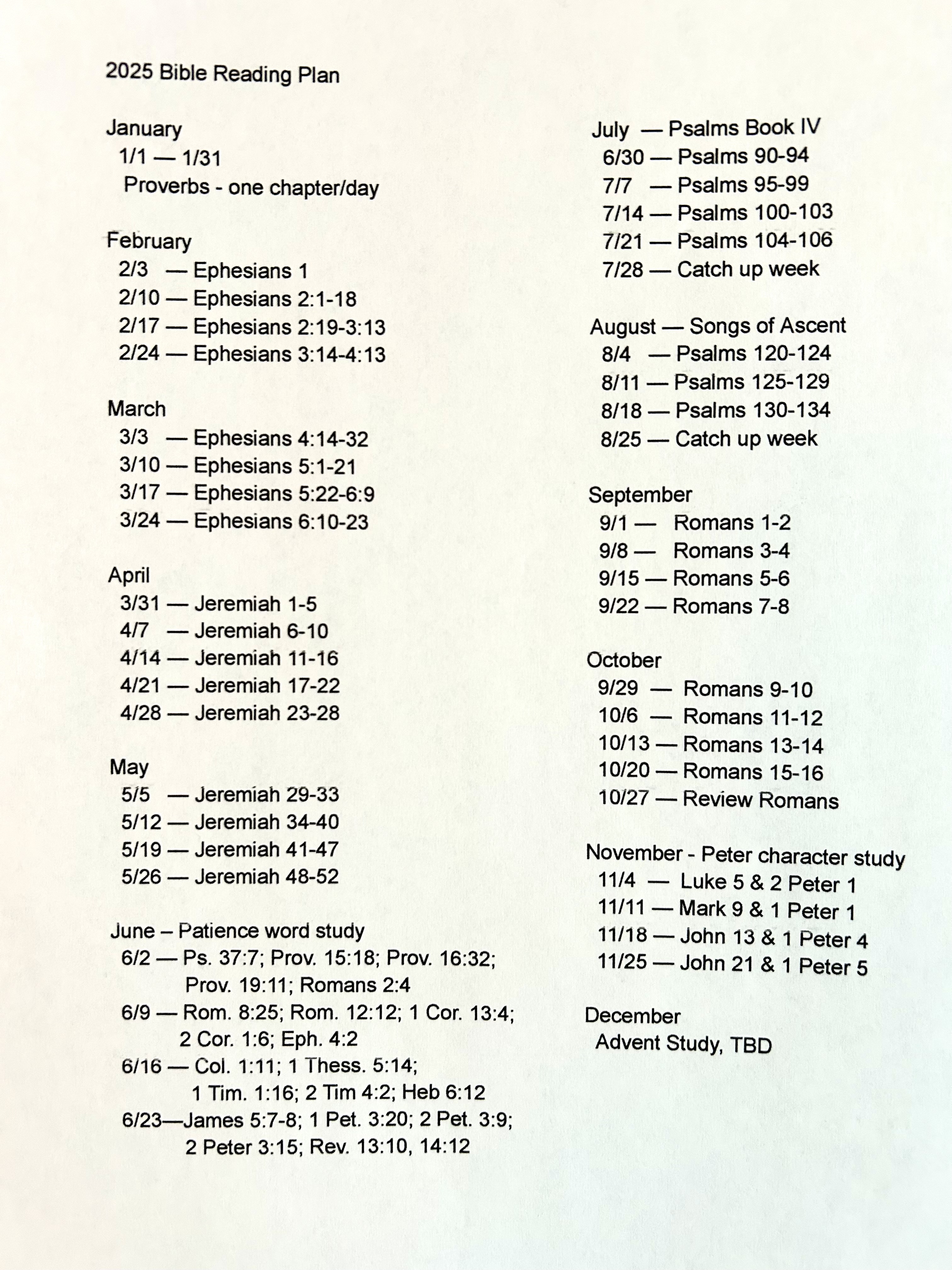
The schoolgirl in me loves a syllabus, a list of assignments, a program to carry out. Without a plan, I tend to wander and waver, making excuses and sliding through the weeks. So here is my 2025 plan. You are welcome to follow along!
I’m going to start 2025 with a read-through of Proverbs. Who doesn’t need wisdom when facing a new year? I will read one chapter a day for 31 days and pick one verse out of each day’s chapter to copy in my notebook, followed by a reflective sentence or two.
In February and March I will take a slow stroll through Ephesians, taking about 20 verses each week. I plan to read Eugene Peterson’s “Practice Resurrection” and “A Week in the Life of Ephesus” by David A. DeSilva during these two months.
Old Testament prophet Jeremiah will be my focus in April and May, reading 5-7 chapters per week. I have “Run with the Horses” on my book pile, which is another Eugene Peterson book, this one on Jeremiah.
In June, I will do a word study on Patience, the fourth fruit of the spirit as listed in Galatians 5. One verse for each day, Monday through Friday.
July and August will take me to Psalms. First, Book IV, which consists of Psalm 90-106. (Did you know the book of Psalms is divided into 5 books?) After that, I’ll soak in the special group of psalms called “The Songs of Ascent” (Psalms 120-134).
I’ll kick off the fall with Paul’s letter to the Romans, taking two chapters in each week (M-F) of September and October.
In November, I’m going to do a character study on Peter by reading four different accounts in the gospels along with his own words from his letters, 1 and 2 Peter.
The year will close with an Advent devotional of some kind.
Too much? Maybe. Will I stick to it and complete it? Maybe. Will this give me the nudge I need to keep plugging away and give me a framework to pick back up if I fall off the plan? Absolutely.






 a small drop of ink