Recently I read that people have, on average, about 4000 weeks to live. I’m hoping for a few more than that, as 4000 weeks only gets me to about 77 years. I’m aiming for 4,680 weeks. You can do the math.
The idea intrigued me. What would 4000 weeks look like? I had to know, so I made a chart with each dot representing one week. Here’s what my life looks like in dots—each color marks a decade.
See those dark pink dots? Those are my 20s. Five hundred and twenty blue dots cover my 30s. My 40s are shown by yellow dots and purple dots represent my 50s. I’m well into my orange-dot-decade.
See that little heart around that green dot? That’s when PB and I got married. We’ve shared a lot of dots since then, and I’m so grateful.
Every Sunday I draw another tiny circle in another tiny square, step back, and take a long look at my life. I say, “Thank You Lord, for Your faithfulness to me over weeks, years, and decades.”
Then I look at the empty spaces yet to be filled in and say, “Lord, help me to be faithful to You until my dots run out.”
It occurred to me this morning that truly, truly, my dots will go on forever and ever.
“I am the resurrection and the life. He who believes in me will live, even though he dies; and whoever lives and believes in me wil never die.” John 11:25
When I was an elementary school student, I thought time began in 1492. I surmised that the written record of history began with the ditty, “Columbus sailed the ocean blue in 1492.”
That’s because every fall, when we cracked open our American Heritage history books, chapter one was all about the discovery of America. I didn’t know what happened before 1492 until I went to high school, and then I still didn’t have a grasp on the sweep of history. It wasn’t until I began teaching my own children that ancient history began to make sense.
Early in our homeschooling days, I made a timeline that wrapped around our dining room and stretched up and down the hallway. Contributions to our homemade timeline were added every year: Katie’s favorite books and authors, Sam’s sports facts, Anna’s musicians and Jacob’s inventors. Ancient Egypt, ancient Greece, and ancient Rome took their place as we began to see the span of time come to life before our eyes. I sure learned a lot in our little schoolhouse. That’s why I still get a thrill out of stumbling upon a story plucked out of the annals of time—especially when that historical narrative has eternal overtones. Like this one:
In 1591, Spanish conquistador Hernan Cortez landed on the shores of Mexico with 600 men. Legend has it that after landing, Cortez ordered the ships to be burned. As the men saw their way of escape go up in smoke, they understood it was all or nothing. Conquer or die trying.
Maybe that happened. Maybe it didn’t. But it’s a story worth pondering.
I tend to make back-up plans. If I never tell anyone my big dreams, then it doesn’t matter if they never come to fruition. I like to keep an itty-bitty loophole open if things don’t work out the way I hoped. I keep the boat in the harbor in case I want to sail away at the last minute. The problem with back-up plans and loopholes is that they keep me from going all in.
Pastor Mark Batterson wrote, “If Jesus is not Lord of all then Jesus is not Lord at all. It’s all or nothing. It’s now or never. For many years, I thought I was following Jesus. I wasn’t. I had invited Jesus to follow me. I call it inverted Christianity. And it’s a subtle form of selfishness that masquerades as spirituality. That’s when I sold out and bought in. When did we start believing that the gospel is an insurance plan? It’s a daring plan. Jesus did not die just to keep us safe. He died to make us dangerous.”
I have decided to follow Jesus. I have decided to follow Jesus. I have decided to follow Jesus. No turning back. No turning back.
Be dangerous. Burn your boats.
“Any of you who does not give up everything he has cannot be my disciple.” Luke 14:33 “Whatever you do, do it with all your heart.” Colossians 3:23
To be clear, I’m not referring to job (JAWB) insecurity. My position as keeper of the checkbook, CEO of all laundry-related business, and boss of menus and grocery shopping is fairly secure.
No, I’m talking about Job (JOBE) insecurity.
According to my 2024 Bible Reading Plan, I am spending February and March in the book of Job. I thought this weighty and rather somber book would be appropriate during the serious season of Lent. As we approach Passion week and the suffering of Christ, it seems like the right time to sit with Job.
Over the past few years, I’ve managed to read through most of the Bible. Except Job. I left him for last. His book makes me feel a little insecure. Why? Because there are a whole lot of tough questions and not very many answers. It’s not for the faint of heart.
There are 270 questions in the book of Job, to be exact. Job asks 122 questions. Job’s friends ask 83 questions. God asks 65 questions.
It’s a hard book to read. It’s a hard book to understand. It’s a hard book to love.
If you are reading along with me and feel the same way, let’s get some help.
The first place I go when starting to read a book of the Bible is straight to The Bible Project guys. They produce short, engaging summaries of each book that are very helpful. For those of us scratching our heads and saying, “What the heck is going on with Job?” check out this 11 minute video.
If you geek out on books about the Bible, like I do, I highly recommend Trusting God in the Darkness: A Guide to Understanding the Book of Job by Christopher Ash. In the Preface, he writes, “If you have never done so (read Job), my prayer is that this short study will help you find a way in. If you have ventured in but got bogged down and confused, I hope this introduction will signpost the main roads.” Ash delivers in this easy-to-read, thoughtful book.
More from Christopher Ash:
Job is a fireball book. It is a staggeringly honest book. It is a book that knows what people actually say and think—and not just what they say publicly in church. It knows what people say behind closed doors and in whispers, and it knows what we say in our tears. It is not merely an academic book. If we listen to it with any care, it will touch, trouble, and unsettle us at a deep level.
I’m not ashamed to say I need help with a fireball book like Job. I’m willing be touched, troubled and unsettled, as long as I’m holding someone’s hand. So I offer you mine as we read, come to understand a little more, and maybe even grow to love this unique part of God’s Word.
Here’s one take-away for me in the first 14 chapters: Job’s friends were better companions when they sat with Job in silence. Things went south when they started talking. Trite answers and shaded accusations were not helpful to Job.
Sometimes people need presence more than words.
If you are reading Job along with me, what are your take-aways?
Ash Wednesday and Valentine’s Day collided yesterday. The juxtaposition of these two holidays was like having a funeral and a wedding on the same day. Can a person grieve and rejoice at the same time? I hope so, because happiness and sadness often walk hand in hand.
My grandparents were married in December of 1919. Five days before their wedding, my grandpa’s mother took her own life. She left a husband and five children, including a 14 year old daughter and an eight year old son. And my grandpa. There was a funeral on Tuesday and a wedding on Thursday.
Ash Wednesday is a day to remember we are but dust. Valentine’s Day is a day to recognize the wonder of being loved. We can hold both of these truths together at the same time. We are loved dust.
The ashes remind us to hug a little tighter kiss a little longer be a little sweeter try a little harder. “Teach us to use wisely all the time we have.” Ps. 90:12
The hearts remind us that love is a gift often given in the midst of sacrifice. “But God demonstrates his own love for us in this: While we were still sinners, Christ died for us.” Romans 5:8
I hope you had a Happy Dusty Valentine’s Day. May we all find love in the ashes.
PB and I have four kids, two daughters-in-law, two sons-in-law and eleven grands. That makes twenty-one of us when we all get together. Now it seems we have our first, and only, lefty in the bunch. That means 4.7% of our clan is left-handed, well below the population average of 10%.
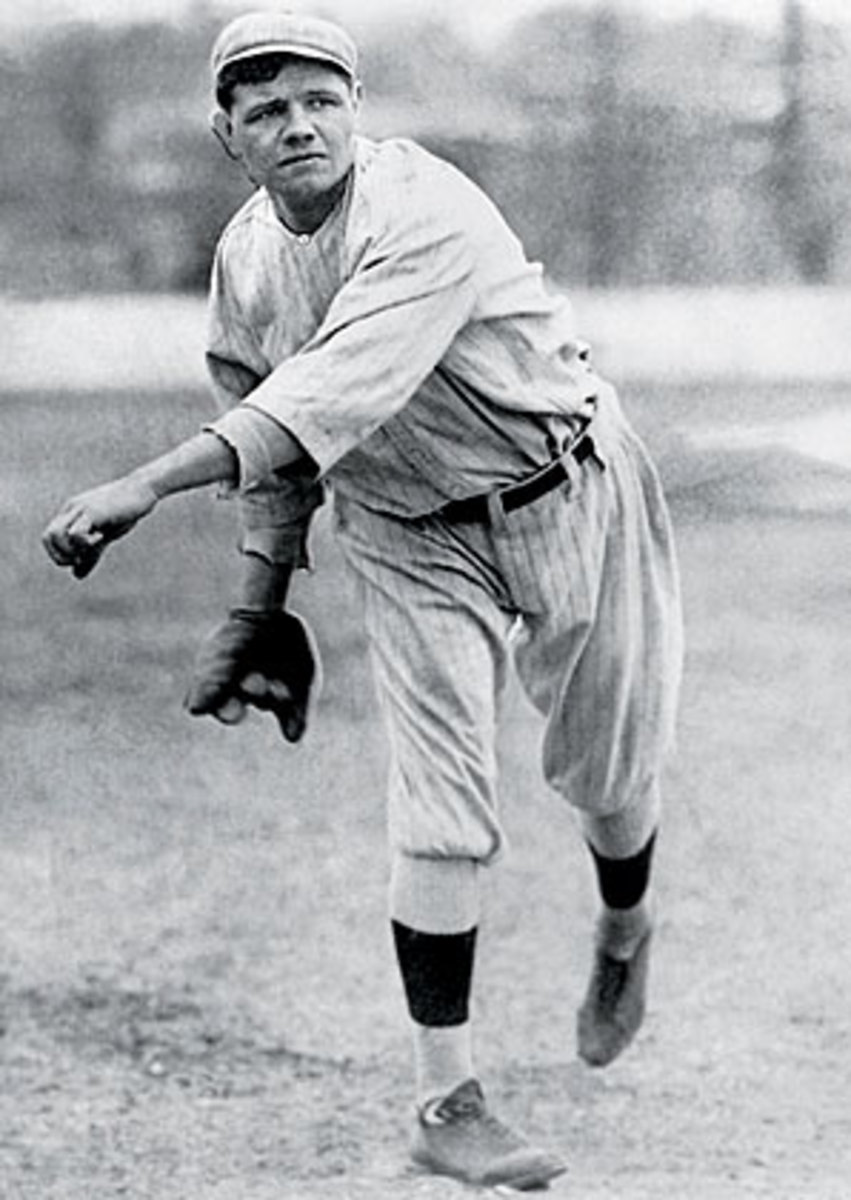
Lots of famous people favored their left, including Leonardo da Vinci, Napoleon Bonaparte and Babe Ruth. Five of the last eight presidents were lefties. Of all professional sports, baseball has one of the highest left-to-right ratios at 30% and southpaw pitchers dominate on the mound. Both of our sons bemoaned the fact that they were right-handed pitchers. They thought we shirked our parental duty by not tying their right hands behind their backs as toddlers.
Even in Bible times, having lefties in your army was highly advantageous. Seven hundred men were chosen among the Benjamite tribe who were left-handed, “each of whom could sling a stone at a hair and not miss.” (Judges 20:16) Sign ’em up.
It appears that God has a dominant right hand. At least, that’s how the Old Testament poets and prophets view Him. Over 60 times in the Psalms, the Lord’s right hand is extolled. God saves, sustains, upholds, seizes foes, achieves awesome deeds, and holds victorious power—all with His strong right hand. When Jesus ascended, He sat down at the right hand of the Father. (Ephesians 1:20) In heaven, we will experience eternal pleasures at the Lord’s right hand. (Psalm 16:11)
What’s up with all this right vs. left hand business?
According to early Jewish thought, the right hand was considered to be more prestigious. This general rule that the right should take precedence over the left was carried into every aspect of Jewish life. They went a little overboard with the whole idea. Rules were put into place that commanded people to wash their right hand before their left hand. They had to put their clothes on in prescribed ways (right sandal first, then left; right arm in the tunic first, then left). The rabbis even advised that when in doubt on which way to turn on a road, take a right.
This preference for the right hand was perpetuated by the teaching that the right represented the attribute of kindness, while the left represented severity. If a person was faced with a situation in which a decision had to be made between kindness or severity, kindness was always the right choice.
God has a strong and mighty right hand. And left hand. He’ll kindly take either one of ours when we reach out to Him.
“For I am the Lord, your God, who takes hold of your right hand and says to you, Do not fear; I will help you.” Isaiah 41:13
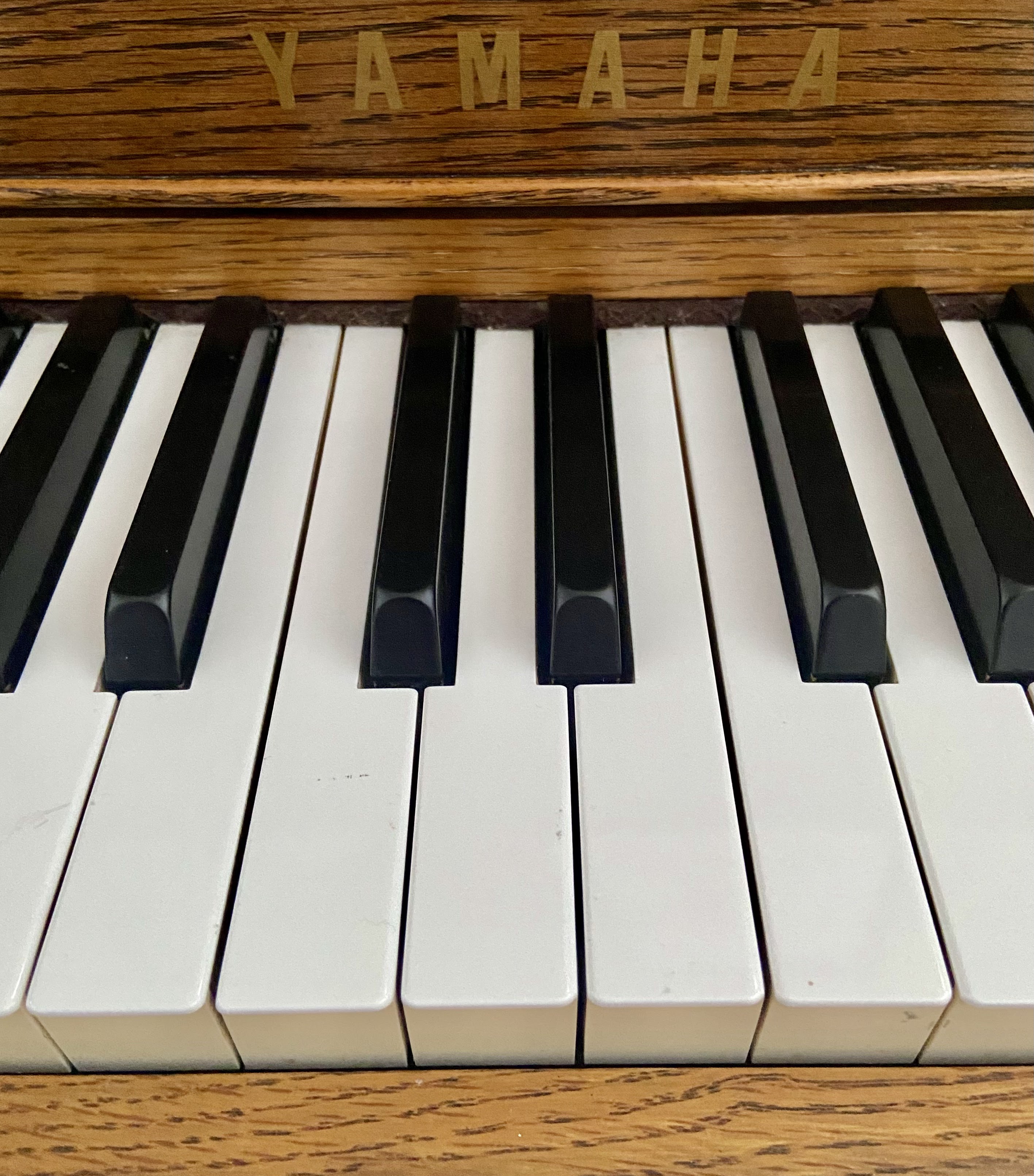
In what seems like many lifetimes ago, I was a college student working toward a degree in vocal music. I learned how to round my vowels and breathe from my diaphragm. I learned the solfeg system and how to recognize half-diminished seventh chords. I modulated and transposed and notated. I practiced the harmonic minor scale, the pentatonic scale and the whole-tone scale. In my senior recital I sang Bach in English, Faure in French, and Puccini in Italian.
The music degree required two years of piano instruction. I had taken years of piano lessons as a youngster, even though I begged my parents to let me quit. I even went so far as to safety-pin notes to my mom and dad’s bedsheets so when they turned down the covers one night, they were faced with a barrage of petitions, such as “Please let me quit piano,” and “I hate piano lessons,” and “Just because my sister took piano lessons doesn’t mean I should have to.”
They did not give in. And I’m so glad.
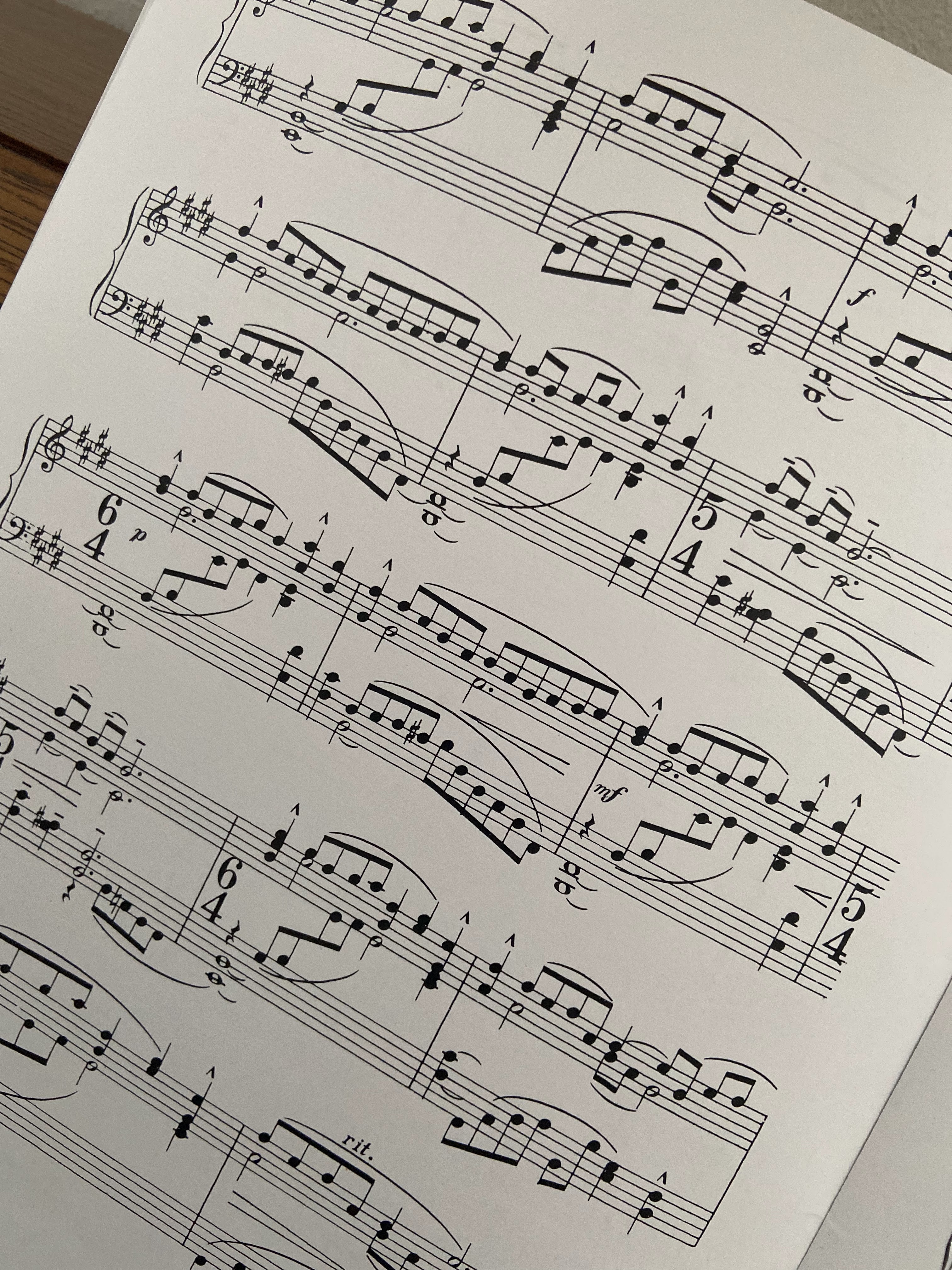
I had a fantastic piano teacher in college named Mrs. Grill. I never once was tempted to pin notes to her bedsheets. I didn’t want to quit taking lessons from her, even after graduation. She pushed me beyond what I thought were my limits—I was convinced I couldn’t play music with sharps. Flats were no problem, but sharps? No way. Until Mrs. Grill assigned me Canciones Y Danzas by Federico Mompou.
Not just one sharp, not two, not three, but four sharps. And I learned to play the piece! And memorize it! And perform it in a recital! Dear Mrs. Grill. I couldn’t have done it without her.
One of my goals for 2024 is to play Mompou’s “Song and Dance No. 5” once again. Right now, I’m stumbling and bumbling my way through it. Right hand alone, then left hand alone, then slowly together. I may never play it with the same confidence I had over 40 years ago. But then, I don’t have Mrs. Grill encouraging me every week.
I’m learning the joy of doing something just for the love of it—not to pass a class or fulfill requirements or even perform for an audience. Sometimes I still need to be pushed beyond what I think is possible. On the other side of practicing scales and finger exercises, there is delight.
The Psalmist said, “But his delight is in the law of the Lord and on His law he meditates day and night.” (Psalm 1:2) The disciplines of regular prayer and scripture reading can seem to drag on, but then suddenly, there are days when it is pure delight.
Don’t stop. Keep walking (and practicing) every day.
My spell-check is trying to change Bema to Beam, but I have overcome. I have no thoughts to share on beams, but I do have something to say about the Bema.
What’s a “Bema”? Glad you asked. Here comes a history lesson.
The places of worship back in Jesus’ day looked nothing like our modern churches. In 1st century Israel, every village had a synagogue. And every synagogue had a Bema.
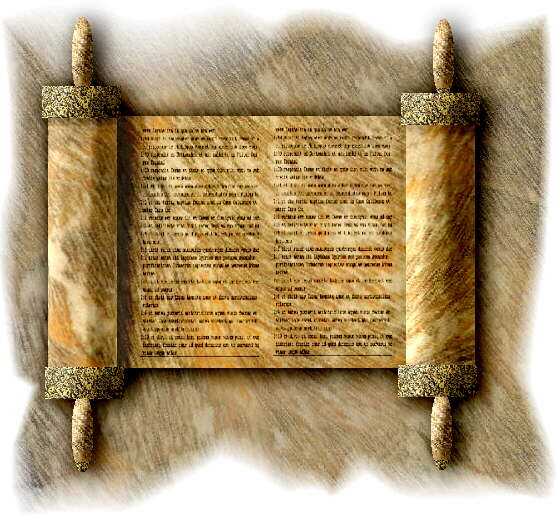
Synagogues were large, fairly plain spaces, where Jewish people gathered to worship Yahweh. Around the edges of the room were benches, like mini-bleachers, made of stone. Important people sat on the benches, while the common people sat on the floor, which was usually made of dirt or flagstone. In the center of the room was a small, slightly raised platform called the Bema. In the middle of the platform was a pedestal on which one of the Torah scrolls was placed. (Torah = the first five books of the Old Testament.) Someone would step up onto the Bema and read the Word of the LORD to the congregation.
On the Sabbath, the community came and gathered around the scriptures. The Word of God took center-stage. Because people were sitting in a circle around the Bema, they were able to look each other in the eyes. Each one could contribute to the discussion that followed the reading, although if a rabbi or special guest was in attendance, he was invited to speak.
As the disciples took the gospel to the Gentiles, many of the early Christians were Greek. Over time, the Greek influence was seen in Christian churches that were designed to accommodate larger groups, with a stage in front and rows of seats for an audience. As more time passed, the Bema was replaced by a pulpit. Worship consisted of sitting passively, looking at the back of others’ heads while professionals led from the stage. While scripture was still an important part of the worship service, most of the time was spent listening to one person expound. In Colonial America, a minister’s sermon could last several hours.
This may sound radical, but what if we went back to looking more like a synagogue than a theater? What if everyone came to worship ready to contribute? What if we beamed (!) a spotlight on the Bema?
It’s a crazy idea.
Your Word is a lamp to my feet and a light to my path. Psalm 119:105
I used to make my kids write thank you notes. I was a firm believer that birthday money from Grandma or a Christmas present from Auntie deserved acknowledgement and gratitude. The notes were written in very large letters and usually ran along these lines:
Dear Grandma, Thank you for the birthday money. Thanks again! Love, Your favorite grandchild
The kids didn’t put a lot of thought or creativity into their sentiments. I didn’t care. I just wanted them to develop the habit of saying “thank you.” It was important to put the simple, terse words down on paper in actual handwriting. Emails, texts, and phone calls would not suffice. That would be too easy. Instead, the scritch-scratch of pencil on cardstock, the crooked address on the envelope and the licked stamp says, “I took the time to do this because I am serious about being grateful.”
Call me old-fashioned.
This year, I’m proposing a new, old-fashioned tradition. Write a thank you note to God.
Put the pen to paper and jot down a few sincere words of appreciation. Instead of extemporaneous spoken prayers or recited doxologies, give it some thought and maybe a little creativity. A yearly record of gratitude at Thanksgiving could stand as a witness to generations yet unborn.
If you need some inspiration, open to Psalm 106, 107, 118, 0r 136. They all begin with the same line: “Give thanks to the Lord for He is good.” That’s an excellent place to start.
Thanksgiving is two weeks away! It’s time to buy a turkey, dig out my gravy-splattered recipe cards, and one other thing….oh yeah! Give thanks.
Being thankful and saying “thank you” are two different things. I am struck by how genuinely grateful people seem to be this time of year, yet not many know whom to thank. It’s like appreciating the feast laid out on the table without saying “thank you” to the cook. Knowing Whom to thank makes all the difference.
In November, my Bible automatically opens to Luke 17 where the healing of ten men leaves Jesus asking questions. I make note of all questions when they appear in the Bible, but when the Son of God puts forth a query, I sit up and pay attention.
“Were not all ten cleansed? Where are the other nine?” Luke 17:17
The account begins with Jesus going into a village and being met by ten men who had leprosy. They stood at a distance and called out in a loud voice, “Jesus, Master, have pity on us!”
This poor, pathetic group of outcasts must have recognized Jesus from afar. They seemed to know He had healing power, although all they asked for was pity. No one in the group of ten dared to draw near to the Master, but kept their distance and yelled out at Him. Jesus yelled back and they were cleansed as they walked away.
Nine men kept walking. One man turned around. Nine men were cleansed. One man was healed. Nine men were grateful. One man said, “Thank You.”
Hear the difference:
Ten men stood at a distance and called out in a loud voice. They went and were cleansed.
One man fell at Jesus’ feet and praised God in a loud voice. He came back and was healed.
All ten had faith—only one had gratitude.
Dear Jesus, may my call for help from a distance draw me to Your feet with praise.
Oh Lord God, may the intensity of my thanks match the fervency of my requests.
PB and I have gone into homes where no one offered to take our coats (so we tossed them in a corner), we weren’t welcomed to come in and sit down (so we stood around awkwardly), and nothing was offered to eat or drink (although cookies sat on a plate all evening). Sometimes people just don’t know how to be hospitable.
We’ve also been places where we were greeted politely (although it seemed a bit formal), we were escorted to an immaculate parlor (where we sat awkwardly), and gourmet food was served (with all the properly placed silverware and goblets). Sometimes people only know how to entertain.
For over three decades, PB ended worship services with a paraphrase of Ephesians 3:17-19. It starts like this: “We pray that Christ will be more and more at home in our hearts, living within us as we trust in Him…”
Is Christ “at home” in my heart?
Do I address Him formally? (Dear Gawwwwd.) Is there awkwardness between us because there are things too touchy to talk about? (I’d rather not discuss that please.) Am I following the rules of etiquette and decorum? (And making sure everybody else is, too.)
Am I trying to entertain God?
Or am I waiting at the door, anxious to invite Him in with warmth and joy? (Lord! I’m so glad You’re here!) Do I offer Him myself, foibles and faults included? (I’m not much, but I’m all Yours.) Does He feel comfortable enough to put His feet up on my coffee table? (Make Yourself at home here.)
Is my heart hospitable?
I can invite Jesus to stop by, perhaps on special occasions. I can clean up the place, get dressed up, and put out the best china. But He’s not impressed by my outward show of righteousness.
Or I can sign over the deed to the place and give Him ownership. I can let Him clean out the closets, clothe me in His righteousness, and fellowship at the table daily.
“Look! I stand at the door and knock. If you hear my voice and open the door, I will come in, and we will share a meal together as friends.” Revelation 3:20
What can I give Him, poor as I am? If I were a shepherd, I’d bring Him a lamb. If I were a wise man, I’d do my part. Yet what can I give Him? Give Him my heart. ~ Christina Rossetti


























 a small drop of ink