Perfect Peace

Shalom, my friends!

“Shalom” is a Jewish greeting that can mean both hello and goodbye. The word is translated as “peace to you.”

Isaiah 26:3 says, “You will keep him in perfect peace whose mind is stayed on You, because he trusts in You.” I love that verse.

Isaiah wasn’t just talking about any old peace – he was talking about perfect peace. In the original language of Hebrew, the word perfect is “shalom” and the word peace is “shalom.” It’s like Isaiah is saying, “God will keep you in shalom shalom—perfect peace.” Or put another way: “Double peace to you.” In Jesus’ day, the Jews greeted each other with the words “Shalom Shalom.”

In our day, there is a great need for perfect peace. Especially now, as we enter a season in our country that seems to focus on division and anger and all manner of nastiness. These next three months might be challenging, but I’d like to suggest that we double down on peace by speaking peaceful words over each other. Maybe even triple it up.

So, Shalom Shalom, my friends.
May God’s perfect peace be upon you.
Pass that peace to someone today.

Keep the Peace

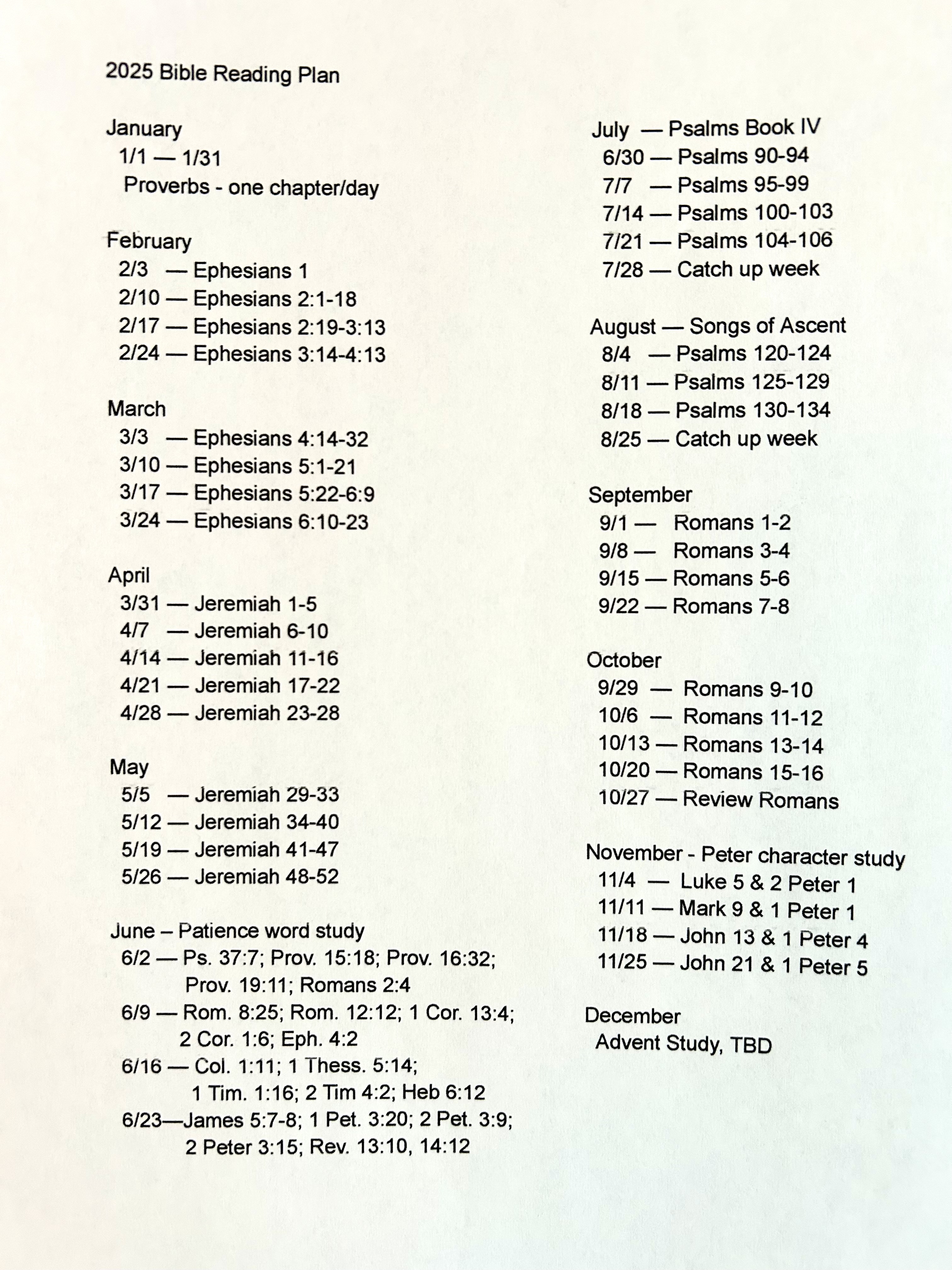
I’ve been reading Bible verses on peace throughout the month of July. (See 2024 Bible Reading Plan) It’s been good for my soul. Those familiar verses reminded me of things I knew but needed to hear again.

Philippians 4:6-7 was the most familiar one on my list as it was one of the first scriptures I memorized back in my high school days. I still have to recite it in the King James version.

“Be anxious for nothing; but in every thing by prayer and supplication with thanksgiving let your requests be made known unto God. And the peace of God, which passeth all understanding, shall keep your hearts and minds through Christ Jesus.”

Such a classic verse.
I heartily recommend putting it to memory,
in the version of your choice.

I thought I knew that verse backward and forward, but as always, there’s more.

It was the word “passeth” that got me. Other versions say “transcends.” It means “to surpass, to rise above, to excel, to be superior in rank.”

Here’s what I wrote in my notebook that morning:

Superior in rank. Hmmm. In the military there are levels of authority, like Sergeant, Lieutenant, Captain, Major, Colonel, General. Some soldiers surpass or rise above the others and move up in rank. Each step up calls for added respect. The Sergeant can’t walk into the General’s office and tell him what to do. The Sergeant must comply with the General’s commands.

My anxiety is the Sergeant. God’s peace is the General. God’s peace outranks my anxiety—my anxiety has no authority to overrule the peace of God. I just need to keep the order of command. I need to tell my worries and fears that they are not in charge and it is not within their jurisdiction to dictate my thoughts. In fact, those pesky worries need to stand at attention, give a crisp salute and say, “Sir, yes, sir” to the commanding officer, a.k.a. King of the Universe, a.k.a. Prince of Peace.

“Don’t fret or worry. Instead of worrying, pray. Let petitions and praises shape your worries into prayers, letting God know your concerns. Before you know it, a sense of God’s wholeness, everything coming together for good, will come and settle you down. It’s wonderful what happens when Christ displaces worry at the center of your life.” ~ The Message

Bookkeeping

This is the only word in the English language (besides “bookkeeper”) that has three double letters— b-O-O-K-K-E-E-p-i-n-g. I guess you could call it a triple-double.

I learned this fun fact years ago in Economics 101. We had a visiting professor from Boston who wrote the word in large letters on the chalkboard one morning. It’s the only thing I remember from that class. I dropped Econ soon after, figuring that at least I learned something. More than forty years later, I still can’t explain supply and demand, but I know the only word with three double letters.

I admit I am a bookkeeper at heart. I have a detailed budget book, I keep every receipt in envelopes by the month, and I balance our checkbook to the penny.

Attention to details is one of my strengths.

It’s helpful when PB needs to be reminded what time his appointment is, or when I keep track of whose turn it is to deal, or when I rattle off all eleven grandkids’ birth dates.

But there’s a flip side.

It’s not helpful when I remind PB of the “right” way to load the dishwasher, or when I keep track of who won the card game last week, or when I rattle off others’ mistakes.

God is big into details.
Just look at that swirly pattern on your fingertip.
Take a close look at the inside a lily-of-the-valley.
Try to call all the stars in the Milky Way galaxy by name.

But God doesn’t seem to be big on bookkeeping.
In fact, God took the sinless Christ and poured my sins into Him.
Then, in exchange, God’s goodness was poured into me. (2 Cor. 5:21)

That kind of transaction really messes up the books.

He remembers our sins no more (Heb. 8:12).
He blots them out for His own sake (Is. 43:25).
He removes them as far as the east is from the west (Ps. 103:12).

What kind of a bookkeeper does that?

God reconciled the world to himself through Christ,
by not counting people’s sins against them.
2 Corinthians 5:19

Glory hallelujah!

Peace Plan

According to my Bible Reading Plan for 2024, a word study on “peace” is coming up next. For those who are slogging through Leviticus with me, hang in there! We’re almost done! For those who lost some traction in the chapters on mildew and bodily discharges, start fresh with us on July 1st!

This is year #3 in my study on the Fruit of the Spirit,
as found in Galatians 5:22.
Six years to go.

“But the fruit of the Spirit is
love, joy, peace,
patience, kindness, goodness,
faithfulness, gentleness and self-control.”
(Kinda glad self-control is at the end.)

Here’s my peace plan:

  • A short passage or verse for every day (Monday-Friday) during the month of July.
  • Write out the verse with the word “peace” in it, using an actual pencil on actual paper.
  • Re-write the verse in my own words.
  • Pray for peace—peace within, peace around me, peace in the world.
  • Extra credit for fellow Bible study nerds: go to blueletterbible.org to look up original language definitions. (You should try it—it’s so much fun.)

Click here or on the link at the top of the page for the passages.

Daily Sugar

As a child, I had a sweet tooth. And the cavities to prove it. I clearly remember my mother buying me a sweet treat on the way home from the dentist for being a good girl. Not many of my experiences in the dentist chair were happy ones.

I still have a sweet tooth. And a bag of licorice in my desk drawer to prove it. And some cookies in the back of the freezer. And caramel ice-cream topping in the refrigerator. Who needs ice-cream when a spoonful of caramel will do? Although ice-cream is always a good option.

I know. My penchant for sugar is not good for me and I should quit cold-turkey. After that bag of licorice is gone.

Maybe that’s why I smiled when I came across this quote by my favorite old dead guy, Charles H. Spurgeon.

“Certain people must always have sweets and comforts;
but God’s wise children do not wish for these in undue measure.
Daily bread we ask for—not daily sugar.

The more I thought about Spurgeon’s words, the less I smiled. Am I one of those people who must always have sweets and comforts? Do I wish for these in undue measure? Have I prayed, “Give me this day my daily sugar?” And I’m not just talking about cookies and candy.

What other things do I turn to for comfort? Ordering another book from Amazon? Binge watching on Netflix? Too much “me” time? Wanting things my way?

Spurg did it again.
He drew me in with winsome words
and then cut me to the quick.

I wonder if Charles (and maybe Jesus) had a savory palate.
“You are the salt of the earth, not the sugar candy!”
C. H. Spurgeon

No Doubt About It

Here’s a Bible verse you don’t see on coffee cups:

“When they saw him,
they worshiped him;
but some doubted.”
Matthew 28:17

The disciples saw Jesus arrested, crucified, dead and buried. No doubt about it.

A few days later they saw him alive, eating fish, poofing through walls, talking and laughing. For days and days (40, to be exact) Jesus “gave many convincing proofs that he was alive.” (Acts 1:3)

Still, some doubted.

But that didn’t really matter.
Their reluctance to believe,
their hesitation to accept the inconceivable,
their skepticism in light of what they saw with their eyes—
didn’t change the truth.

Jesus didn’t see their uncertainties and say, “Well, I guess this isn’t going to work after all. You all should go back to your fishing boats and I’ll go back to heaven. See ya—it’s been fun.”

Oh no.

Instead, despite their lack of faith, Jesus said,
“All authority in heaven and on earth has been given to me.”
Your doubts can’t stop My plan for the world.

He said, “Go and make disciples.”
Your doubts can’t thwart My purpose for you.

He said, “I will be with you always.”
Your doubts can’t hinder My Presence.

Do you have doubts?
Me, too.
It’s ok.
The truth still stands.

He is with us always.
No doubt about it.

Put that on a coffee cup.

Time for the Ordinary

I like the rhythm of the church calendar and the seasonal celebrations that go with it. Those meaningful markers provide a framework that shapes the days, weeks and months of the year. Advent, in December, prepares us to enter into the Nativity story. In March or April we observe Lent, focusing on the cross, which leads up to Easter and the triumph of the empty grave. In May, we rejoice in the Ascension of Jesus and the coming of the Holy Spirit.

But what about now?
What high and holy day is next?

According to the 2024 liturgical calendar, May 20th through November 30th marks a season called “Ordinary Time.”

Ordinary Time.

It turns out that this season is the longest, which seems fitting.

So many of our days are routine, unremarkable, commonplace.

Could Ordinary Days be the best days of all?

No gifts to buy, no decorations to create, no traditions to uphold.

No cut-out cookies, no chocolate bunnies, no hustle and bustle.

Instead,

a day to wake up and walk in the early morning air,

a day to make some sandwiches and wash some dishes,

a day to pull some weeds and arrange some flowers,

a day to love some people and serve some brothers and sisters,

a day to laugh or cry or wait or move,

a day to lift my eyes and and listen for trumpet sound —

any ordinary day in Ordinary Time can become extraordinary.

Welcome to Ordinary Time, my friends!

Celebrate this extraordinary day!

Take your everyday, ordinary life—
your sleeping, eating, going-to-work, and walking-around life—
and place it before God as an offering.  
Romans 12:1
The Message

My Tambourine

I had a brief career in dance.

My mother took me to lessons every week in Mrs. Baxter’s basement.
She paid for the tutu, the tap shoes, and the tambourine.
I learned the shuffle-ball-change step and memorized the routine.

But when recital day came,
I refused to go on stage.

While my friends were lining up behind the curtain for the performance, my mother whisked me outside for a breath of fresh air and to dry some tears. She tried to convince me that I would be fine up there in the bright lights with a gymnasium full of people watching, but I stomped my little tap shoe on the parking lot blacktop and shook my head (and my tambourine). Then we got in the car and drove home.

There was no more talk of lessons after that,
officially ending my dance career at the age of five.

Somehow, that tambourine stayed with me through the years. It ended up in the dress-up box my children played with, along with my tutu. (I’ll spare my son the embarrassment of posting an adorable picture of him in the tutu.)

What prompted this traumatic memory?
I read Exodus 15 this week.

“Then the prophetess Miriam, Aaron’s sister,
took a tambourine in her hand,
and all the women came out following her
with tambourines and dancing.”
Exodus 15:20

Dear Miriam.

Moses and Aaron’s big sister was among the Hebrew slaves who left Egypt in haste, not taking time to let their bread rise. The people grabbed what they could and got out quick, before Pharaoh changed his mind again. As Miriam gathered up a few things, she saw her tambourine and thought, “I’m going to need that someday.” So she stuffed it in her bag and carried it with her as she walked between the Red Sea walls of water. Then she watched as the walls collapsed on the Egyptian army. In awed silence, the Hebrew people stood on the shore—safe and free and delivered.

Miriam knew what to do.
She picked up her tambourine and gave it a mighty shake.
She did a victory dance and sang, “He has triumphed gloriously!”
Evidently, she told all her girlfriends to pack their tambourines as well.
The ladies led the people in songs of worship.

There’s a beautiful truth here.
When you’re in the midst of chaos and in great need of deliverance—
when the enemy is in hot pursuit and you seem to be cornered—
when your only way out is through an unfamiliar path—
don’t forget to bring along your tambourine.

Someday you’ll need it.
You will dance again.

Turning Tables

I met with some friends this week to study Acts 12.

At the beginning of the chapter—

  • James had just been put to death with the sword
  • Peter was in prison and was presumably next
  • King Herod had all the power

By the end of the same chapter—

  • King Herod was dead
  • Peter was free
  • The Word of God increased and spread with power

In between there were a few miracles, some angelic activity, and lots of prayer. “Well, well, well, how the turntables.”*

My Bible study friends all agreed that it was remarkable for Peter to be sleeping soundly on the night before his execution. So soundly, in fact, that he dozed right through the sudden and dramatic entrance of an angel into his jail cell. A bright light flooded the space and the heavenly being burst in (Ta Da!!), but Peter snoozed on.

Angels typically induce a measure of terror when they come onto an earthly scene. Their first words to humans are usually “Fear not!” Angels are other-worldly beings, mighty warriors, awesome sights to behold.

In Peter’s prison cell, however, the angel didn’t say “Fear not!” Instead the heavenly being had to shake Peter awake and say “Get up!” Peter had to be told to get dressed and put on his shoes. As they were leaving, the angel reminded him to put on his coat.

Chains fell off with a clatter. Peter stumbled around the cell gathering his things. A celestial spotlight poured down, yet not one of the sixteen prison guards roused.

Some of us are in our own Acts 12 stories. We are in the beginning, where it looks bleak and hope is hard to muster. The good seems to be losing and the bad seems to have a powerful grip. What are we to do?

We do what they did in the middle of Acts 12. Peter rested while his friends prayed earnestly, gathering together for all-night prayer meetings. With their mustard-seed-size faith, they asked for angel intervention and a miraculous move of God.

By the end of our Acts 12 stories, we will be able to look back and see what God has done. Chains will be broken. Prison doors will be flung open. Justice will be served. Good will triumph and evil will be vanquished.

The tables will turn.

*Michael Scott on “The Office”

Pickling

This week I’ll finish reading through the book of Genesis (see my Bible Reading Plan for 2024). The story of Joseph and his brothers gets me every time.

Joseph was 17 years old when his siblings sold him into slavery. He served in the house of Potipher, one of Pharaoh’s officials, until wrongfully accused of sexual assault. Although he was innocent, Joseph was thrown into prison and remained there for 10-12 years. He spent the entire decade of his 20s locked up in an Egyptian jail.

Last week, I considered the idea of being “pickled“—the process of transforming a cucumber into a pickle, which takes time. Those jars come out of the water-bath canner, the seals ping, and they are placed on the shelf. Experts agree the jars should remain unopened for at least 4-6 weeks to allow for the process to continue. In other words, cucs need to be locked up in prison for a time in order to be fully transformed.

I can relate to going through seasons when I felt like I was “on the shelf”—waiting for something, anything, to happen.

A wise monk once said, “You’ve bought into the cultural myth that when you’re waiting, you’re doing nothing. When you’re waiting, you’re not doing nothing. You’re doing the most important something there is. You’re allowing your soul to grow up. If you can’t wait, you can’t become what God created you to be.”*

All those years in an Egyptian prison, Joseph was being “pickled”—growing up and becoming what God created him to be. He couldn’t hurry the process, but also, he wasn’t doing nothing.

Are you in a season of waiting?
You can’t hurry the process.
But you aren’t doing nothing.
You are being transformed.
“He has made everything beautiful in its time.”
Ecclesiastes 3:11

And that’s all I have to say about pickles.
(For now.)
(I don’t even like pickles.)

*When the Heart Waits, Sue Monk Kidd