Dirt Poor

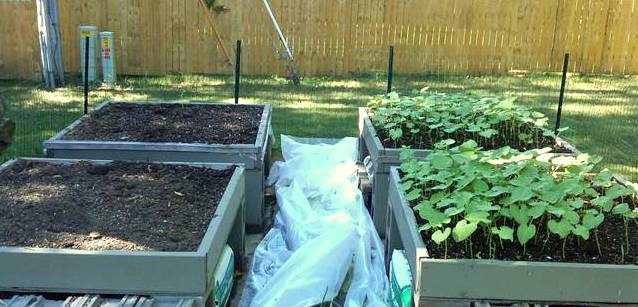
Several years ago, PB and I planted green beans in four raised beds.

Same seeds, same amount of sun and water, same guy planted the seeds on the same day. So much the same, yet the results were so different. It must have been something about the dirt.

Jesus described four kinds of soil in His story called “The Parable of the Sower” in Matthew 13. The same guy planted the same seeds on the same day, yet the results were so different.

The four soils represent four kinds of hearts and how they respond to the seed of the Word.

Some days my heart is a hard path.
The Seed lands on my heart, but can’t penetrate. Pride or bitterness or disappointment tamps down my desire to understand the Word. Or maybe I’ve been walking the same path so long that monotony has made me callous. Perhaps others have stomped on me and a tough, protective shell has developed.

Some days my heart is shallow soil.
The Seed lands on my heart and goes in the thin layer of topsoil. For a short season, the seed of the Word is exciting and enthusiasm runs high. Before long, things heat up and get testy. Because there is rock under the scanty soil, there are no roots to maintain the emotional high and the young growth withers away as quickly as it sprang up.

Some days my heart is thorny ground.
The Seed lands on my heart and goes in the soil with great promise. The Seed even sends roots down. However, the new seedling can’t compete with nagging worries, pleasurable distractions and selfish desire for worldly possessions. The wild overgrowth overtakes and suffocates the crop before there is any lasting fruit.

Some days my heart is good soil.
The Seed lands on my heart, goes in the soil, puts down roots and grows up into a healthy plant. Finally, some good news — a harvest! What made the difference? The condition of the soil.

Lord, break up my hard ground. Make my roots go down deep into the soil of Your marvelous love. Yank out the weeds that threaten to choke my affection for You. Let Your Word land daily on a tender and soft heart, ready to receive and able to produce fruit for Your glory.

“Listen then, if you have ears!” Matthew 13:11

Short Story

Without a story in a sermon, a preacher loses 80% of the congregation. An illustration that is sports-related perks the ears of three-fourths of the men in the pews. Deep truth seems to stick better when associated with a word picture. We like stories.

“Jesus was one of the world’s supreme masters of the short story.” (William Barclay)

The Master told over 30 stories, or parables, as recorded in the gospels of Matthew, Mark and Luke. Parables are defined as “earthly stories with a heavenly meaning”, but the listener has to engage and discover that meaning. Truth won’t be found by audience members who are too lazy to think.

I don’t think the point of some of His parables dawned on people until they were walking home wrestling with what He said. Jesus used story as a way of forcing people to rethink and reexamine spiritual truth.

Jon Ritner, Positively Irritating

Jesus’ stories were spontaneous, often spoken to crowds of people but sometimes told to His twelve disciples alone. When reading these passages in the Bible, it’s important to see what prompted Jesus to tell the story, to look back and see what led up to the moment. Matthew 13 is an example of how this scene is set up for the Parable of the Sower.

The chapter starts with “That same day…” What same day? What else happened that day?

It’s possible that Matthew 12:1 is the beginning of that day. If so, that was one crazy day.

Jesus and his disciples were called out by the Pharisees for harvesting grain on the Sabbath. Then, Jesus healed a man with a shriveled hand in the synagogue, causing the Pharisees to begin plotting how they might kill Jesus. There was another run-in with Pharisees and they attributed Jesus’ miracles to Satan. Jesus called them a bunch of snakes. The Pharisees demanded to see another miracle and Jesus told them they were wicked. Finally, Jesus’ mother and brothers showed up, creating an awkward situation.

Jesus “went out of the house and sat by the lake”. Maybe He needed a moment. Things were ramping up with the religious establishment and His family. From that point on, Jesus mainly taught the crowds using parables.

I noticed two things in Matthew 13:1-2 as a set-up to the parable.

First, Jesus “went out” (verse 1) in the same way the farmer in His story “went out” (verse 3). They were both sowing seed.

And second, Jesus sat down in a boat and the people in the crowd stood for the teaching. “We would have less sleeping in church if this arrangement still prevailed.” (Charles Spurgeon)

Next: The Parable of the Sower