For the law was given through Moses; grace and truth came through Jesus Christ. John 1:17
Continued from the last post: I guess my 4th grade teacher was right. When I point my finger at someone else, there are three more pointing back at me. This judging business is tricky. I looked at those self-righteous Pharisees in John 8 and judged them for their judgmentalism, self-righteous person that I am.
What is astonishing to me is the way Jesus brought grace and truth to this sticky situation.
Truth: Jesus knew the truth about the woman’s sin and didn’t make excuses for her. He didn’t debate with the Pharisees about the law or the punishment the law required. In fact, Jesus challenged them to go ahead and stone her, which might have thrown them off a bit. Except no one could meet the qualifier: being without sin. Jesus was the only one there who actually met the requirements to cast the first stone, but he didn’t pick up a pebble.
Lesson: Sin is sin and Jesus is the only one who can do anything about it.
Truth: Jesus knew the truth about the Pharisees’ hearts: they were not motivated by a desire for righteousness, but by evil. When Jesus asked the woman where her accusers were, the Greek word for “accuser” was the same word the rabbis used for the devil. The religious professionals weren’t even aware that they were “caught in the act” of sinning as well.
Lesson: Only Jesus knows what’s in the heart, good or bad.
Grace: Jesus didn’t pass judgment on the woman. He was careful not to bring added shame to her in front of the Pharisees and the people looking on. Jesus only spoke to her after her accusers had left, saying, “Neither do I condemn you. Go and sin no more.” Although he knew what the law said, Jesus didn’t enforce the punishment, perhaps thinking, “It won’t be long before I fulfill the law and die for that sin.”
Lesson: Casting shame, guilt and condemnation onto others is not in my job description.
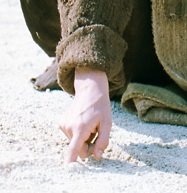
Grace: Jesus did not cast judgment on the Pharisees. In a masterful move, he forced the religious leaders to judge themselves. As they stood there gripping the rocks in their hands, Jesus politely bent down and wrote in the dust. He didn’t stare them down, preach them a sermon, or embarrass them in front of the people; he allowed them to leave quietly with a little bit of dignity.
Lesson: Grace causes people to drop their rocks.
I guess it doesn’t really matter what Jesus wrote…