Snapshot

Day 2 – A Month with M&M

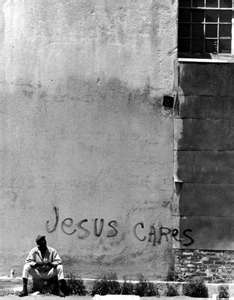
My heart goes out to Martha, I admit.  Her story could be mine many days.  Here she was, faced with the Messiah on her doorstep.  Oh, and his twelve disciples, too.  Thirteen men showing up for supper?  What sane homemaker wouldn’t freak out?  What I find most unfortunate is that this is one day in the life of a wonderful woman.  Think about it.  What if your snapshot was taken on one of your most stressful days and that’s the profile picture that defined you for 2,000 years?  How would you like it?  Huh?  Down through the annals of history, all the generations would ever know of you was how you came unraveled when trying to make a nice dinner for company.  What would your Polaroid look like it if it captured you on your worst day?

When all four kids were little, I remember a day like that.  I was in the kitchen making jam; up to my elbows in strawberries and sugar and Sure-Jel.  I shooed the kiddos outside to play, but they kept coming in and out, slamming the screen door over and over.  Someone ran in for a drink of water.  SLAM.  Someone needed a band-aid.  SLAM.  Someone tattled on someone else.  SLAM.  I warned them to stay outside and not to slam that door one more time.  A few minutes later the doorbell rang.  “Very funny,” I yelled.  My voice rose, “If you come in here one more time….”  Then I turned around to give the stink-eye to the smarty pants who dared to ring the bell, and behold, there was our next door neighbor, Adelaide, standing outside my screen door with a plate of cookies.  The elderly woman had been enjoying watching the kids play in the yard and thought they might like a treat.  Wince.  Click.  You’re on Candid Camera. 

I’m not sure I’d appreciate being the topic of hundreds of sermons down through the ages based on that particular day.  Know what I mean?

Mary and Martha… or Martha and Mary?


Day 1 – A Month with M&M

Welcome to a month with Mary and Martha.  Or is it Martha and Mary?  See, if we’re going to spend a whole month on 5 little verses, we’ll have to be pretty picky.  So before we even get one word into the story, let’s figure this out.  Every sermon I downloaded on Luke 10:38-42 is titled, “Mary and Martha”.  Why does Mary get top billing, I wonder?  It seems evident that Martha is the older sister, as the scripture states, “…a woman named Martha opened her home to him.”  Her home.  Not many women owned property back in those days.  It leaves me wondering if perhaps the parents had died and the three siblings (Martha, Mary and brother Lazarus) were left with the house.  Maybe Lazarus was too young to manage a home and Martha was more than capable of running a household.  She was definitely in charge.  Typically, the oldest is mentioned first: Cain and Abel, Peter and Andrew, James and John.  Hmmm.

When I was little, we went to the Biddick and Rundell Picnic every summer.  As the story goes, one day in the early 1800’s in Cornwall, England, Matthew and Mary Biddick took their 14 children to the beach for a Sunday picnic.  As it happened, James and Betsy Rundell and their 14 children were also at the beach that day.  Out of that meeting on the rocky shores of Cornwall, four of the Biddicks married four of the Rundells and they came to America together.  Hence, the Biddick and Rundell Picnic every June. 

After I got married and moved away from the area, I heard that attendance at the yearly gathering began to dwindle.  After several years had passed, my brother went to the picnic, only to find that it had been renamed the Rundell and Biddick Picnic.  Why?  Because the Biddicks stopped showing up. 

Showing up is important.  Mary showed up at Jesus’ feet.  Maybe that’s why her name comes first.

Mary and Martha: Coming Soon to a Blog Near You

I love the Bible story of Mary and Martha in Luke 10.  I love it so much that I’ve downloaded 20 sermons about the sisters on my ipod.  I love it so much that I can practically recite it by heart.   I love it so much that I’m making our women’s Bible study group focus on it for 12 weeks starting in September. (It’s one of the perks of being a Bible study leader – you get to pick what to study.) 

Starting sometime in September, (not sure when yet; it’s one of the perks of writing a blog – you get to decided when to write) I plan to post a daily reflection on this little 5-verse, 7-sentence passage.  Let’s just see how much we can squeeze out of this small section of scripture.   For a whole month, let’s explore what M&M might have to say to us.  You are welcome to stop in daily and join the conversation.  (It’s one of the perks of reading blogs – you get to leave comments whenever you want.)

Praying Up with John Baillie

Maybe I should just cut and paste the June 2010 posts right back in here.  Strawberry jam, camp week, VBS week – here we go again!  Except this year, throw in a wedding.  Yes, a wedding!  The big day isn’t until August, but we are in full matrimony mode.  All this activity could threaten to overwhelm me, so I need a little help these days getting prayed up.  When I sit in my prayer chair early in the morning, I start to pray, but I am bombarded with thoughts like these: 

Dear Lord, thanks for this new day.  Help me to walk in Your ways…..

Oh!   Remember to call the candy store to see if they can order red raspberry drops to go with the lemon drops for the reception……

Sorry, Lord.  Okay, fill me with Your Spirit and use me to serve others.

Ah!   Don’t forget to cut out that bamboo leaf pattern for the set design and print out more nametags for the VBS kids…….

Oops.  Focus.  Be with PB and the kids today. 

Oh yah!  Gotta pick up a Father’s Day card and get PB’s favorite snack food packed up for his week at camp….

In times like these, I call on John Baillie and his prayers.  When I can’t seem to put together two sentences that make sense even to God, Baillie’s “A Diary of Private Prayer” is just what I need. (For more on John Baillie see October 6, 2010 post,  “Borrowing Prayers From John Baillie”.)   Take it away John.  The rest of us will join in.

“O Eternal God, though Thou art not such as I can see with my eyes or touch with my hands, yet grant me this day a clear conviction of Thy reality and power.  Let me not go forth to my work believing only in the world of sense and time, but give me grace to understand that the world I cannot see or touch is the most real world of all…Let me keep steadily in mind that the things that matter are not money or possessions, not houses or lands, not bodily comfort or bodily pleasure; but truth and honour and meekness and helpfulness and a pure love of Thyself.”

Amen.

Judging the Judgmental

For the law was given through Moses;  grace and truth came through Jesus Christ.  John 1:17

Continued from the last post:  I guess my 4th grade teacher was right.  When I point my finger at someone else, there are three more pointing back at me.  This judging business is tricky.  I looked at those self-righteous Pharisees in John 8 and judged them for their judgmentalism, self-righteous person that I am.

What is astonishing to me is the way Jesus brought grace and truth to this sticky situation.

Truth: Jesus knew the truth about the woman’s sin and didn’t make excuses for her.  He didn’t debate with the Pharisees about the law or the punishment the law required.  In fact, Jesus challenged them to go ahead and stone her, which might have thrown them off a bit.  Except no one could meet the qualifier: being without sin.  Jesus was the only one there who actually met the requirements to cast the first stone, but he didn’t pick up a pebble.

Lesson:  Sin is sin and Jesus is the only one who can do anything about it.

Truth:  Jesus knew the truth about the Pharisees’ hearts: they were not motivated by a desire for righteousness, but by evil.  When Jesus asked the woman where her accusers were, the Greek word for “accuser” was the same word the rabbis used for the devil.  The religious professionals weren’t even aware that they were “caught in the act” of sinning as well.

Lesson:  Only Jesus knows what’s in the heart, good or bad.

Grace:  Jesus didn’t pass judgment on the woman.  He was careful not to bring added shame to her in front of the Pharisees and the people looking on.  Jesus only spoke to her after her accusers had left, saying, “Neither do I condemn you.  Go and sin no more.”  Although he knew what the law said, Jesus didn’t enforce the punishment, perhaps thinking, “It won’t be long before I fulfill the law and die for that sin.”

Lesson:  Casting shame, guilt and condemnation onto others is not in my job description.

Grace:  Jesus did not cast judgment on the Pharisees.  In a masterful move, he forced the religious leaders to judge themselves.  As they stood there gripping the rocks in their hands, Jesus politely bent down and wrote in the dust.  He didn’t stare them down, preach them a sermon, or embarrass them in front of the people; he allowed them to leave quietly with a little bit of dignity.

Lesson:  Grace causes people to drop their rocks.

I guess it doesn’t really matter what Jesus wrote…

What Would Jesus Write?

“But Jesus bent down and started to write on the ground with his finger.”  John 8:6

PB preached on John 8:1-11 on Sunday.  There’s a lot going on in those eleven verses and I have a whole string of questions that are stirring in my heart and mind.  But one of the most intriguing parts of this scene is when Jesus wrote something on the ground with his finger.  It is the only instance in recorded scripture of Jesus writing anything.  The Word became flesh, but didn’t write a single word of scripture.  That’s fascinating.

A woman (the sinner) caught in the act of adultery stood before Jesus, as her accusers (the church folks) beat her up with Bible verses.  Meanwhile, Jesus stooped down and doodled in the dirt.  Or did He?  What would Jesus write?  Well, I read about 25 commentaries on this passage and they all started out by stating, “There is no way of knowing what Jesus wrote on the ground, but it’s possible that….”  And so the conjecture begins.  Here are some theories:

1)  Jesus stooped down and scribbled in the dirt to collect himself because he was so angry with the Pharisees and because He didn’t want to bring further shame to the woman.

2)  Jesus wanted to give the Pharisees a chance to stop their vendetta against Him at the expense of this woman.  He was hoping they would hear themselves and recognize how evil they sounded.

3)  Jesus began to write a list of sins that the Pharisees had commiteed and were now committing.

4)  Jesus began to write a list of woman’s names and addresses – the name of each accuser’s girlfriend.

5)  Jesus was just following proper Roman judicial practices by writing out the sentence before pronouncing it.

6)  Jesus drew a picture.  (However, the Greek makes it clear Jesus wrote words.)

7)  Jesus wrote out the 10 Commandments.

8)  Jesus wrote the Pharisees’ names in the dust along with Jeremiah 17:13.  (“O Lord, the hope of Israel, all who forsake you will be put to shame. Those who turn away from you will be written in the dust because they have forsaken the Lord, the spring of living water”)

Care to weigh in?  Cast a vote?  What do you think Jesus wrote?

Pandas

For someone in my position (Christian Education Director at a church), there are two major defining moments each year: the Christmas Program and Vacation Bible School.  Over the past six years that I’ve been doing this, we’ve had some pretty memorable performances in December.  The kids work hard and start memorizing songs and lines in October.  We do it up big with staging and lights and costumes.  On the day of the program, the place is packed with parents and grandparents.  The kids inevitably rise to the occasion and the congregation always gives them a standing ovation.  It’s a glorious feeling of accomplishment for the young folks.  (See December 20, 2010 post)

VBS, however, is a whole different thing.  For this event, adults are the ones who work for months to pull off a big 4 day party for the kids.  In January, we begin scouring thrift stores and sale racks for decor that fits the theme.  We put out a call to start collecting whatever the craft person is going to need in abundance, whether it’s toilet paper cardboard tubes or empty tin soup cans.  We go all out to make sure the kids who come through our doors have a blast at church.  (See June 29, 2010 post)

This year’s theme is “Pandamania: Where God Is Wild About You”. We will be creating an Asian bamboo jungle, with lots of panda bears.  At first I thought this was going to be tough.  I have no stuffed pandas in the storage closet and no bamboo growing in my backyard. 

But it’s amazing what happens when you begin looking with an eye for something specific.  At the Dollar Store, lo and behold: a whole crate full of little panda puppets and stacks of Chinese lanterns.  At Goodwill, whadya know: a pile of 6 foot tall fake bamboo.  In my own sewing cabinet, voila: fabric that will make a great waterfall.  Suddenly, I am seeing this stuff everywhere!  It’s like my mind is directing my eyes to see what I normally would overlook. 

I think the same thing happens with God.  Going through my day without an awareness of God, or “an eye” for Him,  I am more likely to be oblivious to His wondrous activity all around me.  When my focus is on pandas, they seem to show up everywhere.  When my focus is on God, He does, too.

Listening In

I used to get a kick out of listening in on my kids’ conversations when they were little. (“You be the mommy and I’ll be the daddy.”  “Why can’t I be the daddy?”  “Because you have longer eyelashes.”)   As they grew older I perked up less for the entertainment value, and more for the information I was hoping to glean.   (“Don’t tell mom and dad, but you know that girl in my class with the long eyelashes…?”)

Reading the gospels is kind of like listening in on Jesus’ conversations with people.  And I’ve noticed something recently.  Jesus didn’t talk the same way to everyone.  He figured out where people were coming from first and then geared the discussion around their frame of reference.  For instance, when he talked to the woman at the well he used words like water, thirst, drink, spring.  But when Jesus faced the teachers of the law, he chose different words: valid testimony, execute judgement, witness, evidence, investigate, proof.  In John 5:24 he said, “I tell you the truth,” or “Verily, verily, I say unto you.”   Translation: “I’m telling you the truth, the whole truth and nothing but the truth, so help me….Me.”  Then He went on to present three witnesses to validate His claims,  as required by the court of law (v. 31-37).  After giving the testimony of the witnesses, Jesus shifted from being the defense attorney to the prosecuting attorney and rung them up on charges (v.38-42) before wrapping up with His closing argument (v.43-47).  The carpenter from Nazareth finished with an incriminating question to which there was no reply.  Silence.  He schooled the big-shot lawyers.  Bam.  I rest my case.

The Master didn’t talk about living water to the lawyers; He didn’t use legal jargon with the woman at the well.  Many times He answered people when nothing had been asked.  And sometimes He didn’t answer a straight-forward question with a clear answer, but told a story instead.  Quite often He answered a question with another question.  No formulas; no tracts; no step-by-step programs.  The best thing for us to do is listen in and learn from a real Master.

He who has ears to hear, let him hear.

Inheritance

You are all children of God through faith in Christ Jesus…If you belong to Christ, then you are Abraham’s seed, and heirs according to the promise.  Galatians 3:26, 29

Back in February, I started listening to an online Bible study series taught by Beth Moore called “The Inheritance”.  I took ten pages of notes and highlighted the key verses.  I was familiar with most of the scriptures; I knew most of this stuff.  I planned to put my notes in a file labeled “Inheritance” and move on to the next study.  But something happened on my way to the file cabinet.

I found myself sitting in a lawyer’s office reading my dad’s Last Will and Testament.

Suddenly, those ten pages of study notes jumped off the paper and into my heart.  My dad left me something, even though I did nothing to earn it or deserve it.  Just because I was his daughter.  I contributed nothing to the family business; in fact, I went and married a preacher!  I didn’t call or visit dad as much as I should have; I didn’t take time to get to know his deepest joys and fears.  But no matter.  A portion of what he worked for his whole life was left to me.  I walked out of that lawyer’s office with tears streaming down my face.  I began to comprehend the significance of those Bible study notes.

So, it has made me wonder: Why don’t I wake up every morning and weep with joy over the stunning realization that I am a real live heir of God and co-heir with Jesus Christ?  Why am I not overwhelmed by the incomparable, unsearchable, immeasurable riches of God that are mine simply because I am His daughter?  Why do I not stand in utter awe at the portion allotted to me, my delightful inheritance in Christ?

Sometimes it’s a long way from the head to the heart.  But when the truth strikes, it is absolutely breathtaking.

Pick Up!

I’ve been camping out in John 5 (see April 19 post: “Get Up!”).  It just thrills my soul to know Jesus told the man, “Pick up your mat”.  How many times have I quoted that very scripture (with variations)?  You know: pick up your shoes, pick up your room, pick up your sweaty, smelly  jersey, pick up your cereal bowl with the milk that has curdled and stinks to high heaven…..well, you get the picture.  During all those years of raising four kids, I didn’t realize how spiritual I was sounding.  (Neither did the kids, I’m sure.)

Jesus told a lot of people to “get up”, but He was also big on “pick up”.  The paralytic in Mark 2 didn’t get to waltz out of that house with his new legs.  Oh, no.  Come right back here, buddy, and pick up that sorry old bedroll before you leave.  And the disciples were told to pick up the leftovers after every one of those crowd-sized meals.  Five thousand people could probably leave quite a pile of fish bones and bread crusts.

Jesus didn’t ask anyone to do what he wouldn’t do, however.  This Easter I was reminded once again of my favorite “pick up” story in the Holy Book.  The risen Savior was in the tomb, about ready to bust out of there, when He stopped, picked up His face cloth and folded it neatly, leaving it on the slab of rock. (John 20:7)  What a Man!

The only thing that amazes me more is that He also picked me up.  As the Psalmist wrote, “He picks up the poor from out of the dirt.”  (Psalm 115:4 Message)