Thick and Thin

Lent always takes me by surprise.
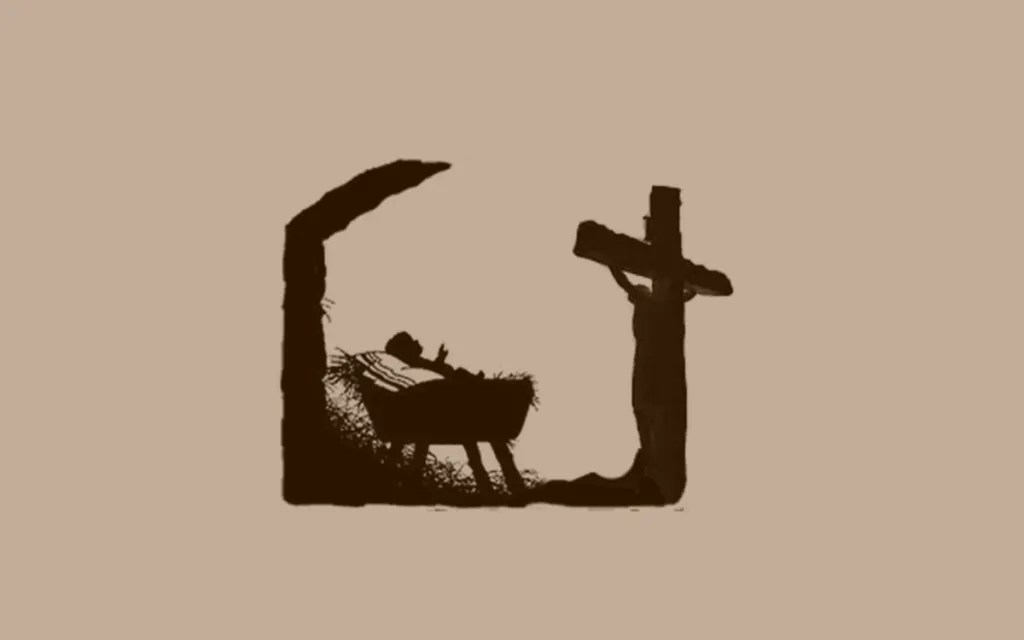
It seems like we just packed away the Nativity scene
and here we are—already headed for the cross.

I always go into Lent with a sense of trepidation.
Like the disciples, I tend to drag my feet and want to lag behind.

“They were on their way up to Jerusalem,
with Jesus leading the way,
and as the disciples were following
they were filled with terror and dread.”
Mark 10:32 

Again this year, Lord? Really? Do I have to walk the road to Golgotha with You once more? Do I have to witness yet again the torture, the nails, the blood, the injustice of it all? Is it truly necessary to contemplate sacrifice and sorrow, surrender and selflessness? Must I enter the wilderness with You for forty days and forty nights?

Can’t we just meet up on Easter?

Lord Jesus Christ, Son of God,
have mercy on me, a sinner.

I need Lent.

“We need more than a Good Friday service two days in advance to get into the state of mind and heart to celebrate Jesus’ victory over death and hell. We cannot prepare for Easter over the weekend. No, we need to walk a longer pilgrimage to get ready.” Aaron Damiani, The Good of Giving Up

“Lent is about thinning our lives
in order to
thicken our communion with God.”
Alicia Britt Chole, 40 Days of Decrease

I’m in.
I’ll walk this pilgrimage to the cross again.
Through thick and thin.

Be An Olympian

The Apostle Paul was a sports fan.

He loved a good sports analogy and used them often when talking about the spiritual life: running, wrestling, boxing, winning the prize.

A few miles outside Corinth, the Isthmian Games were held every two years. There were no Airb&bs in the area, so tentmakers made a killing on the sale of temporary shelters for the fans who came from far away.

Paul went to Corinth and met Aquilla and his wife Pricilla “and because he was a tentmaker as they were, he stayed and worked with them.” (Acts 18:3) Maybe he attended an event, or maybe he heard the cheers from the stadium.

The Isthmian Games had competitions in footraces, wrestling, boxing, throwing the discus and javelin, the long jump, chariot racing, poetry reading and singing. Yes, poetry reading. And singing. There was only one winner in each category—no second or third place. And there were no medals.

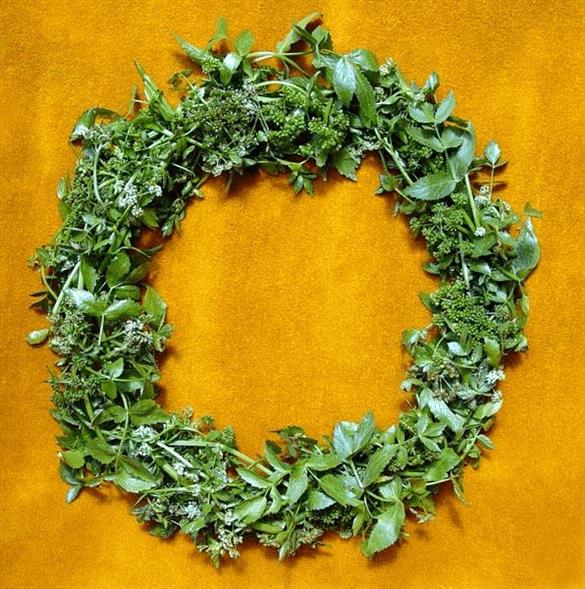
The winner was given a crown made out of celery.

“Everyone who competes in the games goes into strict training.
They do it to get a crown that will not last,
but we do it to get a crown that will last forever.”
1 Corinthians 9:25

Olympians are inspirational. As I watch the athletes perform at such a high level, I think, “What is behind that one moment of glory?” Champions are made in the things we don’t see. The daily workouts, the daily reps, the daily nutritional program.

Life is built on the dailies, even for average, unathletic people like me who will never stand on an Olympic podium. The seemingly unimportant and unseen daily routines accumulate over time. They determine if I live with halfheartedness or excellence.

What if I approached my life with God as an Olympian?

Could I stick to the consistent discipline of living for Christ?
Do I have enough dedication to take my faith seriously every day?
Are my daily routines helping or hurting my spiritual life?
Am I running the race set before me in such a way to win the prize?

“You will receive the crown of glory that will never fade away.” 1 Peter 5:4

And it ain’t made of celery.

“Exercise daily in God—no spiritual flabbiness, please!
Workouts in the gymnasium are useful,
but a disciplined life in God is far more so,
making you fit both today and forever.”
1 Timothy 4:8, The Message

Crowded

“Who do the crowds say I am?” Luke 9:18

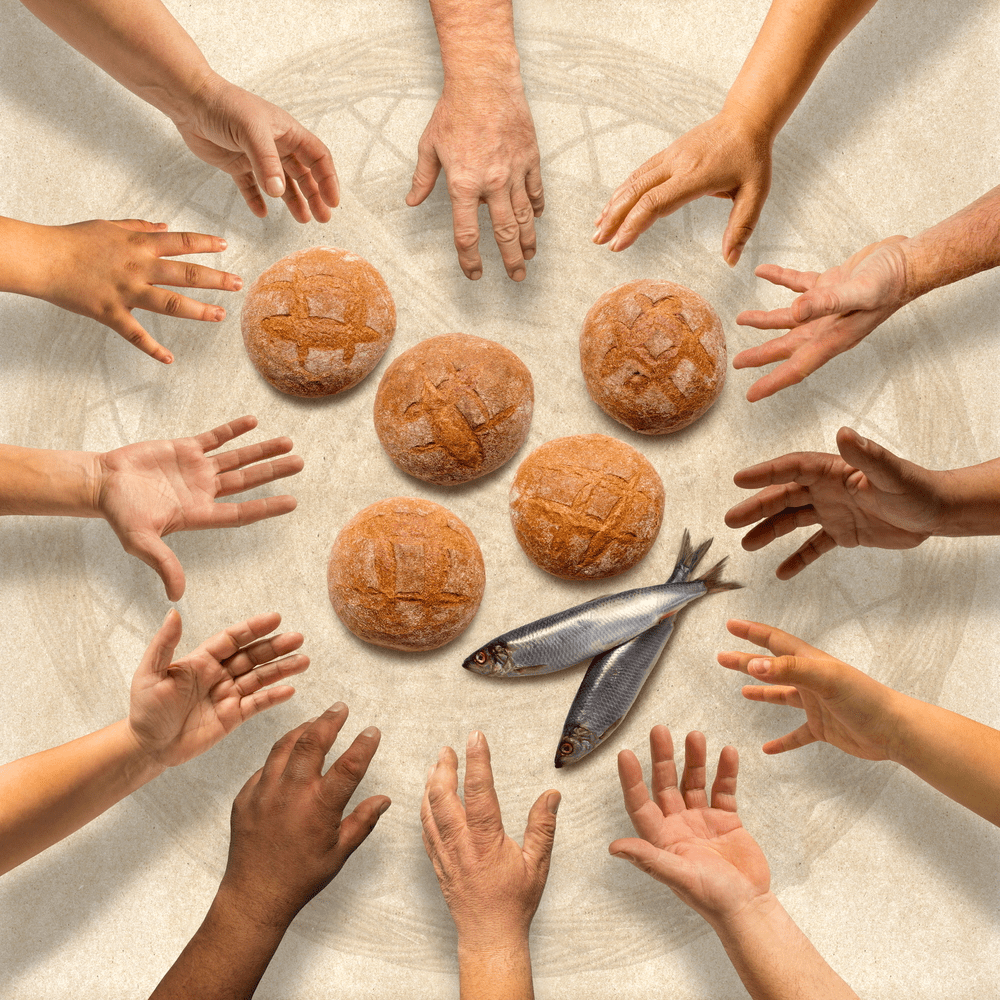
Five thousand people were talking. News was out that five little loaves of bread and two measly fish somehow multiplied into dinner for a multitude.

two-fish

The throng was trying to figure out who Jesus was. And they were struggling.

  • John the Baptist, come back to life? Wrong.
  • Elijah, come back to life? Wrong.
  • One of the other Old Testament prophets, come back to life? Wrong.

The crowd was easily confused.

The word “crowd” is found 38 times in the Gospel of Luke. Jesus taught the crowd, He healed the crowd, He fed the crowd, He told the crowd stories, He answered questions from the crowd. And then the crowd disappeared, only to show up later, shouting, “Crucify him!” That’s the crowd for you.

“But what about you?” he asked. “Who do you say I am?” Luke 9:20

Ah. Now there’s the question.

Step away from the Instagram influencers
and the opinionated opinions
and the ego-centric philosophies.

The crowd is confused.

confused

What about you? Who do you think Jesus is?

It’s the most important question you’ll ever answer.

Take Charge

Sometimes I’m a take-charge kind of person.

If I see something that needs to be done and nobody is doing it, I don’t mind stepping up to the plate and gettin’ ‘er done. However, if there is someone in my midst who has more “take-charge-ness” than me, I am more than happy to step down and let somebody else get ‘er done.

Taking charge can be a good thing when there needs to be some leadership to accomplish a task. Taking charge can be a bad thing when it’s motivated by control and comes off as bossiness.

So, I had to smile when I read this scripture:

“Then Jesus entered a house, and again a crowd gathered so that he and his disciples were not even able to eat.  When his family heard about this, they went to take charge of him, for they said, ‘He is out of his mind.’” Mark 3:20-21

Families are funny that way. We tend to think we have a right to interfere. As a mother, I’ve done my fair share of meddling. And I’m not proud of it. Jesus’ family seemed to think it was time to put an end to the craziness and take Him back to the carpenter’s shop where He belonged. But Jesus didn’t let His mother and brothers derail His mission.

Besides, who can take charge of Jesus?

I need Him to take charge of me.

What the Skibidi?

What the skibidi is going on?

Skibidi—(adj.) A word with no real meaning; a word that can mean anything you want it to mean.

“Skibidi” was recently added to the Cambridge Dictionary. I admit, it is fun to say. But why are we making up words that have no meaning? Maybe Solomon was on to something:
“Meaningless! Meaningless! Utterly meaningless! Everything is meaningless!” Ecclesiastes 1:2

Maybe Timothy had a better take:
“The goal is love, which comes from a pure heart and a good conscience and a sincere faith. Some have wandered away from these and turned to meaningless talk.” I Timothy 1:5-6

Here’s what got me started on all this:

The Cambridge Dictionary Word of the Year for 2025 was:
Parasocial—(adj.) Relating to a connection that someone feels between themselves and a famous person they do not know, such as an online influencer, a character in a film or TV series, or an artificial intelligence. 

The 2025 Oxford Dictionary Word of the Year was:
Rage Bait—(n.) Online content deliberately designed to elicit anger or outrage by being frustrating, provocative, or offensive, typically posted in order to increase traffic to or engagement with a particular web page or social media account.

The Merriam-Webster 2025 Word of the Year was:
Slop—(n.) Digital content of low quality that is produced usually in quantity by means of artificial intelligence.

The Dictionary.com Word of the Year was:
6 7—(n. or adj.) A slang term that is intentionally vague or nonsensical.

If those four words define our times, what does that say about us?
We can’t connect to real people in our midst,
so we wallow in slop
and take the bait that leads to rage?
6 7
Lord, have mercy.

This parasocial, angry, slop-filled world is in desperate need of good news.
Can we deliver?

We are bringing the good news to you,
so that you turn from these meaningless things
to the living God.
Acts 14:15

Lord, help us to shine like stars in the universe
as we hold out the Word of Life.
Philippians 2:15-16

Kindness

Five years ago I started a nine-year quest to work my way through the fruits of the Spirit, as listed in Galatians 5:22-23. This year, it’s kindness.

“But the fruit of the Spirit is
love, joy, peace,
patience, kindness, goodness,
faithfulness, gentleness and self-control.”

At the beginning of this journey through the nine character traits, I figured if I spent a whole year developing each fruit, I’d be a pretty darn good Christian by 2030.

This is my half-way point and, honestly, I haven’t seen great improvement in my character. I still struggle with unloving thoughts, mopey attitudes, anxiety, and impatience. Alas, I can’t squeeze out those admirable fruits no matter how many Bible verses I read about them.

It took me five years to notice something:
These characteristics are fruit of the SPIRIT, not fruit of the DINAH.
They are not my project to conquer, but the work of the Spirit in me.

I’m slow to learn.

Here’s the best part.

In my study thus far, what has stood out to me is the astounding love of God, the abundant joy of the Lord, His peace that passes understanding, and the long-suffering patience of the Father. Instead of making strides in my own character development, I’m finding myself at the receiving end of God’s perfect character.

I’m not going to put a “Be Kind” sign in my front yard, or get a “Choose Kindness” tattoo. I’m not even going to try really hard to be a kinder, gentler person.

I am going to pay attention to the kindness of God
and hope some of it rubs off
as the Spirit works it in.

Yield

Back in December,
I started asking God if He had a word for me to carry into the new year.
Nothing came.

I kept asking and tried to listen.
Nothing.

I started to get a little twitchy when January 1st came and went.
Still no word.

Me: Lord, what word do You have for me in 2026?
God: What word do you have for Me?
Me: (long pause) Huh? You are waiting for me to pick a word?
God: I yield the word-picking to you this year.
Me: Yield.
God: Good word.

Yield is a good word. It does double duty as a noun and a verb.
Yield, n. — quantity of harvest or income produced
Yield, v. — to give up or surrender; to give precedence to; to relinquish

Two years ago, I copied down this quote:

“Abiding is a humble, gentle persistency
in attending to Jesus and only to Him,
and a kind of unyielding yieldedness to Him alone.”
(Leighton Ford, The Attentive Life)

Those two words “unyielding yieldedness” stuck with me.
I’m going to spend the coming year figuring out what that means.
And how to do it.

Offer yourselves to God as those alive from the dead,
and your members as instruments of righteousness, yielded to God.
Romans 6:13


2026 Bible Reading Plan

I’ve been creating my own Bible Reading Plan for twelve years now. It must be the teacher in me—I get a kick out of giving myself assignments. I also don’t like being told by someone else what to read. (Must be the rebel in me.) I’ve kept track over the years of all the books of the Bible I’ve read (must be the perfectionist in me) and there are some glaring holes indicating books I have been avoiding for twelve years.

If I fail to plan, I can plan to fail. And sometimes I fail even when I do plan. But having a plan in place helps me get back on track. Eventually.

This year is going to be challenging. You are welcome to join me, if you dare.

I’m starting off with the Gospel of Mark because I need to begin the year with my eyes on Jesus.

In February, I’ll take a slow stroll through Colossians, one chapter a week in small bite-size portions Monday-Friday.

Here’s where it gets tricky. 1 & 2 Chronicles have never been my favorites. Especially the first nine chapters which contain lists of unpronounceable names. I’m sure there is treasure in there somewhere, but it will be a test of my patience. Close on the heels of Chronicles will be Ezra, Nehemiah and Esther. No dilly-dallying here — a quick run through the chapters.

In June and July I’ll slow down a bit and take my time reading the book of Hebrews.

August is usually the time of year when I falter, so I’m returning to my beloved Psalm 119. It will be like a visit with an old friend.

This fall, strap on your seatbelts if you’re still with me. Ezekiel is weird. And probably wonderful, but I wouldn’t know because this has been my #1 book to ignore. Not anymore! I’m diving in. After Ezekiel, I’ll stay on the weird and wonderful track by reading Revelation, then end 2026 with an Advent study to be determined.

Note: This is a “reading plan, ” not a “study plan.” The point is to stay engaged with God’s Word consistently. God gave us a book and He arranged every word in it. Those words are nutrition for our souls. As Moses said,

“These are not just idle words for you; they are your life.”
Deuteronomy 32:47

God bless the reading of the Word in 2026!

Christmas Eyes

Something about Christmas brings out the kid in all of us.
PB’s natural fun-loving personality really shines during the holidays.
He brings home all kinds of goodies. Every day. They are piling up.

Bags of Farm & Fleet Tootsie Roll Pops are a staple around here. In December, though, the stash is considerably expanded. After all, there are Christmas programs and dance recitals and extra church services. The demand rises dramatically, so PB keeps his pockets jammed full of suckers to pass out when the kids’ start to wiggle.

One year, PB brought home a yodeling pickle ornament. It’s motion sensitive, which means when I get up at 5:30 a.m. and tiptoe out to the kitchen, a shrill voice coming from a dark corner scares the Charles Dickens out of me. So fun!

It’s not all candy and toys for PB. He also goes in for a good game to play with the grandkids. This one is sure to be a hit with the 6-year-old and 8-year-old grandsons. We need to give them more reasons to talk about butts.

Of all PB’s fun finds, these get my seal of approval.
They don’t cause cavities,
they don’t yodel,
and they have nothing to do with butts.

These flimsy “glasses” transform the Christmas tree lights into fun shapes. We have glasses that create snowmen, reindeer, trees, candy canes and gingerbread men. These magical specs cost $1.69 each, which is the best deal in town.

See what I mean?
The glasses help you see something that nobody else sees.
It’s magic.

I’m wondering if Simeon had a special pair of glasses.

In Luke 2, when Joseph and Mary brought their 8-day-old baby boy to the temple, Simeon saw something that nobody else saw. The elderly gentleman took baby Jesus in his arms and declared, “My eyes have seen your salvation.” (Luke 2:30)

Everyone else in the temple saw a baby.
Simeon saw salvation.
He must have had Holy-Spirit-glasses.
Oh, for eyes to see like Simeon.

Two Ways to Give Thanks

My inbox greeted me with two messages on this Thanksgiving morning.

I signed up for the NYT emails so I can play Wordle.
I get SpurgeonBooks emails so I can pray the Word.

Feast your eyes on two ways to give thanks today.

“Everything will be OK. Try to enjoy the day. You can do it.”
vs.
“Always thankful to our merciful God”

Take your pick.

“Give thanks as you move through the day.
And hug your people tight.” (NYT)
vs.
“We all have some cause for thankfulness,
therefore will we praise the Lord from the rising of the sun
unto the going down of the same.” (Spurg)

It helps to know Who to thank.

Also, you didn’t think we would finish the year without a plan, did you?

The 2025 Bible Reading Plan was left wide open for December. But never fear, we will finish strong in 2025 with an Advent Reading Plan. Also, fear not—most days are only a few verses. Grab yourself a cup of coffee in the wee hours of dark December mornings, light a candle, and join me for a moment of stillness and study of His Word. The same Word that became Flesh.