Author Archives: dinahoverlien

O Come! Day 3
O Come! Day 2
O Come! Day 1
O Come!

The Hebrew language doesn’t have exclamation points,
but it does have “O”s.
“Be exalted, O God,” (Psalm 57:11) could be written “Be exalted, God!!!!!”
“Hear my cry, O God,” (Psalm 61:1) is the same as “Hear my cry, God!!!!”
The “O” is used to add earnestness to an appeal
and to show strong emotion.
In Hebrew, a repeated word is supposed to make us
stand up and take notice.
A word used three times in a row is supposed to make us
fall down on our faces.
“Holy, HOLY, HOLY is the Lord God Almighty.” (Revelation 4:8)
In the hymn “O Come All Ye Faithful,” the word “come” is used 7 times in the first stanza. The repetitive word is supposed to grab our attention. The chorus implements the triple-word-rule with each phrase growing more fervent.
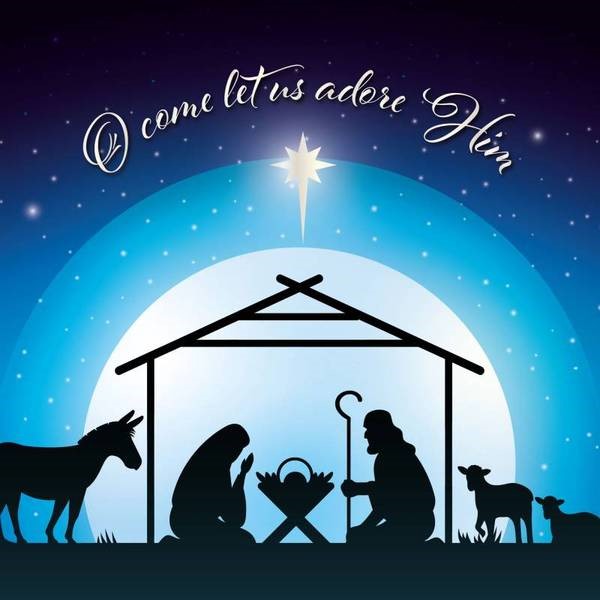
O come let us adore Him.
O come let us adore Him.
O come let us adore Him,
Christ the Lord.
Put another way:
Come, let us adore Him!!
Come ON, let us adore Him!!!
Oh for heaven’s sake, COME ON NOW, let us adore Him!!!!
That’s my invitation to you on the 12 days leading up to Christmas.
Come and adore Him with me every day through Christmas Eve!
O come!
Three-minute devotionals will be aired on WCNP 89.5 daily at 8:30 a.m., 11:15 a.m. and 5:30 p.m. (give or take a few minutes) starting on Friday, December 13th. You can also find them on the WCNP Facebook page or at www.wcnpfm.org.
Or stop by here every day!

Thanksgiving 1948
Thanksgiving 1948

Grandpa and Grandma
Uncle Franklin and Aunt Ardith
Uncle Morris and Aunt Phyllis
Cousins Candy, Jerry, Jim and Joe
That’s my mother on the far right,
holding my brother.
Dad must have taken the picture.
The men were in suits and ties.
The women sported hair rolls and pin curls.
The children gathered around Grandma.
The turkey was ready to be carved.
Thanksgiving 2024 will look a little different.
I have no lace curtains or flowery wallpaper.
There will be no linen tablecloth.
I will not wear bright red lipstick.
But, hopefully, the children will gather around Nonnie.
And, hopefully, the 18 pound turkey will feed us all.
And, hopefully, we will give thanks for another year
with everyone around the table.
Some things never change.
“It is good to give thanks to the Lord.”
Psalm 92:1

Thankful
One of my favorite authors is Wendell Berry. Our neighborhood book club just finished Hannah Coulter so I am enchanted all over again with Port William and all my dear fictional friends. They remind me of the good salt-of-the-earth people I grew up around—people who loved the land and who knew how to be neighborly. I’m thankful for Berry’s words in this season, and I’m basking in their beauty.

“You mustn’t wish for another life.
You mustn’t want to be somebody else.
What you must do is this:
Rejoice evermore. Pray without ceasing. In everything give thanks.*
I am not all the way capable of so much,
but those are the right instructions.”
Hannah Coulter

“I tremble with gratitude
for my children and their children
who take pleasure in one another.
At our dinners together, the dead
enter and pass among us
in living love and in memory.
And so the young are taught.”
Leavings: Poems
* 1 Thessalonians 5:16-18

Further Up and Further In
Back when we were homeschooling, my favorite part of the day was the afternoon read-aloud time. I loved picking out great stories and doing all the “voices” of the characters. The kids would sprawl out on the living room carpet and color or draw or build Lego creations while I read. “One more chapter, pleeeease” was music to my ears.
I missed afternoon read-aloud time when the kids grew up and left the nest. So I decided to read to PB. My dear husband is always a good sport when it comes to my ideas, God bless him. As it turns out, he loved it as much as the kids did. And I still get to do “voices.”
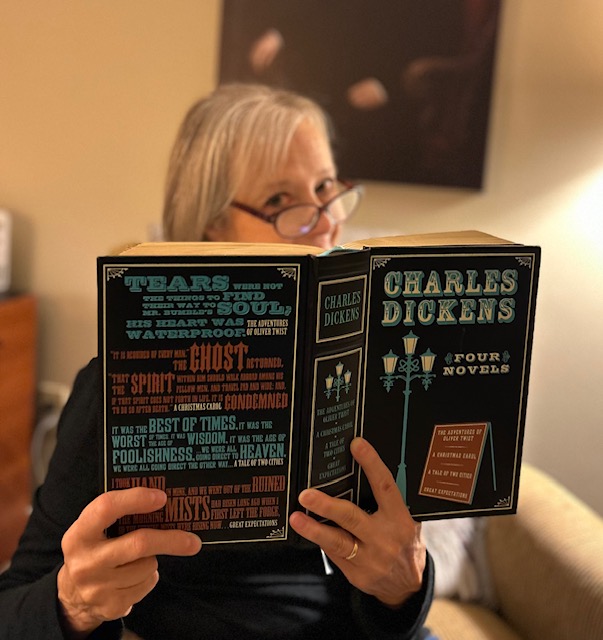
I was shocked when he admitted that he had never read The Chronicles of Narnia by C. S. Lewis, so we started book one last January. This week, we finished book seven. Please understand that instead of “one more chapter, please” I now hear soft snores after a few pages. It’s slow going.
The characters were a real test of my various voice inflections. King Tirian got a British accent while the Dwarfs spoke with a Scottish brogue. Shift, the Ape, had a Texas drawl and Puzzle, the donkey, was given a Bronx dialect. Puddleglum had an “Eeyore-ish” sound and Rishda was gravelly and sinister. Of course, for Aslan, I tried my best to imitate Liam Neeson and I took it up a few octaves for Reepicheep.

“The Last Battle” is my favorite book in the series. I couldn’t hold back the tears at the end when Aslan came leaping down the mountain, “like a waterfall of power and beauty.” When the children said goodbye to the Shadowlands, I had to stop reading for a minute. PB didn’t quite know what to do.
As the beloved characters go further up and further in,
the reader knows what this is all about.
This is heaven, Eden restored, the Golden Gates opened.
“Isn’t it wonderful?” said Lucy. “Have you noticed one can’t feel afraid, even if one wants to? Try it. “By Jove, neither one can,” said Eustace after he had tried.
“The further up and the further in you go, the bigger everything gets. The inside is larger than the outside.”
The Chronicles end with this magnificent paragraph—
And for us this is the end of all the stories, and we can most truly say that they all lived happily ever after. But for them it was only the beginning of the real story. All their life in this world and all their adventures in Narnia had only been the cover and the title page: now at last they were beginning Chapter One of the Great Story which no one on earth has read: which goes on forever: in which every chapter is better than the one before.
Some of the finest words ever written.
Pass the tissues.
In case you’re wondering what’s up next for PB:

Big Shoulders
When our four kids were little and we were homeschooling, we took advantage of the November election to teach them about government. We studied the three branches, the political parties and the candidates running for office. We visited the state capitol and met our representative. We wrote letters to the President and the Governor, assuring them of our prayers and asking for their pictures. We learned the Pledge of Allegiance and said it together every morning.
The night before the election, one of the presidential candidates made a stop in a town nearby. We bundled up the kids and stood outside for an hour before finally seeing the top of the hopeful politician’s head. In the distance. For a split second.
But the atmosphere was electric — that political rally rivaled any big sporting event. There was music and a cheering crowd and people holding up signs. We got swept up in the frenzy.
The next morning, as the kids were eating breakfast, our seven year old asked who won the election. When I said that our candidate lost, he put his little head down on the table and started to cry. PB and I looked at each other with wide eyes. Maybe we overdid it. I had to convince the broken-hearted boy that the world was not coming to an end.
It’s easy to get swept up and lose eternal perspective.
But here’s some good news today—
the government is on His shoulders. (Isaiah 9:6)
He’s got big shoulders.
We’re not made to carry such a heavy load.
Our shoulders aren’t strong enough.
Worldly governments will one day come to an end.
But here’s more good news—someday,
“of the increase of His government and peace there will be no end.”
Isaiah 9:7
What’s in a Name?
Mahershalalhashbaz—how would you like to have that name?
The prophet Isaiah and his wife choose this name for their baby boy. It means “Quick-To-The-Plunder-Swift-To-The-Spoil.” The birth of this son was part of a prophecy. Before the little guy could say “Mama” or “Dada,” Assyria was predicted to invade and punish Damascus and Samaria. The army from the north would be Maher-Shalal-Hash-Baz. (Isaiah 8)
I hope they called him Baz for short.

Names are important. It’s one of the biggest decisions parents make at the birth of a child. PB and I thought long and hard when picking our kids’ names. We gave each one a middle name that had family connections, but also sounded good should they become famous. Katie Sims. Samuel Bradley. Anna Somers. Jacob Daniel. (Not to be confused with Jack Daniels.)
Names in the Bible always mean something.
Nowhere is that more clear than in the first pages of Genesis.
The first ten generations that would become Jesus’ line of ancestry are listed in Genesis 5. Whoo-boy. In what looks like a boring list of weird names, there is a message that’s just too good to miss. Get ready for goosebumps.*
Here’s the list of generations in the family tree:
- Adam—means “human” or “man”
- Seth—means “appointed”
- Enosh—means “mortal”
- Kenan—means “sorrow”
- Mahalalel—means “the blessed God”
- Jared—means “shall come down”
- Enoch—means “teaching”
- Methuselah—means “his death shall bring”
- Lamech—means “the despairing”
- Noah—means “relief” or “comfort”
Now string it all together.
Man is appointed to mortal sorrow but the blessed God shall come down teaching. His death shall bring the despairing relief and comfort.
That’s not a coincidence.
That’s Jesus, right there in Genesis 5.
That’s pretty wonderful.
“Open my eyes that I may see wonderful things in your law.”
Psalm 119:18
*Thanks to “Bible Bookclub Podcast” for this insight.

 a small drop of ink