Two Ways to Give Thanks

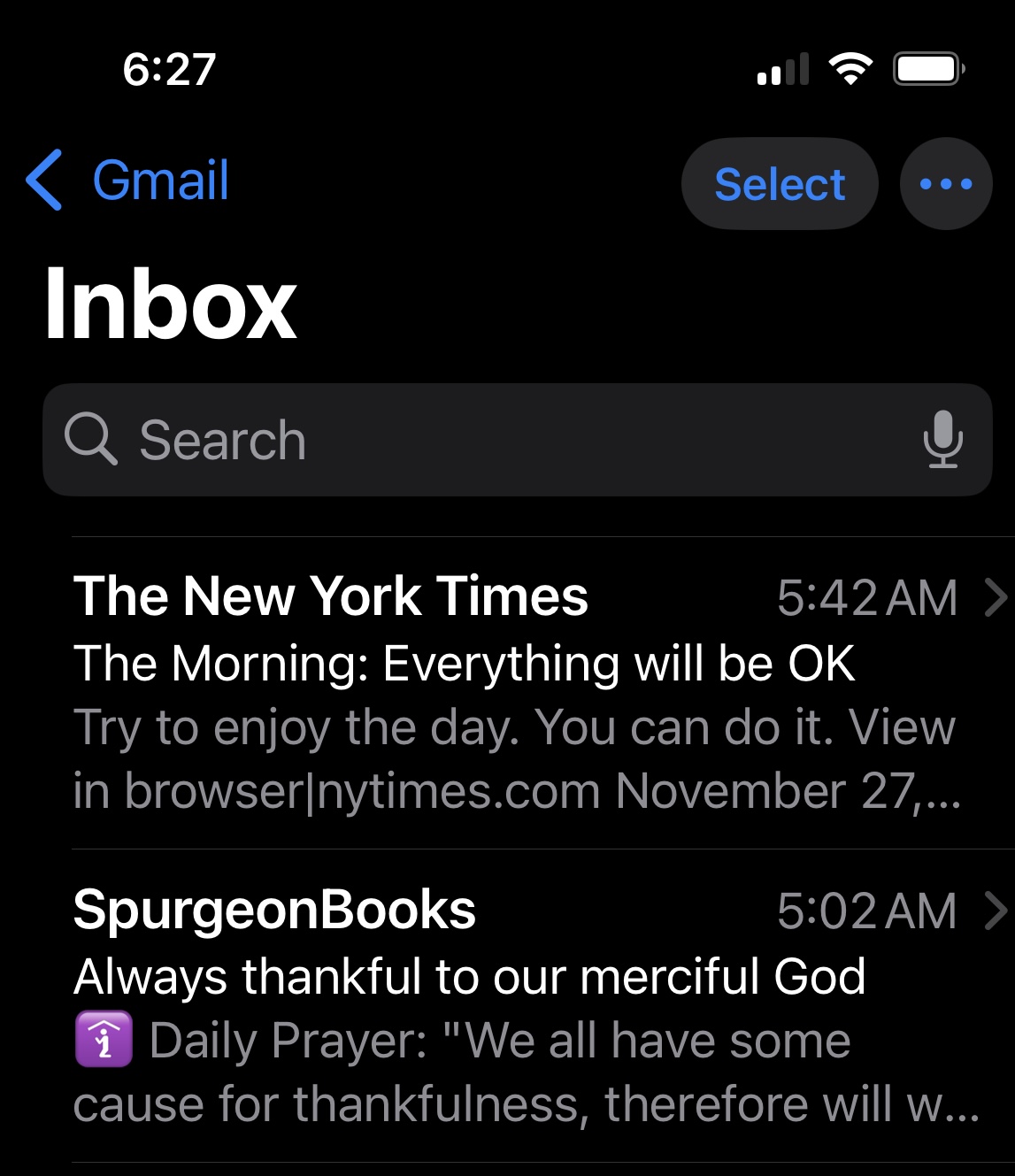
My inbox greeted me with two messages on this Thanksgiving morning.

I signed up for the NYT emails so I can play Wordle.
I get SpurgeonBooks emails so I can pray the Word.

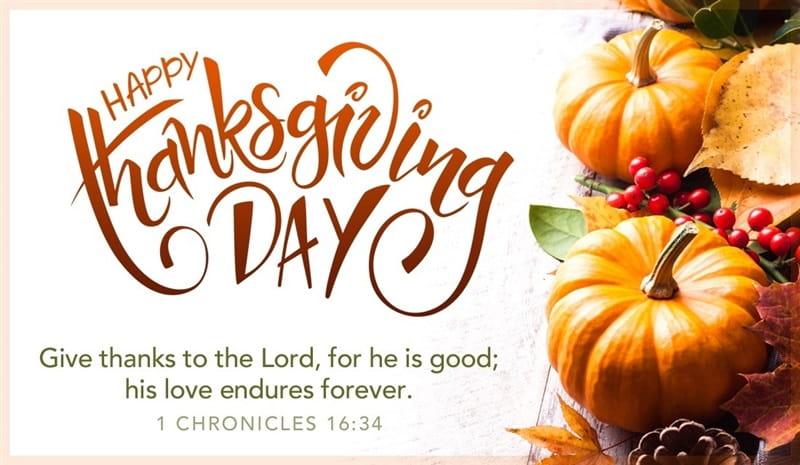
Feast your eyes on two ways to give thanks today.

“Everything will be OK. Try to enjoy the day. You can do it.”
vs.
“Always thankful to our merciful God”

Take your pick.

“Give thanks as you move through the day.
And hug your people tight.” (NYT)
vs.
“We all have some cause for thankfulness,
therefore will we praise the Lord from the rising of the sun
unto the going down of the same.” (Spurg)

It helps to know Who to thank.

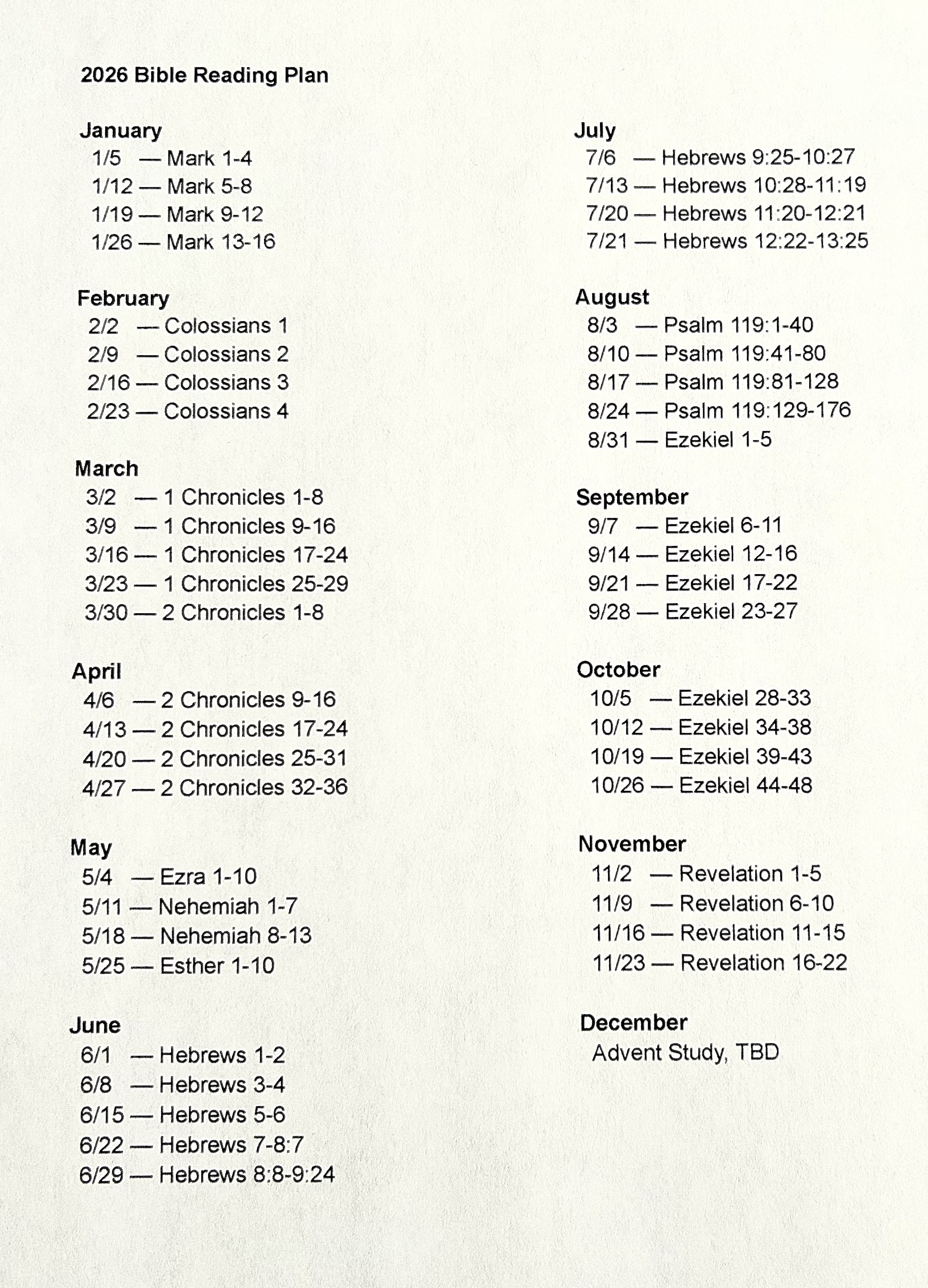
Also, you didn’t think we would finish the year without a plan, did you?

The 2025 Bible Reading Plan was left wide open for December. But never fear, we will finish strong in 2025 with an Advent Reading Plan. Also, fear not—most days are only a few verses. Grab yourself a cup of coffee in the wee hours of dark December mornings, light a candle, and join me for a moment of stillness and study of His Word. The same Word that became Flesh.

Greatly Grateful

“If you think little of what God has done for you,
you will do very little for Him;
but if you have a great notion
of His great mercy to you,
you will be greatly grateful to your gracious God.”
~Charles Spurgeon~

I am greatly grateful to you for reading a small drop of ink.
“I thank my God every time I remember you.”
Philippians 1:3

Gotta go make gravy now.

We Got Robbed

Many years ago, PB and I drove to Winona, Minnesota for a Keith Green concert. We arrived early, so we left our car in the empty parking ramp and slipped into the auditorium to listen to the sound checks.

Keith Green was a radical-hippie-Jesus-lover. He had crazy piano skills and wrote songs that brought worship to a new level. I’d never heard anyone sing with so much conviction and passion. The lyrics to his songs were raw and deeply honest. It was a thrill to be able to hear him live. We sat in the front row.

After the concert, we walked back to the parking ramp and discovered our car had been broken into. The window had been smashed and our bags torn apart. We were poor college students at the time, so the robbers didn’t find anything worth stealing. It was a cold ride home to LaCrosse that night, but it could have been worse and we were thankful.

A year after we heard Keith Green perform, he died in a plane crash. He was 28 years old. I remember hearing the news on the radio, sitting on the stairs in our townhouse apartment, and weeping.

I recalled this memory because of a quote I read this week by another old dead guy, Matthew Henry. He was a preacher in the 1700’s and was attacked one night by robbers on the streets of London. Reflecting on his unsettling experience he said:

I am thankful first because I have never been robbed before.
Second, although they took my money, they did not take my life.
Third, they took everything, but it wasn’t much.
Fourth, I am thankful that it was I who was robbed, not I who robbed.

As we count our many blessings,
let’s be thankful for all the disasters that didn’t happen,
for all the close calls that were avoided,
for all the near misses that were thwarted.

I lift up my eyes to the mountains—
    where does my help come from?
My help comes from the Lord,
    the Maker of heaven and earth.
He will not let your foot slip.
The Lord will watch over your coming and going
    both now and forevermore.
Psalm 121

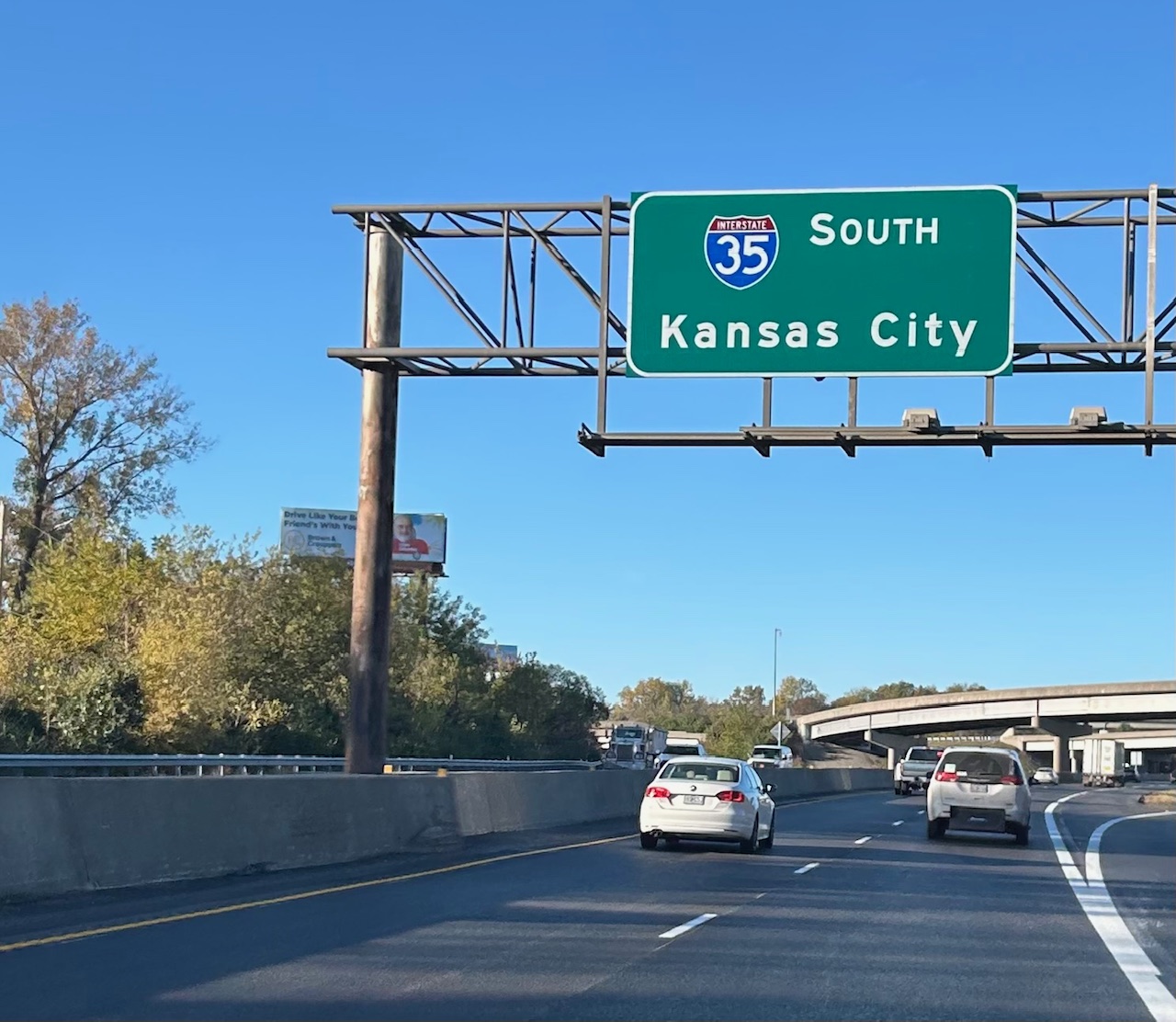
Kansas City, Here I Come

When PB asked me what I wanted to do for my birthday, I was ready with an answer.

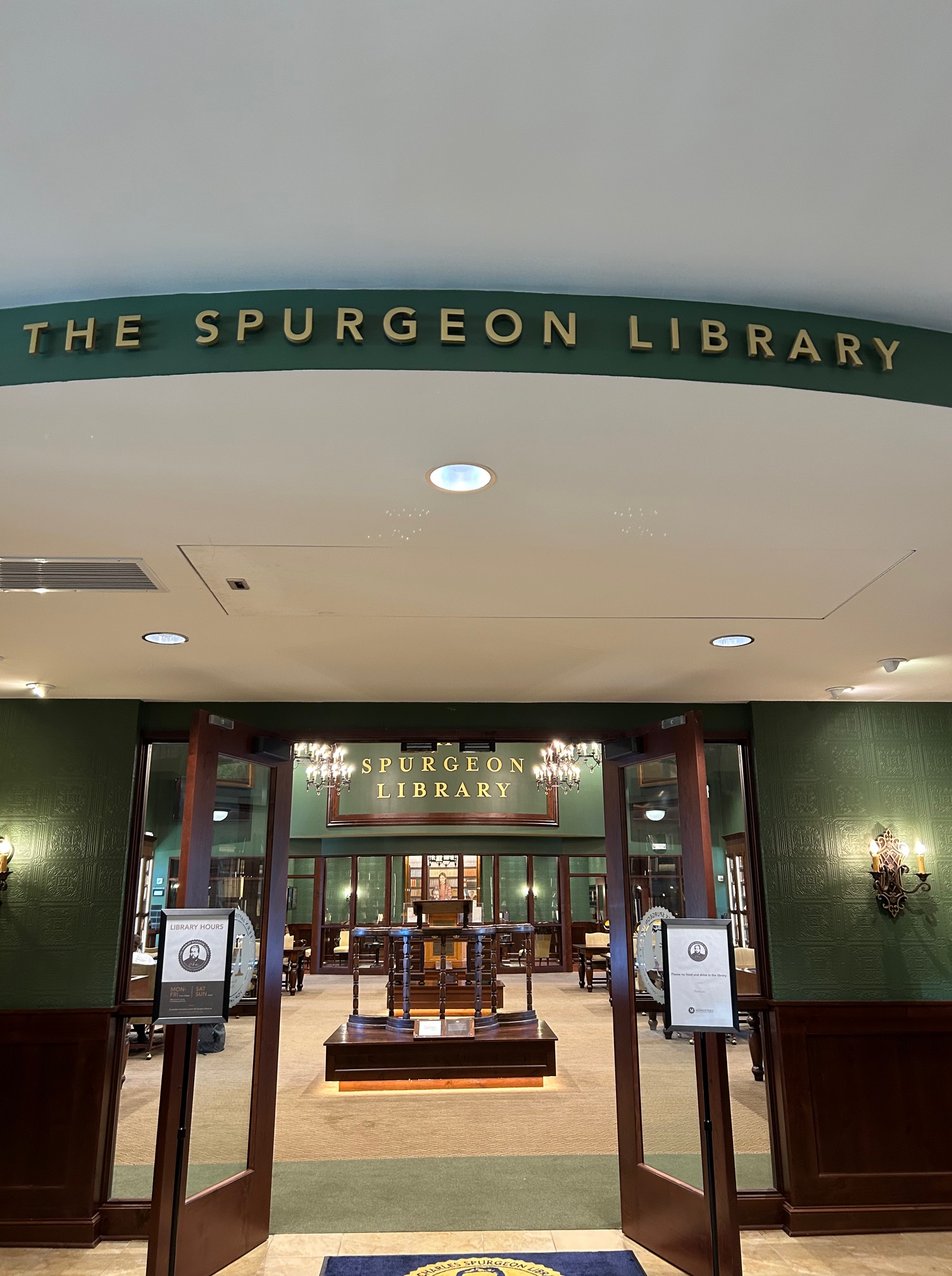
“I want to go to Kansas City and visit the Charles Spurgeon Library on the campus of Midwestern Baptist Theological Seminary.”

Not your typical birthday request, I know. Even PB raised his eyebrows at that one, but he’s always game for a road-trip-adventure. And I promised him some KC barbeque.

As we crossed the state line into Missouri, we played “Kansas City, Here I Come” by Wilbert Harrison, recorded in 1959, which seemed appropriate since it was my birthday trip and that’s my birth year.

See? I wasn’t making it up. Not every old dead guy gets his own library.

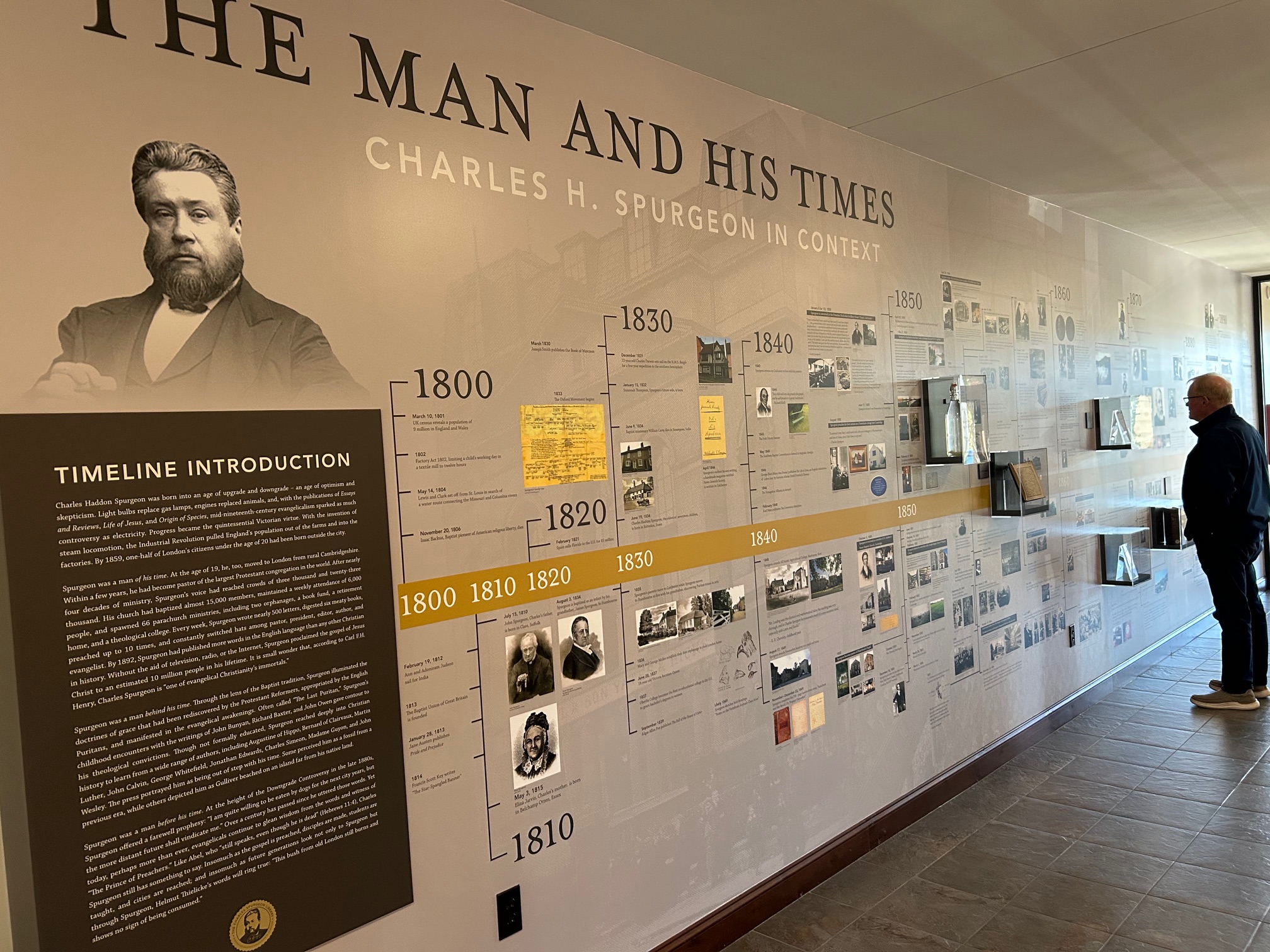
Spurgeon had a 12,000-volume personal library. After he died, half of his books were sold and ended up in America. They sat in boxes for 100 years in a basement. Then Midwestern Baptist rescued them and someone donated several million dollars to build a library to house and display them. Everything you ever wanted to know about Charles Spurgeon is there. We spent three hours soaking up every bit of it.

PB was a trooper.
Down deep, I think he loved seeing everything as much as I did.

This is the pew Charles was sitting on when he came to saving faith in Jesus.
He was 15 years old.
He started preaching at 17 and had his first church when he was 19.

Spurgeon’s desk—we were allowed to touch it.

So Many Books. The man read six books every week.
That’s 312 books per year.
But then, Spurg didn’t have TV or Internet or Automobiles.

The paintings all over the library were really beautiful.
Every little enclosed case had a story.

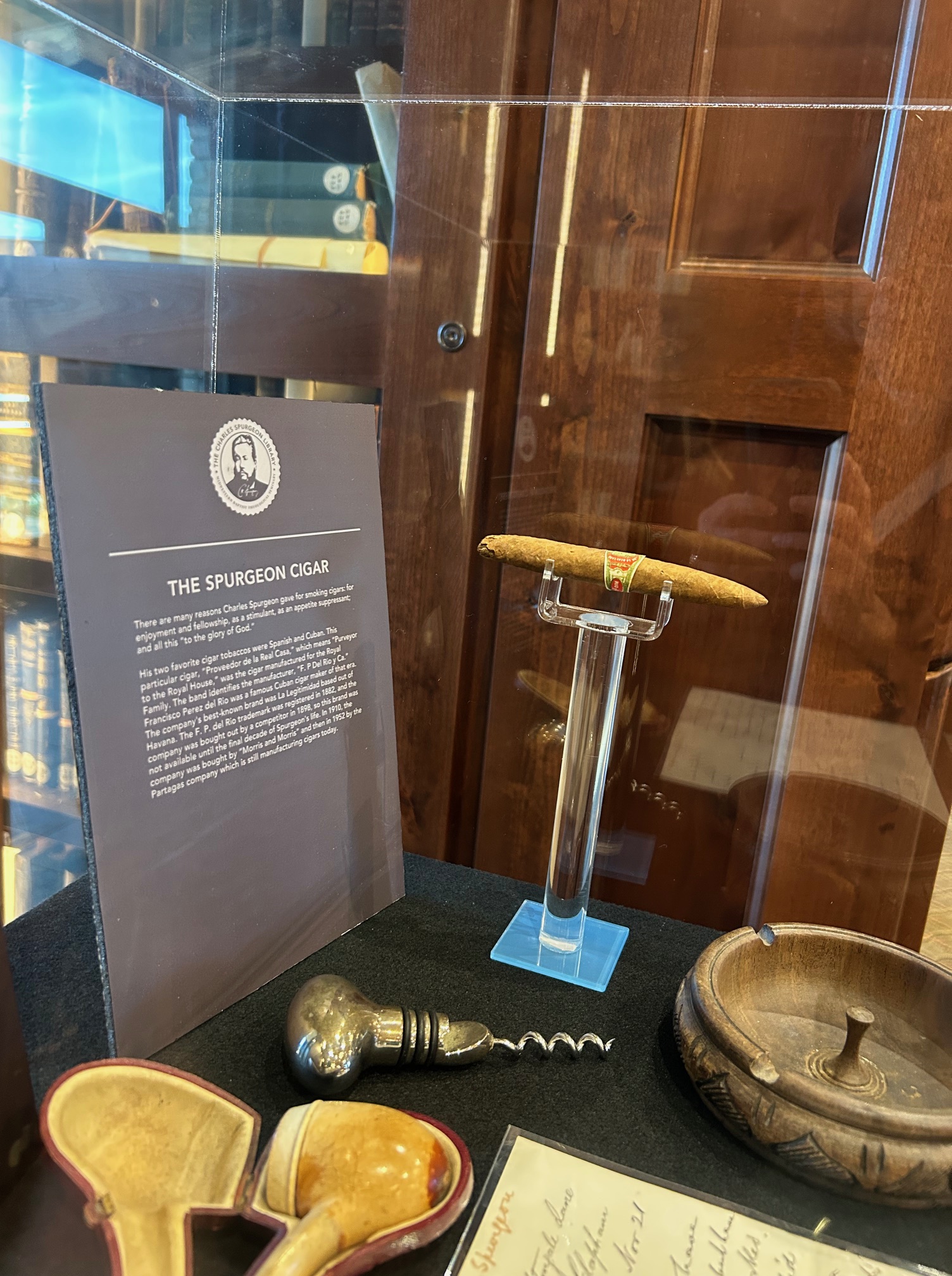
There were three cigars in his coat pocket when he died.
To the glory of God.

A good time was had by all.

My admiration for CHS grew exponentially.
I sure hope he teaches and preaches in the New Earth.
I’ll be in the front row, grinning from ear to ear.

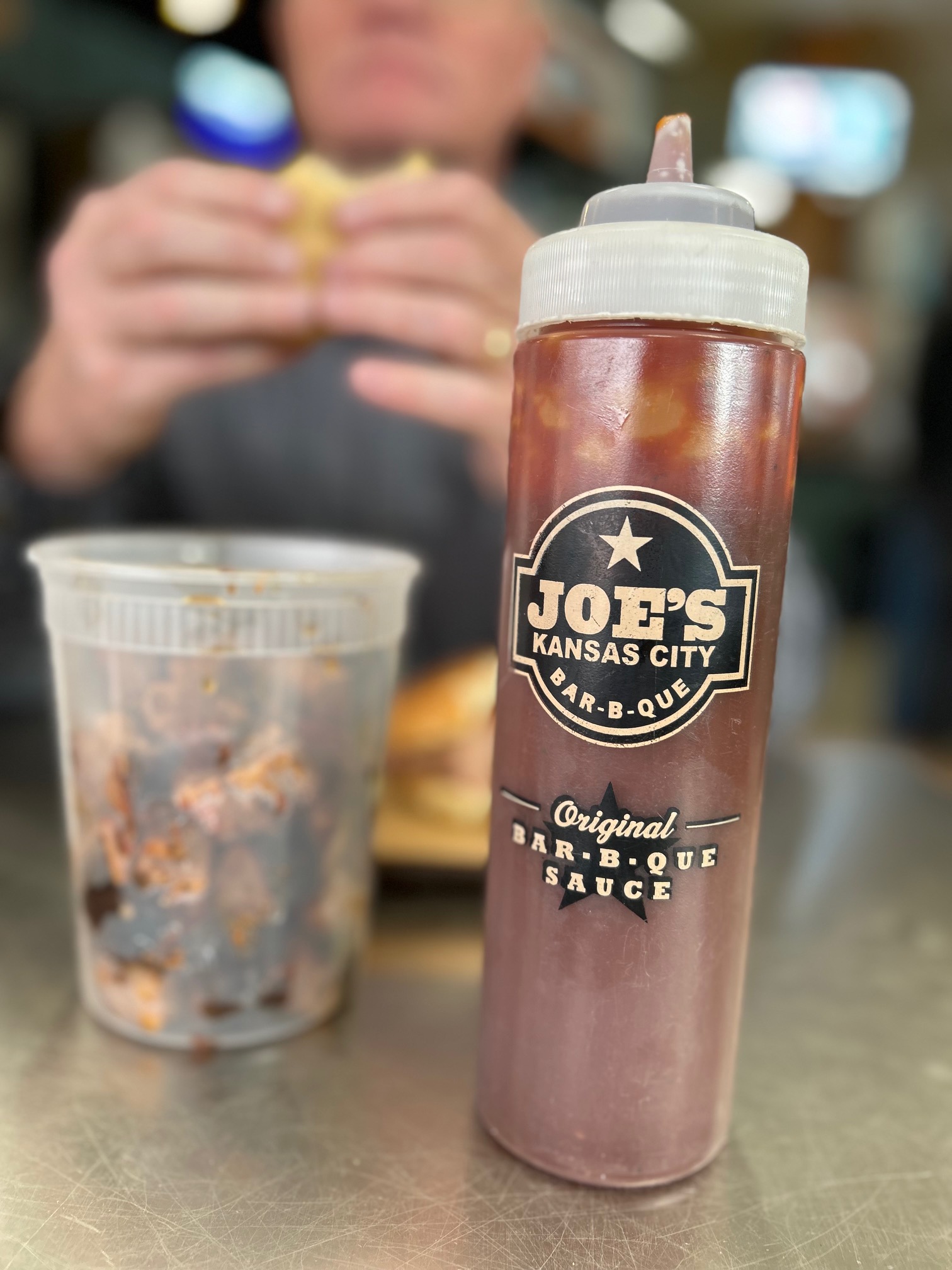
We celebrated at Joe’s Kansas City Bar-B-Que with brisket and burnt ends.

Thanks, honey, for making my birthday dreams come true.
You’ll always be my #1 preacher.

Road Trip

Once in a while, PB and I like to jump in the car and take off.
We don’t do long vacations or travel the world.
We like being home.

Since retiring to the woods we feel like we’re on perpetual vaca,
so occasionally an adventure is in order.
Today is that day.

You’ll never guess where we’re going…

Spurgeon

Charles Spurgeon is my favorite old dead guy.
I call him my 19th century boyfriend.
PB doesn’t mind because Spurg has been dead for 133 years.

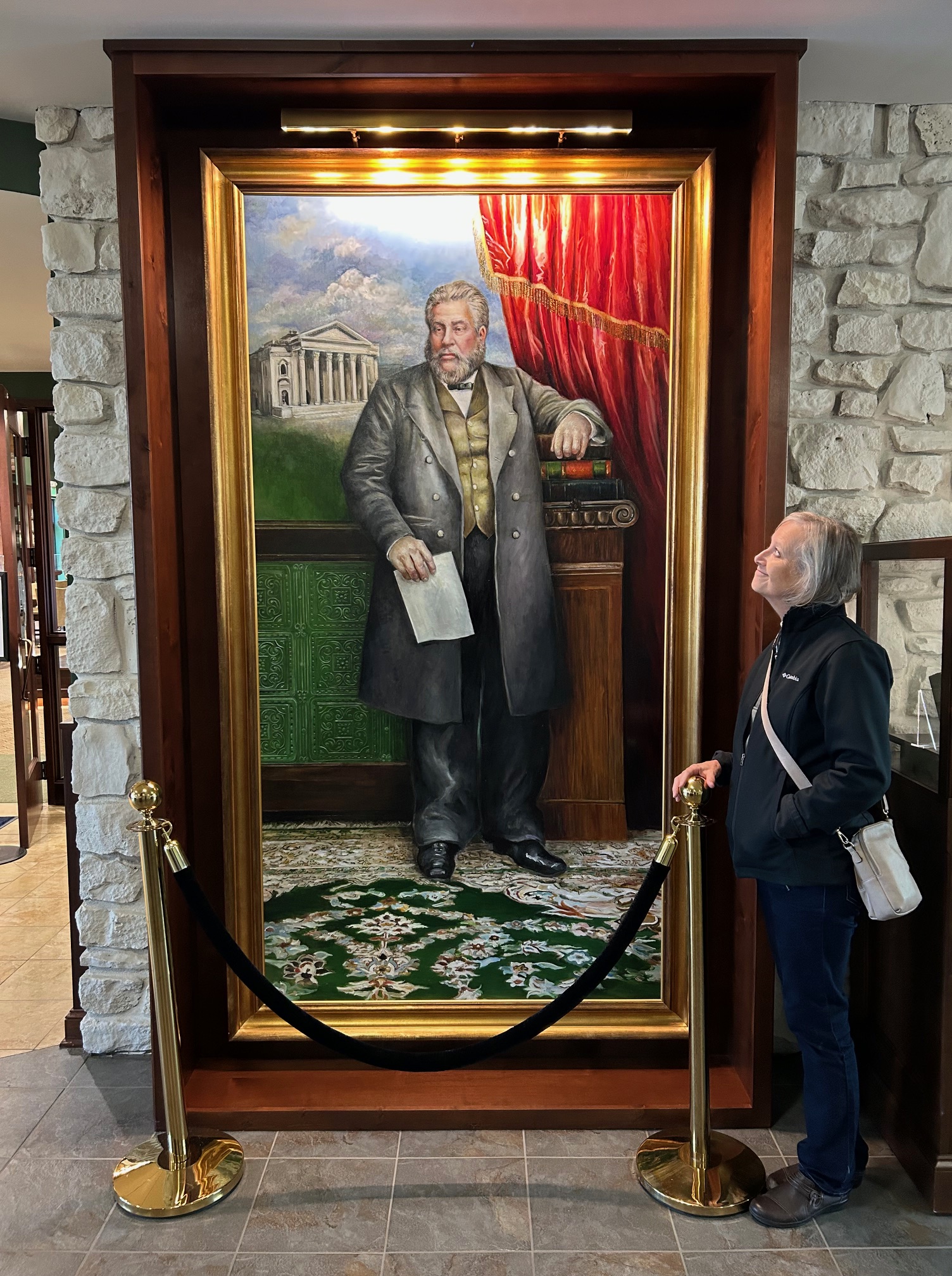
A few years ago, friends gave me a portrait of Charles that hangs in my home office. He watches over me as I sit in my chair every morning–reading, praying, thinking, writing.

The man inspires me.

He wrote 500 personal letters every week.
He preached four to ten sermons each week.
He wrote 135 books and published 63 volumes of sermons.
He read six books per week, reading no less than 500 pages every day.
He gave a two-hour lecture at the Pastor’s College every Friday.

All without a computer. No cutting and pasting, no typing even.
Every word he wrote was put to paper with a pen
that had to be dipped into an ink bottle.

His Sunday morning schedule was as follows:
Wake early and ride carriage to church.
Smoke one cigar to the glory of God.
Lead worship service, preaching no more than 45 minutes.
Greet people in the church vestry all afternoon.
Begin sermon prep for the evening service.
Preach Sunday evening sermon.
Ride carriage home and go to bed.

Charles Spurgeon, a.k.a. The Prince of Preachers,
preached 3,561 sermons over 40 years,
making him my second favorite preacher of all time.

My #1 pastor never smoked cigars.
Not even to the glory of God.

Long Distance

PB and I first met way back in 1974, before cell phones and email. We wrote letters to each other and PB saved up his dimes so he could go to the phone booth on the corner and make an occasional long-distance call.

By 1977, we were both in college and living several states apart. Because he was a poor college student, and I was a less poor college student, we devised a system for making those long distance phone calls.  It went like this:

The phone would ring in my dorm room.
I would answer it.
The operator would say, “Person-to-person call for Betty.”
I would say, “Betty is not here right now.”
The operator would say, “Thank you. The caller will try back later.”
Click.
Then I would call PB on my dime.

Long distance was never a problem for Jesus. When a centurion asked the Rabbi to heal his servant, Jesus offered to come to his house. The soldier resisted, saying he knew how authority worked—all Jesus had to do was say the word and it would be done. It was a remarkable statement of faith, coming from a Roman.

Just imagine the servant, paralyzed and in great pain at home, possibly dying. Suddenly the nerves in his body fire up and feeling starts to return. The pain subsides. His feet and legs begin to twitch and then he springs out of bed and runs around the room. He thinks, “How did this just happen?”

Someone once told me that God’s phone number is Jeremiah 33:3.
“Call to me and I will answer you
and tell you great and unsearchable things you do not know.”

So go ahead—call Him.
He’s already paid for it.
He promises to answer.
He’ll never hang up on you.
Call person-to-person.
The Holy Spirit will connect you.

Jumpin’ Jehoshaphat

Long before Yosemite Sam came up with the phrase “Jumpin’ Jehoshaphat!” there was an actual person named Jehoshaphat. He was king of Judah from 873 BC to 848 BC. There is no record of him doing any jumping.

In a long line of no-good, terrible, very-bad kings, Jeho stands out as a pretty-good, decent, not-too-bad leader of Judah. Not perfect, but better than most.

When King Jehoshaphat heard that a huge enemy army was approaching, he was shook. But instead of having a melt-down, he “resolved to inquire of the Lord” and called for a nation-wide fast. All the people gathered at the temple for a prayer meeting, led by their king. Jeho reminded the people who God was, what God had done for them in the past, and asked for God’s help.

Then Jehoshaphat prayed one of the best prayers in the Bible:
“We don’t know what to do, but our eyes are on You.”*

During the prayer meeting, a prophet received a message from the Lord:
“Do not be afraid or discouraged for the battle is not yours, but God’s.”

Further instructions were given:
“Take up your positions; stand firm; face the enemy.”

Jehoshaphat had a brilliant idea:
“He appointed singers to praise the Lord at the head of the army.”

Then God had a brilliant plan:
As they began to sing and praise, the Lord set ambushes
and the enemy armies destroyed each other.”

The King knew what to do next:
“Led by Jehoshaphat, they returned joyfully and went to the temple.”

I think maybe he jumped up and down a little bit, too.

I also think maybe we could learn some things from this account.

  • When under stress, resolve to seek the Lord.
  • Ask some people to fast and pray with you.
  • Preach to yourself what you know to be true about God.
  • Go over all the things God has done for you in the past.
  • Stand firm in the armor of God.
  • Put praise out in front.
  • Watch God move in miraculous ways.
  • Go to church and thank Him.
  • Jump up and down.

*Read it for yourself in 2 Chronicles 20.

I’m An Idiot
It’s true.
Are you one, too?
Before you answer that, read on.

“Now when they (the Pharisees) saw the boldness of Peter and John, and perceived that they were uneducated and untrained men, they marveled. And they took note that these men had been with Jesus.” Acts 4:13

The Greek word for “untrained” is “idiotes” (id-ee-o’-tace) meaning someone who is an “unlearned, unskilled, common ignoramus.”

When Jesus was building His team of disciples, He didn’t go to the local synagogue to interview the students with the highest grade point averages. Jesus went to the lakeshore and called uneducated, untrained fishermen.

Jesus was looking for “idiotes”—just like me.

I’ve never been to seminary.
I don’t know Greek and Hebrew.
I can’t explain the Trinity or the impassability of God
or why He sometimes uses anthropomorphism to describe Himself.

God is not looking for any old idiot, however. God is looking for regular folks who have been with Jesus. He’s looking for people who will make others around them take note—the kind of followers who may not be the most intellectual, but have Holy-Spirit-wisdom gained from time with Jesus.
Like Peter and John.

Their boldness unnerved the Pharisees and sent them into a panic.
Then those “idiotes” went out and turned the world upside down.


Hands Up

In the church I attended as a little girl with my family, we did not clap our hands, raise our hands or extend the hand of friendship during services. We were good midwestern farm folks who loved God, loved our neighbors, and loved the land.

I heard there were some places of worship where people shouted and danced and rolled in the aisles. My young mind couldn’t imagine that God approved of such behavior in church.

Most of my worship as an adult has been spent at a keyboard, playing hymns and worship songs. In this new season of life, I suddenly find my hands free and I don’t know what to do with them.

Sometimes I get the urge to clap. Once in a while, I feel compelled to open my palms and raise them up, just a little bit.

Then I read this:

Lift up your hands in the sanctuary and praise the Lord.”
Psalm 134:2

Clap your hands, all you nations; shout to God with cries of joy.”
Psalm 47:1

“Whatever your hand finds to do, do it with all your might.”
Ecclesiastes 9:10

It seems God not only approves, but heartily encourages—even commands—me to do something with my hands. So, I’m learning (albeit a bit self-consciously) how to lift up my hands…

…like a child reaching up to be embraced by my Heavenly Father—

…like a football fan cheering on my team—

…like a friendly wave to my next door neighbor—

… I will seek to be held by the Father,
… I will cheer on the move of the Spirit,
… I will welcome the presence of the Savior.
I will lift up my hands.

“I will praise you as long as I live, and in your name I will lift up my hands.
Psalm 63:4