Pearl Jam

In 2006, a giant pearl was found by a poor fisherman along the coast of Palawan, a Philippine Island. His anchor jammed up against a large protrusion which turned out to be a seventy-five pound gleaming treasure. He hefted it into his boat and rowed back to his tiny wooden shack. Thinking it would bring him good luck, the fisherman hid his prize catch under his bed. For ten years.

Luck ran out when the wooden hut burned down. The man gave the two-foot long pearl to his aunt because it was too heavy for him to move. She happened to be a tourism officer and the stunning pearl is now on display at the city hall in Puerto Princesa, Philippines.

The pearl is valued at $100 million.
I’d say that’s one pearl of great price.

“The kingdom of God is like a merchant in search of fine pearls, who, on finding one pearl of great value, went and sold all that he had and bought it.” Matt. 13:45-46

Jesus told a whole story in one sentence.
It was about a businessman who sold everything he had
to buy one priceless pearl.

That’s you.
You’re the pearl of great price.
Jesus gave up everything just to have you.

“You are not your own. You were bought at a price.”
1 Corinthians 6:19-20

A 75 lb. pearl is massive, but we ain’t seen nothin’ yet.
Apostle John’s vision of New Jerusalem does indeed include pearly gates.
“The twelve gates were twelve pearls, each gate made of a single pearl.” Rev. 21:21


Oysters must be really big in heaven.

Compost Post

One spring a farmer friend brought over a load of manure to put on our new garden. We worked that “organic material” into the soil and then planted the seeds. By mid-July, the garden looked incredible — especially the tomato plants. Those Beefsteaks and Big Boys grew as tall as me with huge stems and lush green leaves. By mid-August, our well fertilized plot looked like the Amazon jungle. This is what I was envisioning:

There was only one problem: not one tomato. All that tending, staking, and weeding with nothing to show. No BLTs, no salsa, no spaghetti sauce. How disappointing.

William Shakespeare said,
“Even good things can become bad if they are excessive.”
This applies to cow poop in a garden plot.

In the last post on Matthew 13, the four soils had various results.
One question lingers: What made the good soil “good”?

My Master Gardener friends would tell me it has to do with pH levels and aeration and mulch and rotation. And compost. Compost is essential.

My Master seems to be telling me that good “heart soil” needs the same kind of attention.

What is my heart pH level?
Is the state of my heart acidic? Am I continually critical and judgmental? Or am I too alkaline? Is my heart like hard clay, apathetic and unresponsive?
I need continuous alignment with Jesus!

Is there room for God in my heart?
Do I understand that the occasional pokes and jabs by the Holy Spirit may be creating space for His breath of life, His living water, and His light to get in?
I need the aerating work of the Spirit!

Does my heart appreciate others?
Am I resisting the cover of fellowship with other believers? Do I realize how much I need their influence to keep down the weeds and retain the freshness of my faith?
I need the mulch of community!

Am I afraid to innovate?
Am I settling for doing the same old things in the same old ways? Can I be open to change and embrace switching things up for the sake of new growth?
I need occasional rotation!

And then there’s the compost. My compost pile has coffee grounds and egg shells and carrot peels. In other words, garbage. Could it be that Jesus wants to take all the junk and muck and crud in my life, break it down, and use it to enrich the soil of my heart? What if I looked at troubles and trials as essential fertilizer? Yes, it stinks for a while, but after a season, the results are good soil for the Good Farmer to plant good Seed.

Enough questions!
How about a song?
Oops, that’s a question!

“Purify my heart.
Let every word, every thought, every motive, every intention,
be pleasing in Your sight, oh God.”
Jess Ray

Dirt Poor

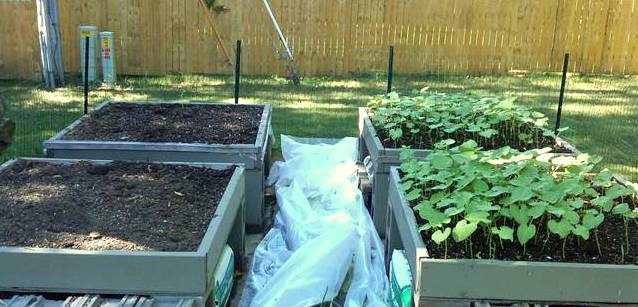
Several years ago, PB and I planted green beans in four raised beds.

Same seeds, same amount of sun and water, same guy planted the seeds on the same day. So much the same, yet the results were so different. It must have been something about the dirt.

Jesus described four kinds of soil in His story called “The Parable of the Sower” in Matthew 13. The same guy planted the same seeds on the same day, yet the results were so different.

The four soils represent four kinds of hearts and how they respond to the seed of the Word.

Some days my heart is a hard path.
The Seed lands on my heart, but can’t penetrate. Pride or bitterness or disappointment tamps down my desire to understand the Word. Or maybe I’ve been walking the same path so long that monotony has made me callous. Perhaps others have stomped on me and a tough, protective shell has developed.

Some days my heart is shallow soil.
The Seed lands on my heart and goes in the thin layer of topsoil. For a short season, the seed of the Word is exciting and enthusiasm runs high. Before long, things heat up and get testy. Because there is rock under the scanty soil, there are no roots to maintain the emotional high and the young growth withers away as quickly as it sprang up.

Some days my heart is thorny ground.
The Seed lands on my heart and goes in the soil with great promise. The Seed even sends roots down. However, the new seedling can’t compete with nagging worries, pleasurable distractions and selfish desire for worldly possessions. The wild overgrowth overtakes and suffocates the crop before there is any lasting fruit.

Some days my heart is good soil.
The Seed lands on my heart, goes in the soil, puts down roots and grows up into a healthy plant. Finally, some good news — a harvest! What made the difference? The condition of the soil.

Lord, break up my hard ground. Make my roots go down deep into the soil of Your marvelous love. Yank out the weeds that threaten to choke my affection for You. Let Your Word land daily on a tender and soft heart, ready to receive and able to produce fruit for Your glory.

“Listen then, if you have ears!” Matthew 13:11

Short Story

Without a story in a sermon, a preacher loses 80% of the congregation. An illustration that is sports-related perks the ears of three-fourths of the men in the pews. Deep truth seems to stick better when associated with a word picture. We like stories.

“Jesus was one of the world’s supreme masters of the short story.” (William Barclay)

The Master told over 30 stories, or parables, as recorded in the gospels of Matthew, Mark and Luke. Parables are defined as “earthly stories with a heavenly meaning”, but the listener has to engage and discover that meaning. Truth won’t be found by audience members who are too lazy to think.

I don’t think the point of some of His parables dawned on people until they were walking home wrestling with what He said. Jesus used story as a way of forcing people to rethink and reexamine spiritual truth.

Jon Ritner, Positively Irritating

Jesus’ stories were spontaneous, often spoken to crowds of people but sometimes told to His twelve disciples alone. When reading these passages in the Bible, it’s important to see what prompted Jesus to tell the story, to look back and see what led up to the moment. Matthew 13 is an example of how this scene is set up for the Parable of the Sower.

The chapter starts with “That same day…” What same day? What else happened that day?

It’s possible that Matthew 12:1 is the beginning of that day. If so, that was one crazy day.

Jesus and his disciples were called out by the Pharisees for harvesting grain on the Sabbath. Then, Jesus healed a man with a shriveled hand in the synagogue, causing the Pharisees to begin plotting how they might kill Jesus. There was another run-in with Pharisees and they attributed Jesus’ miracles to Satan. Jesus called them a bunch of snakes. The Pharisees demanded to see another miracle and Jesus told them they were wicked. Finally, Jesus’ mother and brothers showed up, creating an awkward situation.

Jesus “went out of the house and sat by the lake”. Maybe He needed a moment. Things were ramping up with the religious establishment and His family. From that point on, Jesus mainly taught the crowds using parables.

I noticed two things in Matthew 13:1-2 as a set-up to the parable.

First, Jesus “went out” (verse 1) in the same way the farmer in His story “went out” (verse 3). They were both sowing seed.

And second, Jesus sat down in a boat and the people in the crowd stood for the teaching. “We would have less sleeping in church if this arrangement still prevailed.” (Charles Spurgeon)

Next: The Parable of the Sower

Storytime

The book “One-Minute Bedtime Stories” must have been written by a tired parent. As a mother of four and now a Nonnie of eleven, I can’t imagine a one-minute story satisfying too many three year olds. But then, I’m a sucker for “one more…please Nonnie,” even when it’s clearly a nighttime stall tactic.

The “one minute” idea caught on and soon all kinds of similar books hit the market.

  • The One Minute Manager
  • The One Minute Cure
  • The One Minute Workout
  • The One Minute Millionaire

Then the fad crossed over into Christian publishing and some titles made me cringe.

  • One Minute Prayers for Busy People
  • One Minute With God: Sixty Supernatural Seconds That Will Change Your Life

I’m not against one minute prayers — I pray them all day long — but I am not comfortable with relegating God to a one-minute time slot in my schedule. It takes more than sixty seconds a day to develop a vital, intimate relationship.

For the next ten weeks, my Bible Reading Plan is taking me to the Gospel of Matthew. I’ll be sitting down for “storytime” with Jesus, looking at several of His parables.

One thing I noticed as I perused the passages I’ll be reading —
Jesus told very short stories.

The Parable of the Sower (Matthew 13:3-9) takes 47.24 seconds. The Parable of the Prodigal Son is one of the longest, clocking in at 2 minutes 32 seconds. Some of Jesus’ stories are only one or two sentences — easily less than one minute.

It seems Jesus didn’t have a problem telling one-minute stories.
But they have given us plenty to think about for millennia.

Would you like to join me? Next week we’ll look at Matthew 13:1-9, 18-23.

Roadtrip

PB and I took a road trip to Montana. We drove 80 mph across smooth blacktop highways. We pulled over occasionally to pick up snacks and fill the gas tank. We stopped for the night and enjoyed a comfortable air-conditioned room with a soft mattress and hot shower. Breakfast was prepared and ready for us in the morning. We passed the hours by listening to audio books, podcasts and ball games.

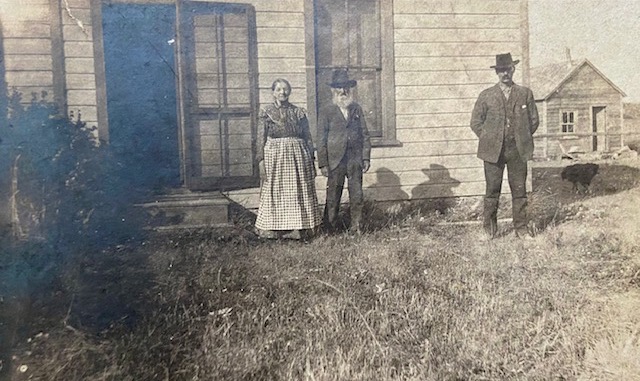
As we sped down the interstate, I couldn’t help but think about my great-great grandparents, who journeyed from Wisconsin to Montana in 1886. They headed west to claim 160 acres of free land as a result of the Homestead Act, enacted by Congress four years earlier. There were no paved four-lane highways, no rest areas with flush toilets and no Holiday Inn Express hotels with hot breakfasts.

If Grandpa John and Grandma Harriet could see us now, they would be in awe at the speed in which we travel and the luxury we enjoy along the way. Life sure has changed since 1886.

Thankfully, some things haven’t changed —
things like mountains, rivers, and the famous Big Sky.

“Oh, these vast, calm, measureless mountain days…
in whose light everything seems equally divine,
opening a thousand windows to show us God.”
John Muir

“You created the mountains by your power,
and demonstrated your strength.”
Psalm 65:6

Intermission

I’m taking a break for a couple weeks.
Stand up and stretch.
Grab a snack.
Chat among yourselves.
Savor early summer days.
Soak up slow summer evenings.
Say some prayers.
Sing some songs.
Walk in the woods.
TTFN!

Reminder

“Kindness without truth is not kind.
Truth without kindness is not true.”
Martin Schleske

Sometimes I tell people what they want to hear,
softly glossing over points of contention in order to keep the peace.

This is not being kind.

Sometimes I tell people what they don’t want to hear,
making my points with hard conviction even if it stirs up discord.

This is not being true.

“God wants us to grow up,
to know the whole truth and tell it in love.”
Ephesians 4:15

1,000 Words

I like to read books about writing. And I’ve read a whole slew of them. I’ve noticed that they are beginning to sound the same, so I guess there’s only so much that can be said about the craft of writing. You just have to sit down and do it.

One author proposed that success as a writer was guaranteed if this bit of advice was followed:

Write 1000 words a day,
five days a week,
for the rest of your life.

This writing expert said it was the magic formula to honing the skills needed to be a real author. It didn’t matter what you wrote, or when you wrote, or how you wrote. Just punch out 1000 words every day.

I took the bait.

The first morning, I printed out a sheet with the expert’s lofty goal that would become my sure-fire path to success. I started typing. After a few hundred words, I began to panic. I didn’t have anything else to say. I typed out my grocery list, the weather report, and what I planned to eat for breakfast. I included the date (spelling out the numbers) and even typed “Word Count” for two more words. It was clear that I wasn’t going to be able to write 1000 words every day for the rest of my life.

So I knocked it down to 500 words, five days a week, for the rest of my life.

The second day, I got a late start and needed to get to an appointment, so I skipped my writing time. I decided to cut the “five days a week” down to a more manageable three days a week, for the rest of my life.

By the third day, I was a little ticked at the expert for bossing me around and telling me how to run my life, so I put my foot down and made my own rules.

Instead of setting unrealistic goals, I’ve decided to adopt King Solomon’s wise counsel:

“The Teacher searched to find just the right words,
and what he wrote was upright and true.”
Ecclesiastes 12:10

I am still a fledgling, unpublished, obscure writer, searching for the right words. But if I can find a few upright and true words along the way, I’ll be satisfied.

By the way, there are three hundred and ninety eight words in this blog post. Word Count. 400!

Fallow Ground

Sometimes I’m wrong.

Sometimes I’m wrong for a long time. Like forty years.

That’s a long stretch to be off target.

Hoo-boy, was I ever relieved to see my error and fix my faulty thinking.

Being corrected is like leaving the chiropractor after being adjusted.
Freedom in movement once again!
Achy joints are released!
Foggy brain is clearer!
Spine is straighter!

Sometimes God has to put me on the table and give me a good adjustment. That happened recently as I read Hosea 10:12.

“Break up your fallow ground,
for it is time to seek the Lord,
until He comes and showers His righteousness on you.”

All this time I’ve misunderstood the words “fallow ground”.

I used to think fallow ground looked like this:

I mistakenly assumed this barren landscape represented my hard, dried up heart. I understood the command to break up the fallow ground as a call to repentance. I was supposed to invite the sharp blades of God’s plow to cut through the crusty surface. The sin I was harboring down deep needed to be rooted out.

It sounded painful.

Now I know better.
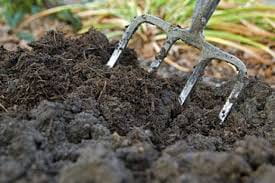
This is actually what fallow ground looks like:

As it turns out, fallow ground is land that is plowed, but intentionally left alone for a period of time in order to restore its fertility and future fruitful production. It’s a season of rest in order to be revived.

You’d think a farmer’s daughter would have known this.

I’ve never been so happy to find out I was wrong.

My heart, I feared, was parched and spent.
New life, it seemed, could not be found,
Until, one day, I learned it meant,
These dormant times are fallow ground.