45th

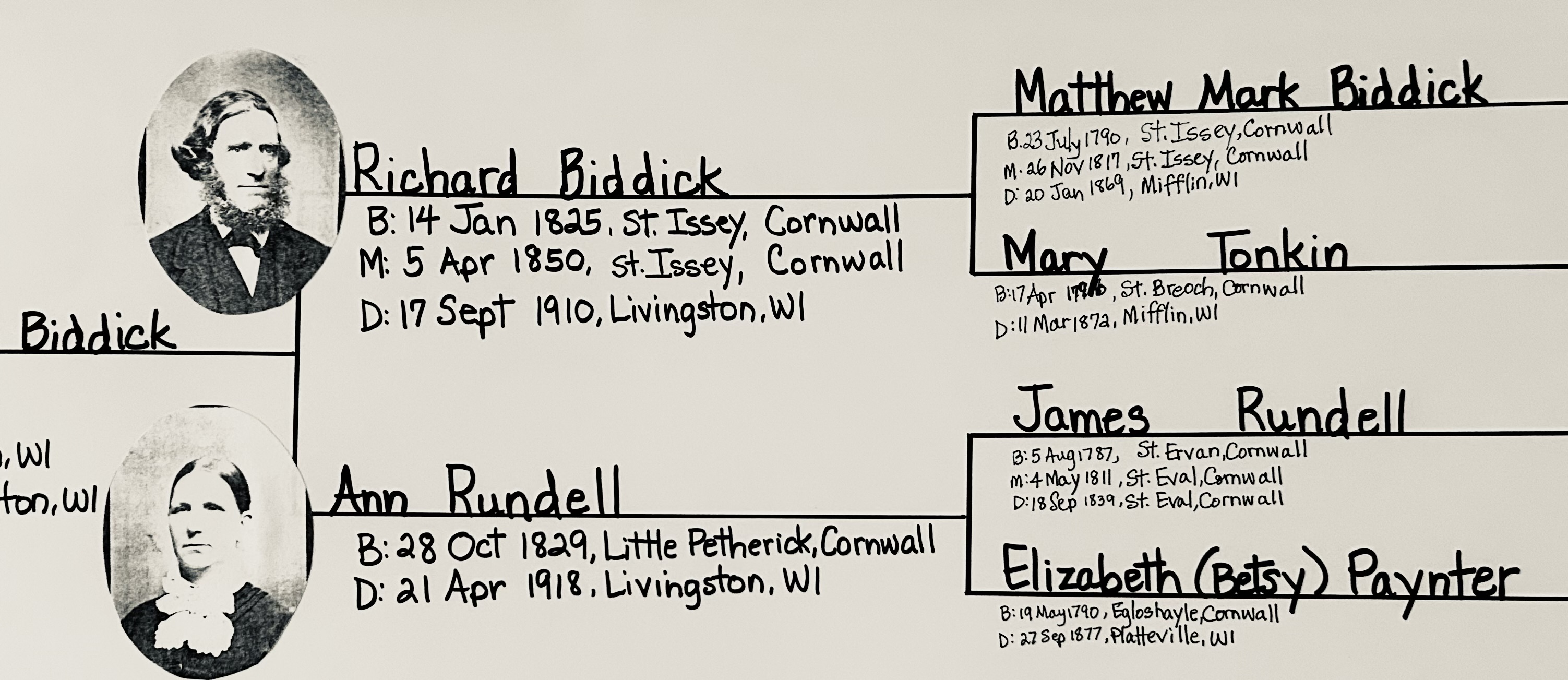
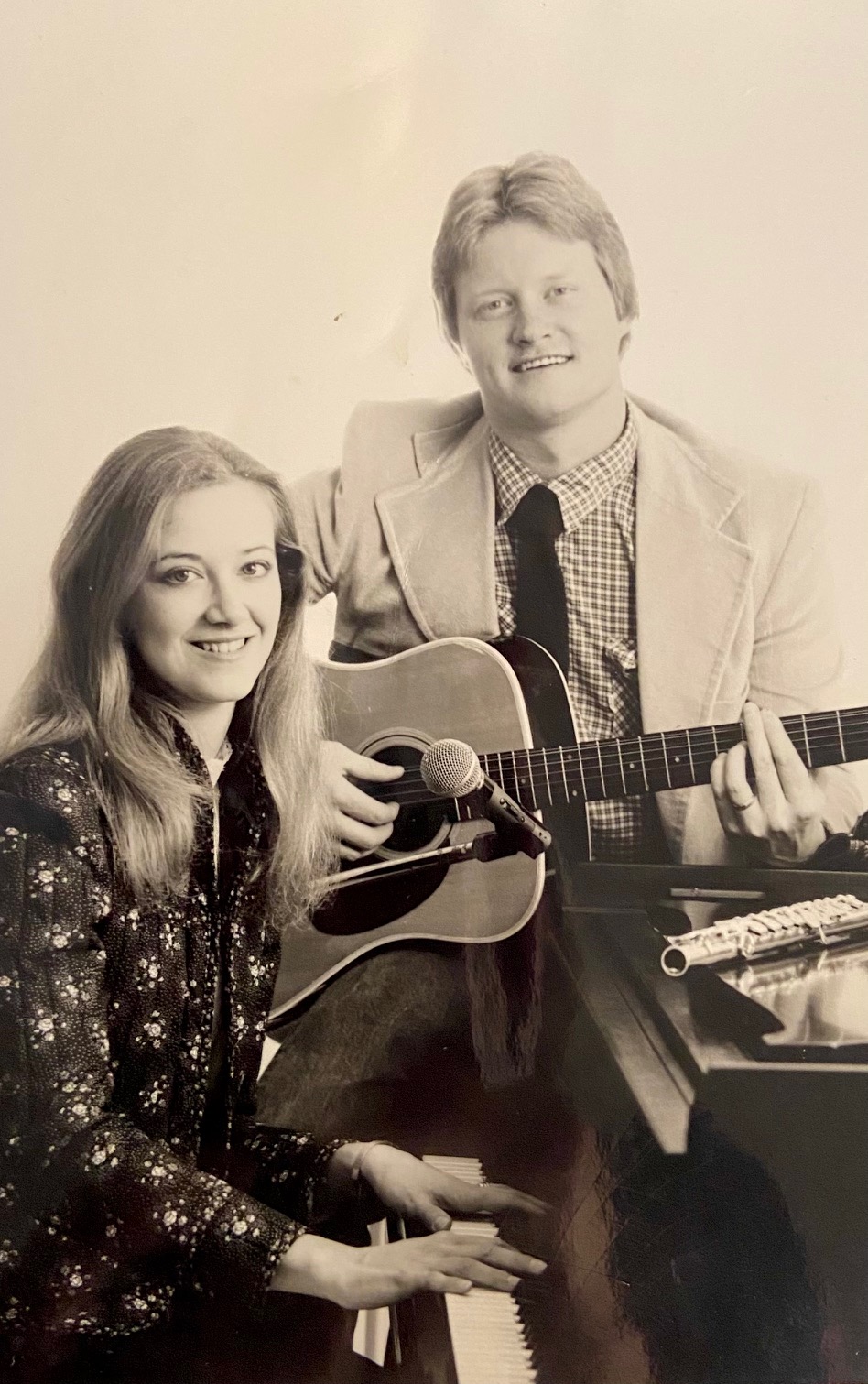
Once upon a time, two fresh-faced, newly-married kids dreamed of going on the road and becoming the next big Christian recording artists. But, alas, free-will offerings at potluck dinners and mother-daughter banquets didn’t pay the bills. So the dream died.

Forty-five years later, they looked back and saw the beautiful truth—
God had a better dream.

When those lovebirds drove away from their wedding reception in their red Pinto station wagon on August 25, 1979, they had no idea what was in store. It would be an amazing adventure!

Still is!

* Family photo by Mike Gorski

Peace Signs

I was a child of the 60s, but I didn’t pay much attention to what was happening in the world. I was too busy riding my bike, playing down by the creek, and setting up paper-doll families all over the living room. I overheard adults talking about the anti-war riots, the civil rights marches, and the hippies, but the first decade of my life was about as peaceful as a lazy afternoon in the haymow.

One thing I do remember from those days: the peace sign.
It was everywhere.

I was in my actual 60s when I learned that the famous sign was based on the letters N and D, and stood for Nuclear Disarmament.

Two flags down at a 45 degree angle = N
One flag up and the other flag down = D

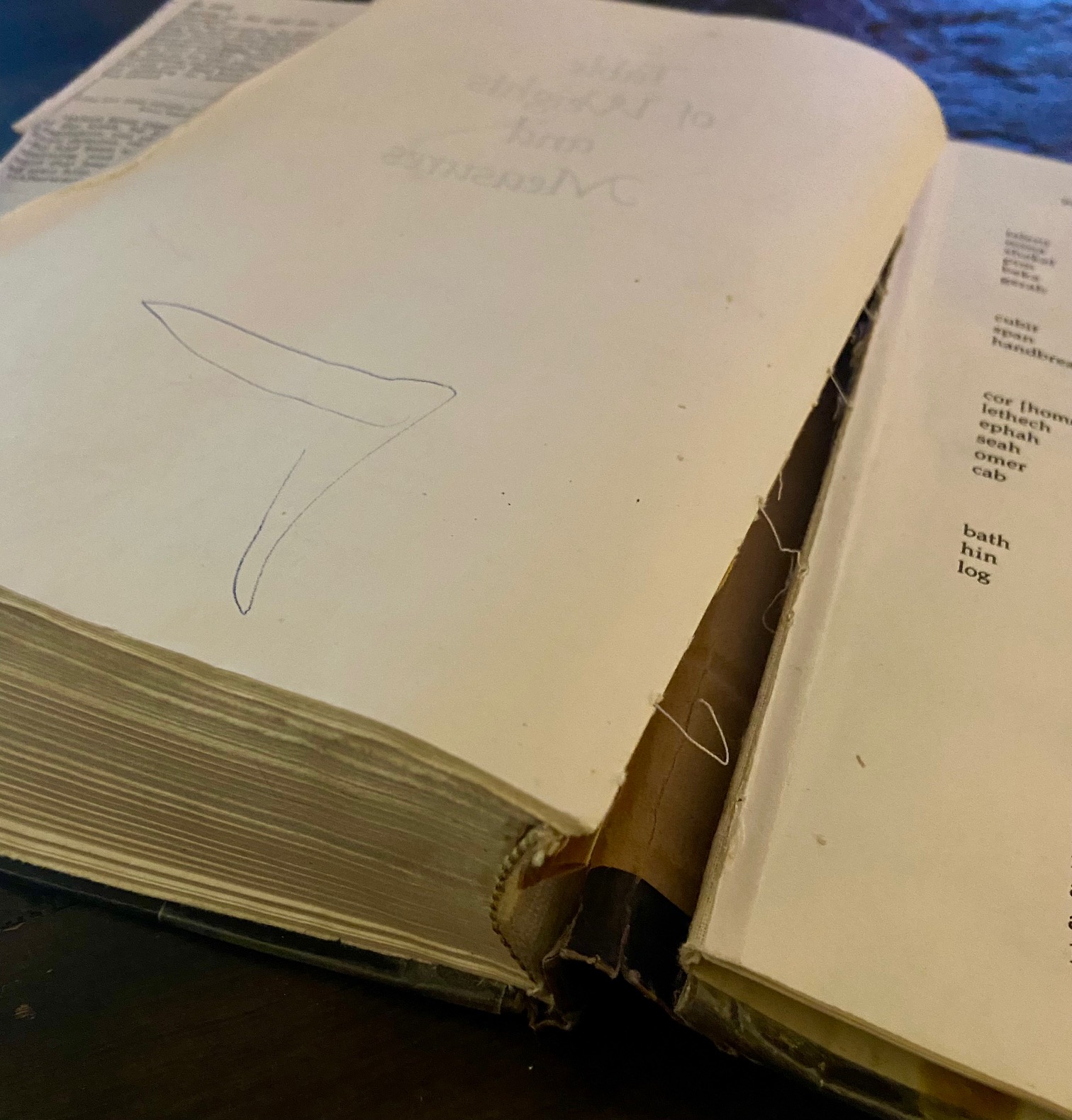
Long before this symbol was created, the ancient Jews had a peace sign of their own, also based on a letter of their alphabet.

“Shin” is the twenty-first letter in the Hebrew alphabet. It is the first letter in the word “Shalom,” so it is associated with peace.

When the temple priests gave the Priestly Blessing at the end of the service, they lifted their hands and made the sign of Shin while reciting, “The Lord bless you and keep you; the Lord make his face shine upon you and be gracious to you; the Lord turn his face toward you and give you peace.” (Num. 6:24-26)

As a child, Leonard Nimoy went to synagogue services with his grandfather. He was intrigued by this sign of “shalom” or peace. As Dr. Spock, Nimoy used the gesture on Star Trek to mean “live long and prosper.”

Maybe it’s time for a new peace sign.
Something we can plaster on t-shirts and billboards.
A universal symbol, easily recognized.
Something cool, groovy, far-out.

Or maybe it’s time for an old peace sign.

God made peace through his Son’s blood on the cross.
Colossians 1:20

Perfect Peace

Shalom, my friends!

“Shalom” is a Jewish greeting that can mean both hello and goodbye. The word is translated as “peace to you.”

Isaiah 26:3 says, “You will keep him in perfect peace whose mind is stayed on You, because he trusts in You.” I love that verse.

Isaiah wasn’t just talking about any old peace – he was talking about perfect peace. In the original language of Hebrew, the word perfect is “shalom” and the word peace is “shalom.” It’s like Isaiah is saying, “God will keep you in shalom shalom—perfect peace.” Or put another way: “Double peace to you.” In Jesus’ day, the Jews greeted each other with the words “Shalom Shalom.”

In our day, there is a great need for perfect peace. Especially now, as we enter a season in our country that seems to focus on division and anger and all manner of nastiness. These next three months might be challenging, but I’d like to suggest that we double down on peace by speaking peaceful words over each other. Maybe even triple it up.

So, Shalom Shalom, my friends.
May God’s perfect peace be upon you.
Pass that peace to someone today.

Keep the Peace

I’ve been reading Bible verses on peace throughout the month of July. (See 2024 Bible Reading Plan) It’s been good for my soul. Those familiar verses reminded me of things I knew but needed to hear again.

Philippians 4:6-7 was the most familiar one on my list as it was one of the first scriptures I memorized back in my high school days. I still have to recite it in the King James version.

“Be anxious for nothing; but in every thing by prayer and supplication with thanksgiving let your requests be made known unto God. And the peace of God, which passeth all understanding, shall keep your hearts and minds through Christ Jesus.”

Such a classic verse.
I heartily recommend putting it to memory,
in the version of your choice.

I thought I knew that verse backward and forward, but as always, there’s more.

It was the word “passeth” that got me. Other versions say “transcends.” It means “to surpass, to rise above, to excel, to be superior in rank.”

Here’s what I wrote in my notebook that morning:

Superior in rank. Hmmm. In the military there are levels of authority, like Sergeant, Lieutenant, Captain, Major, Colonel, General. Some soldiers surpass or rise above the others and move up in rank. Each step up calls for added respect. The Sergeant can’t walk into the General’s office and tell him what to do. The Sergeant must comply with the General’s commands.

My anxiety is the Sergeant. God’s peace is the General. God’s peace outranks my anxiety—my anxiety has no authority to overrule the peace of God. I just need to keep the order of command. I need to tell my worries and fears that they are not in charge and it is not within their jurisdiction to dictate my thoughts. In fact, those pesky worries need to stand at attention, give a crisp salute and say, “Sir, yes, sir” to the commanding officer, a.k.a. King of the Universe, a.k.a. Prince of Peace.

“Don’t fret or worry. Instead of worrying, pray. Let petitions and praises shape your worries into prayers, letting God know your concerns. Before you know it, a sense of God’s wholeness, everything coming together for good, will come and settle you down. It’s wonderful what happens when Christ displaces worry at the center of your life.” ~ The Message

Bookkeeping

This is the only word in the English language (besides “bookkeeper”) that has three double letters— b-O-O-K-K-E-E-p-i-n-g. I guess you could call it a triple-double.

I learned this fun fact years ago in Economics 101. We had a visiting professor from Boston who wrote the word in large letters on the chalkboard one morning. It’s the only thing I remember from that class. I dropped Econ soon after, figuring that at least I learned something. More than forty years later, I still can’t explain supply and demand, but I know the only word with three double letters.

I admit I am a bookkeeper at heart. I have a detailed budget book, I keep every receipt in envelopes by the month, and I balance our checkbook to the penny.

Attention to details is one of my strengths.

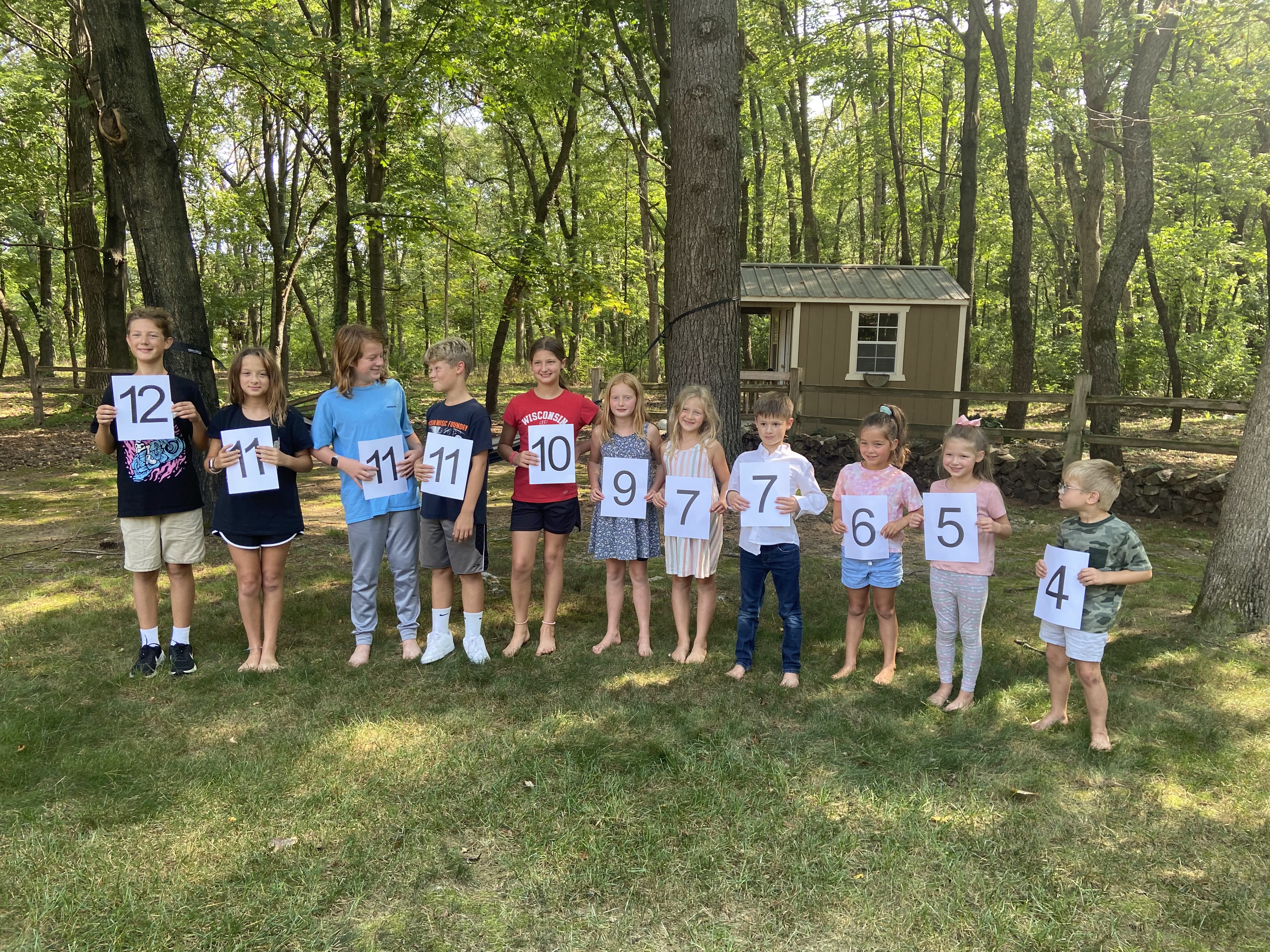
It’s helpful when PB needs to be reminded what time his appointment is, or when I keep track of whose turn it is to deal, or when I rattle off all eleven grandkids’ birth dates.

But there’s a flip side.

It’s not helpful when I remind PB of the “right” way to load the dishwasher, or when I keep track of who won the card game last week, or when I rattle off others’ mistakes.

God is big into details.
Just look at that swirly pattern on your fingertip.
Take a close look at the inside a lily-of-the-valley.
Try to call all the stars in the Milky Way galaxy by name.

But God doesn’t seem to be big on bookkeeping.
In fact, God took the sinless Christ and poured my sins into Him.
Then, in exchange, God’s goodness was poured into me. (2 Cor. 5:21)

That kind of transaction really messes up the books.

He remembers our sins no more (Heb. 8:12).
He blots them out for His own sake (Is. 43:25).
He removes them as far as the east is from the west (Ps. 103:12).

What kind of a bookkeeper does that?

God reconciled the world to himself through Christ,
by not counting people’s sins against them.
2 Corinthians 5:19

Glory hallelujah!

Classic Adventure

PB and I took a little road trip.
We didn’t go very far.
We weren’t gone for very long.
That’s our kind of adventure.

We went to a band concert in a park.
We toured a breathtaking religious site.
We walked through a historical homestead.
We overlooked a river at flood stage from a bluff.
We ate steak and shrimp at a good old fashioned supper club.

The highlight, for me, was a stop at the largest used book store in the state, with over half a million books.

Be still, my heart.

After perusing dusty titles for the better part of an hour, I stumbled on a treasure—literally. A stack of volumes on the floor tripped me up. And I’m so glad they did.

The Harvard Classics were compiled in 1909 by Charles W. Eliot, Harvard University President. He proposed that anyone who would commit to reading this “Five-Foot Shelf of Books” would be exposed to the greatest works ever written and be duly educated.

Sign me up.

The complete 50-volume set is available on Amazon—for $1300. The new books have shiny fake-leather covers and clean, crisp pages.

In that used bookstore I found my treasure at 95.4% off the Amazon price! The covers were faded and the pages were musty. Perfection!

It took me a while to track down PB in that gigantic maze of a bookstore. But when I did and he saw the glimmer in my eye, he knew. A treasure at a bargain price cannot be denied. Now I just need him to put up a five-foot long shelf in my office.

I’m hoping to open Dante’s Divine Comedy or Chaucer’s Canterbury Tales and find a few hidden $20 bills from 1909. Even if I don’t, the true treasure is the joy of reading and learning from the old books.

Volume 1, here I come.

Peace Plan

According to my Bible Reading Plan for 2024, a word study on “peace” is coming up next. For those who are slogging through Leviticus with me, hang in there! We’re almost done! For those who lost some traction in the chapters on mildew and bodily discharges, start fresh with us on July 1st!

This is year #3 in my study on the Fruit of the Spirit,
as found in Galatians 5:22.
Six years to go.

“But the fruit of the Spirit is
love, joy, peace,
patience, kindness, goodness,
faithfulness, gentleness and self-control.”
(Kinda glad self-control is at the end.)

Here’s my peace plan:

  • A short passage or verse for every day (Monday-Friday) during the month of July.
  • Write out the verse with the word “peace” in it, using an actual pencil on actual paper.
  • Re-write the verse in my own words.
  • Pray for peace—peace within, peace around me, peace in the world.
  • Extra credit for fellow Bible study nerds: go to blueletterbible.org to look up original language definitions. (You should try it—it’s so much fun.)

Click here or on the link at the top of the page for the passages.

Daily Sugar

As a child, I had a sweet tooth. And the cavities to prove it. I clearly remember my mother buying me a sweet treat on the way home from the dentist for being a good girl. Not many of my experiences in the dentist chair were happy ones.

I still have a sweet tooth. And a bag of licorice in my desk drawer to prove it. And some cookies in the back of the freezer. And caramel ice-cream topping in the refrigerator. Who needs ice-cream when a spoonful of caramel will do? Although ice-cream is always a good option.

I know. My penchant for sugar is not good for me and I should quit cold-turkey. After that bag of licorice is gone.

Maybe that’s why I smiled when I came across this quote by my favorite old dead guy, Charles H. Spurgeon.

“Certain people must always have sweets and comforts;
but God’s wise children do not wish for these in undue measure.
Daily bread we ask for—not daily sugar.

The more I thought about Spurgeon’s words, the less I smiled. Am I one of those people who must always have sweets and comforts? Do I wish for these in undue measure? Have I prayed, “Give me this day my daily sugar?” And I’m not just talking about cookies and candy.

What other things do I turn to for comfort? Ordering another book from Amazon? Binge watching on Netflix? Too much “me” time? Wanting things my way?

Spurg did it again.
He drew me in with winsome words
and then cut me to the quick.

I wonder if Charles (and maybe Jesus) had a savory palate.
“You are the salt of the earth, not the sugar candy!”
C. H. Spurgeon

Pilgrim Hymnal

This is my grandfather, J. Frank Bradley.

Isn’t he handsome?

He was born on June 5, 1886.
Yesterday would have been his 138th birthday.

He died in 1966, just nine months after my grandma passed.
It was said he died of a broken heart.

I don’t remember much about the man. I have no recollection of sitting on his lap for a story or playing peek-a-boo or even hearing him laugh. I was at the tail end of his line of grandchildren so he was already elderly when I came along. I faintly recall Grandpa Bradley’s baritone voice leading the “Doxology” at family Thanksgiving meals. Maybe that’s why I pulled this old hymnal down from the shelf this week. It’s a treasured possession.

The hymnal was gifted to J. Frank when he retired from singing in the church choir after 40 faithful years. Both the pastor and the choir director wrote notes of thanks inside the front cover. All 28 choir members, including the organist, signed their names.

“I must say that you are a fine human being and that you have been a source of personal inspiration to me during our years of friendship.”

Here is what caught my eye when I opened the old songbook.

March 8, 1959. I would be born eight months later. Still an unknown surprise, I was in the earliest stages of being knit together in the secret place, wonderfully and fearfully made.

I picture Grandpa Bradley in the Somers Congregational Church choir loft, holding his Pilgrim Hymnal and singing, “O God, our help in ages past, our hope for years to come, our shelter in the stormy blast, and our eternal home.”

It seems that this world is in even more need of God’s help than it was back in 1959. But I have just as much hope for my grandchildren in the years to come as he must have had for me.

Someday, in our eternal home, maybe Grandpa and I will sing a duet.