Dear Diary

I love to read other peoples’ diaries.

I may or may not have snuck a peak at a few over the years, but mostly I read other people’s published work. I once read all the diaries and letters of Anne Morrow Lindbergh and by the end, I felt like we were BFFs.

There’s nothing like a glimpse into the dark recesses of someone else’s heart and soul.

Keeping diaries is as old as time. In Genesis 5:1 we find, “This is the written account of Adam’s line.” In the next chapter we read, “This is the account of Noah.” Turn a few pages and there is another: “This is the account of Shem, Ham and Japheth, Noah’s sons.” And it continues on and on. Somebody was writing all this stuff down.

After the children of Israel were delivered out of Egypt, they wandered around the desert for 40 years. Even this was documented right there in Numbers 33.

“They left Kibroth Hattaavah and camped at Hazeroth.
They left Hazeroth and camped at Rithmah.
They left Rithmah and camped at Rimmon Perez….”

Not exactly riveting reading.
Why is this important enough to garner a whole chapter in the Holy Book?

Because God commanded Moses to record the stages in their journey. (Numbers 33:2)

Each of the 41 campsites in the desert was part of their story. Some places were memorable—like that campground with twelve springs and seventy palm trees (nobody forgot that place). Some were featureless and mundane. But they were real places where real people camped out and real people lived and died. The list of campsites in Numbers 33 is a testimony to the move of God in their lives.

Moses did a lot of writing for God,
but he was one of many who were called to use the gift of words.

God told Isaiah—
“Take a large scroll and write on it with an ordinary pen.” Is. 8:1
God told Jeremiah—
“Write in a book all the words I have spoken to you.” Jer. 30:2
God told Ezekiel—
“Write these down…so that the people may be faithful.” Ez. 43:11
An angel bellowed at the Apostle John,
“Write this down!” Rev. 21:5

I’m here to say
everyone should record the stages in their journey,
like Moses did.

I know, I know—
not everybody likes to write.

I’m only suggesting that you are an interesting person with a life story that might be more riveting than you think. You don’t have to report on every place you pitched a tent, but a few thoughts written down in a spiral notebook that reveal a little of your heart have the potential to impact future generations.

“Let this be written for a future generation,
that a people not yet created
may praise the Lord.”

Psalm 102:18

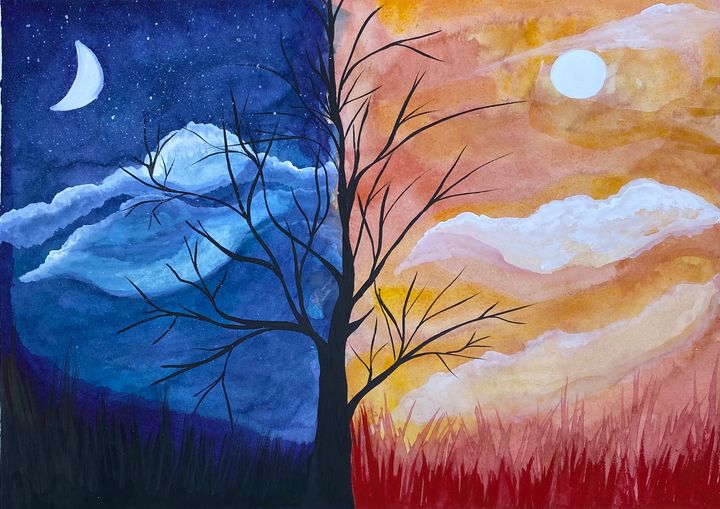
Evening and Morning

Sometimes newborn babies get their mornings and evenings mixed up. They sleep all day and stay awake all night. This behavior often cycles back around when those babies turn into teenagers.

Most of us operate on the concept that the day begins when we wake up in the morning. As daylight disappears into the darkness of night, we perceive that the day is done.

But that’s not the way God sees it.

At the end of each of the six days of creation God said,
“And there was evening and there was morning—” in that order.

God wasn’t mixed up. That’s the way He intended it.

Based on Genesis 1, the Jewish Sabbath begins on Friday night at sundown, because that is the start of the new day. If we were to adopt this evening—morning format, the first thing we would do at the start of every day is go to bed. Rest. Do nothing. Trust that the world will carry on without us for a few hours. Then, we would continue the day by getting up and working, being productive, taking care of business.

Adam was created on the sixth day and given the assignment of tending a garden. But the new man didn’t get right to work the next day because the seventh day was for rest, declared to be holy. The first thing Adam did was rest and enjoy creation. God set it up this way because we have great value in His eyes based on who we are—created by God in His own image—not because of what we do. He loved us before we could accomplish anything.

Culture shouts:
“Get to work. Be efficient. Create output.”

God says,
“Start with rest. Trust Me to take care of you. Then go and do.”

It seems backwards.
Or maybe we’re the ones who have our days and nights,
I mean, nights and days, mixed up.

Evening, morning and noon, I will pray.
Psalm 55:17

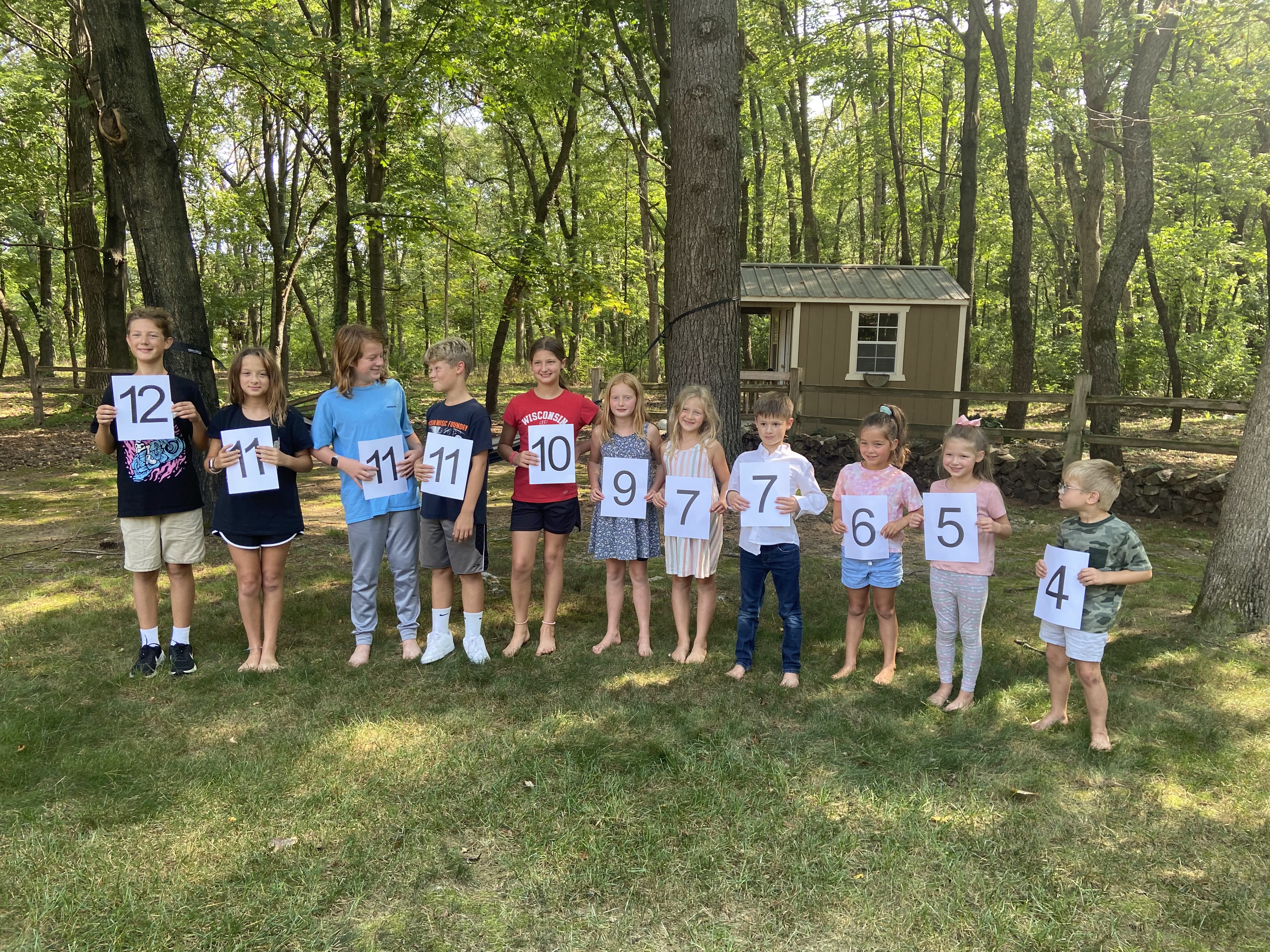
Grandkid Lineup

They are another year older, a few inches taller, and increasingly delightful.

Lord, make known to them the path of life and fill them with joy in Your presence. Psalm 16:11

Surround them with Your favor as a shield. Psalm 5:12

Keep them as the apple of Your eye and hide them in the shadow of Your wings. Psalm 17:8

Oh Lord, hear the prayers from this Nonnie’s heart. Amen.

Roommates

When PB and I were raising four small children, we lived in a three bedroom house. You’d think that the two boys would’ve bunked up together and the two girls would’ve been roomies. But somehow, the oldest sibling talked the other three into sharing a room so she could dwell in peace and quiet all by herself. She had some strong negotiating skills.

Later, when we moved into a four bedroom house, there was more maneuvering among the sibs. Not surprisingly, once again the oldest managed to nab a private room. Every so often, the other three would switch around, depending on who was annoying whom.

I thought of this when reading Numbers 2 this week. (See my Bible Reading Plan.)

The twelve tribes of Israel needed to get organized. They had just been delivered from 400 years of slavery and it would take some time for them to learn how to make their own decisions. So God divided them into groups and told them where to set up camp.

That’s where it gets interesting.

Which families should camp together?
Which ones should be kept farther apart?
God had a brilliant plan.

The tabernacle was smack-dab in the middle of the camp, with the Levites surrounding it. Then God picked three tribes to set up on the east side of the camp, three tribes on the west, three on the south, and three on the north.

The families of Judah, Issachar and Zebulun were assigned the east side of the encampment. These boys were full brothers, all sons of Leah. These tribes would be the first to march out when the camp moved.

Across the way, on the west side, the full-blooded sons (and grandsons) of Rachel were together. They were the youngest of Jacob’s boys and dearly beloved by their father. Remember Joseph and the amazing technicolor dream coat? Baby brother Benjamin camped out with Joseph’s sons Ephraim and Manasseh.

Situated on the south were the tribes of Reuben and Simeon, sons #1 and #2, whose mother was Leah. Gad was placed with them even though he was a half-brother, the son of Leah’s maid.

And last but not least were the tribes of Dan, Asher and Naphtali encamped on the north end. They were the middle children, all sons of the maids belonging to Leah and Rachel. These families brought up the rear when marching out.

The arrangement was so well thought out. God knew exactly where each tribe should be and who they should be with. He knew who should take the lead and who should bring up the rear. The Israelites didn’t question the plan or try to trade places. They let God organize them.

These kinfolk were going to spend a lot of time in the desert together.
Picking the right campmates was crucial to keeping family harmony.
And nobody got a tent to themselves, except maybe Moses.